
Storm Damage Stucco Repair — Complete Guide
Hail and wind hit Castle Rock stucco harder than almost anywhere else in the country, and knowing what to do in the first days after a storm can decide whether insurance pays for the fix. This guide covers storm damage stucco repair from start to finish: how to spot hail and wind damage on your walls, how the insurance claim process actually works, and how to time repairs before Colorado weather makes things worse. You will also find links to detailed guides on inspection, documentation, cost, and repair scope. Everything here comes from working alongside adjusters on Colorado hail claims, not from a generalist crew guessing at insurance language.
What You'll Find in This Guide
- Get a Stucco Repair Estimate in Castle Rock: What a Storm Damage Quote Should Include
- Stucco Repair After Freeze-Thaw Damage in Castle Rock, CO: Stop It From Spreading
- Stucco Repair After Hail: How to Find Impact Zones and Judge the Damage
- How Much Does Storm Damage Stucco Repair Cost?
- How Long Does a Stucco Patch Last Before It Cracks Again? A Straight Answer
- Storm Damage Stucco Repair Terms Explained: A Plain-English Glossary
- Water Damage Behind Stucco: 8 Warning Signs and How Fast You Need to Act
- Storm Damage vs. Age Cracks: Which Stucco Repairs Are Urgent in Colorado
Identifying Hail and Wind Damage on Stucco Before It Hides
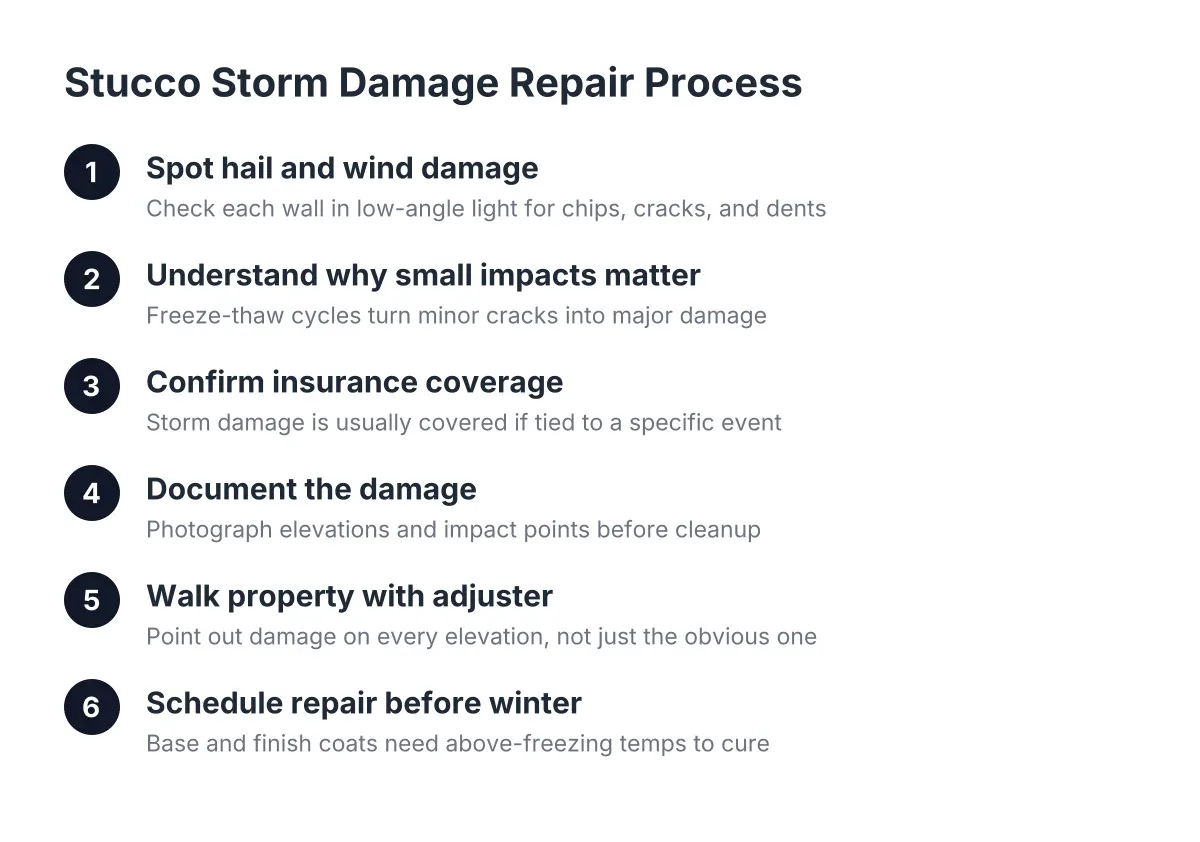
The first 48 hours after a storm matter more than most homeowners realize. Fresh hail hits show clean edges, exposed lighter material underneath, and a pattern that concentrates on one or two sides of the house. Wait a few weeks, however, and dirt, sun, and moisture blur those markers. As a result, the damage becomes harder to prove to an adjuster, even though it is still there.
Start your inspection on the walls facing the storm. In Castle Rock, that usually means the west and south sides, though wind-driven hail can wrap around corners. Look for chips, circular impact marks, spalled patches where the finish coat popped off, and cracks radiating from window and door corners. Additionally, check softer targets nearby: dented gutters, damaged window screens, and marked-up downspouts confirm the storm hit your property hard enough to damage stucco. Our guide to finding hail impact zones walks through this process wall by wall.
Telling Storm Damage Apart From Old Cracks
Not every crack you find traces back to the storm. Stucco develops hairline cracks from settling, temperature swings, and simple age. That distinction matters, because insurance covers sudden storm damage but not wear and tear. To put it simply, calling an age crack storm damage can sink your credibility with the adjuster, while missing real storm damage leaves money on the table. The comparison in storm damage vs. age cracks shows you how to tell them apart before you file anything.
Document everything as you go. Take wide shots that show which wall you are photographing, then close-ups with a coin or tape measure for scale. Note the date of the storm and the date of your photos. Beyond that, keep any local news coverage or weather alerts from the storm day. This record becomes the backbone of your claim, and it costs you nothing but an hour with your phone.
How Insurance Claims Work for Storm Damage Stucco Repair
Colorado sits in the heart of hail country, and insurers know it. The state's May 2017 Front Range hailstorm caused $2.3 billion in insured damage, still Colorado's costliest catastrophe, according to the National Insurance Crime Bureau. Moreover, Rocky Mountain Insurance Information Association data shows Colorado logged 182,591 hail claims from 2013 to 2015, second only to Texas. This means adjusters here see stucco claims constantly. They know the difference between a documented, credible claim and a vague one, and they process them accordingly.
The claim sequence usually runs like this. You document the damage, call your insurer, and an adjuster schedules an inspection. The adjuster walks the property, notes covered damage, and writes a scope of loss. Then your insurer issues payment based on that scope, minus your deductible. Sounds simple, but the details decide the outcome. For example, an adjuster who inspects a dirty wall three months after the storm may attribute damage to age. An adjuster looking at dated photos taken the morning after has far less room to argue.
Working With the Adjuster, Not Against Them
It helps to have your contractor present during the adjuster's inspection. A stucco-specific contractor can point out impact zones the adjuster might walk past, and can speak the same scope-of-loss language. However, be honest about pre-existing damage. Insurers watch claims closely: RMIIA data shows hail claims nationwide rose just 2% between 2018 and 2020 while questionable claim submissions jumped 34%. Consequently, adjusters scrutinize stucco claims harder than they used to, and clean documentation is your best asset.
Understand your quote before you sign anything, too. A fair estimate should match the adjuster's scope or explain clearly where it differs. If you are unsure what a storm damage quote should include, read the line items against a checklist first. Additionally, keep the plain-English glossary of repair terms handy when you review paperwork. Terms like "scope of loss," "recoverable depreciation," and "matching" carry specific meanings that affect what you get paid. The Colorado Division of Insurance also publishes consumer guidance on property claims if you hit a dispute you cannot resolve directly. With premiums rising fast, homeowners have real money at stake: the average Colorado homeowner's premium climbed 57.9% from 2018 to 2023, well above the national average, per the Rocky Mountain Insurance Information Association.
Repair Timelines: Why Waiting Costs More Than the Storm Did
Here is the part most homeowners underestimate. The storm causes the visible damage, but the weather that follows causes the expensive damage. Stucco is a layered system: finish coat, base coat, wire lath, weather barrier, then sheathing. A hail chip or crack that breaches the finish coat opens a path for water. Once moisture reaches the paper and wood behind the wall, a cosmetic repair becomes a structural one.
Colorado's climate accelerates this badly. Castle Rock cycles through freeze and thaw dozens of times each winter. Water enters a hairline crack, freezes overnight, expands, and widens the crack. Then it thaws and repeats the next day. By spring, a crack you could have sealed in an afternoon has crumbled edges and saturated backing. The guide on freeze-thaw damage and stopping the spread explains why fall repairs cost a fraction of spring ones.
Recognizing Water Damage Behind Stucco When It Happens
Watch for dark stains that will not wash off, bulging or soft sections of wall, white mineral streaks, and musty smells near exterior walls. Any of these suggest moisture already got behind the stucco. In that case, timeline stops being a scheduling question and becomes an urgency question. The rundown of eight warning signs of water damage behind stucco ranks them by how fast each one demands action.
Scope drives cost more than anything else. A surface chip repair is inexpensive. A soaked wall section that needs lath and barrier replacement is not. For realistic numbers on each scenario, see the storm damage stucco repair cost guide before you compare bids. Furthermore, repair quality determines whether you do this once or every other year. A patch applied over an unresolved moisture problem will crack again, and a mismatched texture will announce itself from the street. If you want the honest version of how long a good repair holds, read how long a stucco patch lasts before it cracks again. The short answer: fix the cause, match the texture properly, and the patch outlasts the wall around it.
Insurance timelines matter here as well. Most policies set deadlines for filing and for completing repairs after payout. Therefore, sitting on a claim check through a Colorado winter can cost you twice, once in expanded damage and again in coverage complications.
Ready to Get Started?
If a storm just hit your Castle Rock home, do not wait for the damage to explain itself. We inspect stucco storm damage, document what we find in language adjusters recognize, and repair it with color and texture matched to your existing walls. Call us and talk to the crew that will actually show up, not a call center routing you to whoever is available.