How Long Does a Stucco Patch Last Before It Cracks Again? A Straight Answer
If you just had a crack patched, or you are about to, you want to know how long the stucco patch will hold before you see a new crack in the same spot. It is a fair question, and most answers online dodge it. Here is the straight version: a patch done right on a wall with no ongoing problem underneath can last as long as the surrounding stucco, often 15 to 20 years or more. A patch slapped over an active problem can crack again in one season. The difference is not luck. It is what gets checked and fixed before the patch material ever goes on the wall. Understanding the stucco patch lifespan depends on multiple factors, which this guide explores in depth.
This guide walks through what actually decides patch lifespan, how storm damage changes the picture, what cure times mean for durability, and what you can do as a homeowner to make sure the repair you are paying for is the one that lasts. It is written for Castle Rock homes, where hail, wind, freeze-thaw cycles, and newer construction all shape how stucco behaves.
The Short Answer, and Why It Depends
A quality stucco patch on a stable wall should last a decade or two without cracking again. However, three things can cut that lifespan short: the cause of the original crack was never fixed, the surface prep was rushed, or the patch cured badly in Colorado heat or cold.
Think of the patch material itself as the least likely thing to fail. Modern polymer-modified patching compounds bond well and handle weather. When a patch cracks again in six months, the material almost never caused it. Something behind or around the patch moved, stayed wet, or kept vibrating, and the new material cracked the same way the old stucco did.
Therefore, the real question is not "how long does stucco patch material last" in a lab sense. The real question is whether the repair addressed the reason your wall cracked in the first place. That is where a stucco-focused local crew earns its keep over a general handyman who fills the crack and drives away.
Factors That Determine Stucco Patch Lifespan
Four factors control patch lifespan more than anything else. If your contractor handles all four, you can expect the patch to blend in and stay put for years. If any one gets skipped, you will likely watch a hairline reappear along the patch edge within a year or two.
1. Whether the underlying cause was fixed
A patch covers a symptom. If the cause is still active, the crack comes back. Common causes in Castle Rock homes include:
- Normal settling in newer builds, which usually stops within the first few years
- Water getting behind the stucco from a missing gutter, bad flashing, or grade sloping toward the house
- Hail or wind-driven debris that fractured the stucco surface and sometimes the lath behind it
- Vibration from nearby construction or a garage door that shakes the adjacent wall
- Improper curing during the original construction, common in homes built fast during dry, hot months
For example, if water keeps running down a wall because the home has no rain gutter diverting it away from the foundation, the wall stays damp, the wood behind it swells and shrinks, and any patch on that wall is living on borrowed time. Fix the drainage first, then patch. The order matters.
2. Surface prep before the patch goes on
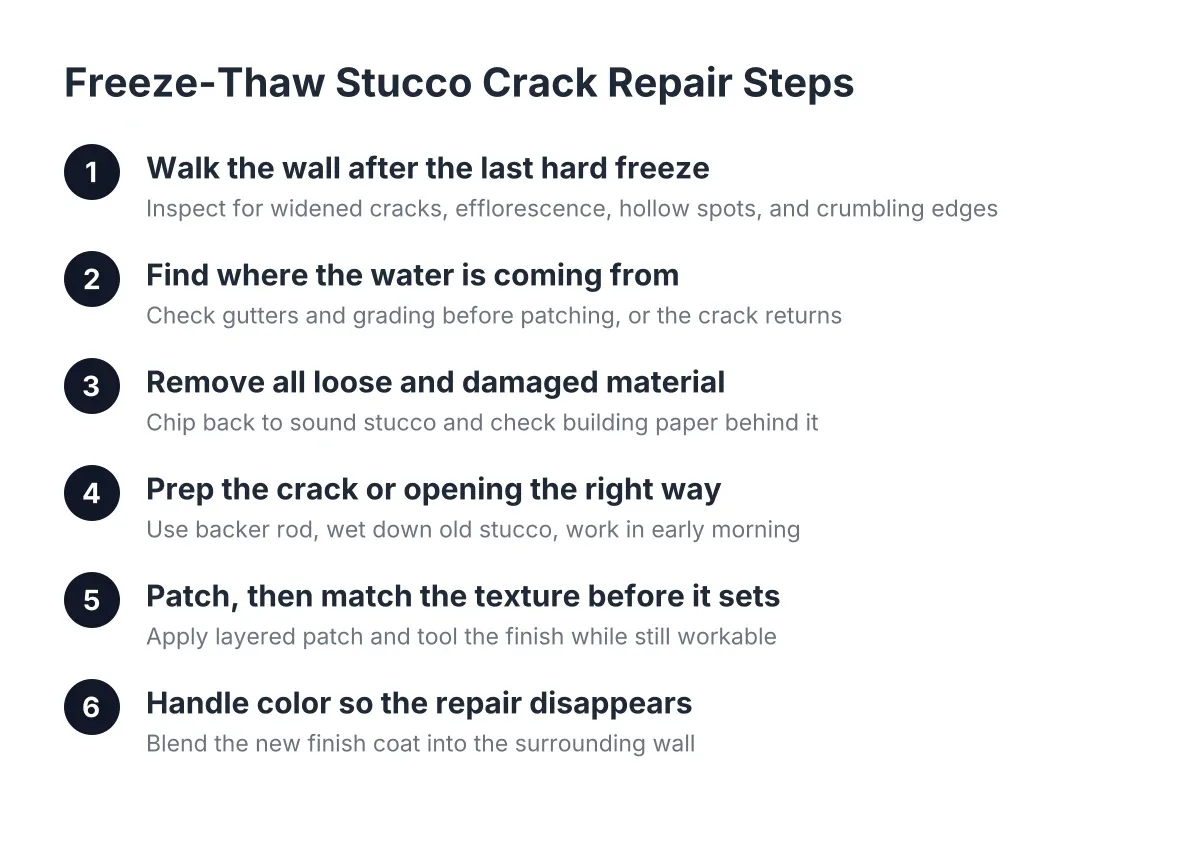
Patch material only holds if it bonds to clean, solid stucco. That means all loose or buckling material comes off first, even if it makes the hole bigger. Leaving loose stucco in place lets rain keep working on the wood underneath, and the patch fails from behind. The surface also needs to be free of dust, oils, and chalky paint residue; any contaminant blocks the bond.
Good crews also wet down the existing stucco before applying patch material. Dry, thirsty old stucco wicks moisture out of the fresh patch too fast, which weakens the cure and invites shrinkage cracks. Watching for this step is one of the easiest ways to tell whether a crew knows the material.
3. The right material and method for the crack
Hairline cracks under about a sixteenth of an inch often need an elastomeric sealant, not cement patch, because the sealant flexes with normal wall movement. Wider cracks and holes need real patching compound, and deep gaps may need backer rod first; according to Sika, backer rod is a closed-cell foam cord used to create a backing inside a crack before sealant goes on. Using cement patch where the wall needs flex, or caulk where the wall needs structure, is a common reason repairs fail early.
Modern polymer-modified, rapid-setting patch products can replace the old three-coat scratch-and-brown system in a single application for repair work. That speeds things up without shortcutting durability, as long as prep and cure conditions are right.
4. Curing conditions
Colorado weather is hard on fresh patch material. Hot afternoon sun pulls moisture out too fast, and freezing nights stop the cure entirely. Experienced crews schedule large crack repairs and caulking for early morning rather than the heat of the afternoon, and they avoid patching right before a hard freeze. A patch that cures badly is weaker for its whole life, even if it looks fine the day the crew leaves.
How Long Does Stucco Patch Material Take to Dry and Cure?
Stucco patch typically dries to the touch within a few hours, but full cure takes longer, often 24 to 72 hours for standard products and up to a week or more before painting in cool or humid weather. Rapid-set products shorten this window. Drying and curing are different things, and durability depends on the cure, not the surface feel.
Homeowners often confuse the two. Dry means the surface no longer feels tacky. Cured means the material has finished its chemical hardening and reached full strength. Painting or pressure-washing a patch that is dry but not cured traps moisture and weakens it. If your crew tells you to wait a few days before painting, that wait protects your repair, not their schedule.
The stucco patch lifespan extends significantly when curing conditions are right. Stucco patch cure time also depends on depth. A thin skim over a hairline crack cures fast. A deep patch filling a hole from hail or impact damage cures from the outside in and needs more time. As a general habit, follow the product's instructions on recoat and paint timing, and add margin if nights are dropping below 40 degrees.
One more note on materials: is stucco patch waterproof? Not by itself. Cured patch material sheds water like the rest of your stucco, but the paint or finish coat over it does most of the weatherproofing. That is another reason the paint step, done at the right time, matters to lifespan.
Storm Damage Changes the Patch Math
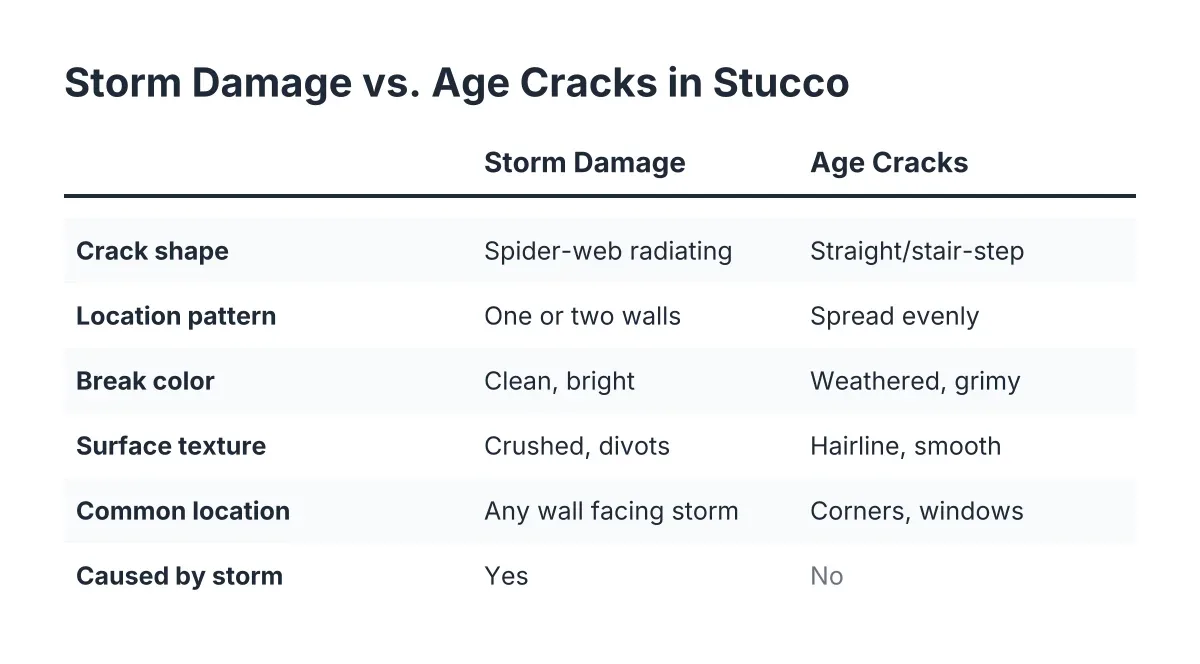
Hail and wind damage deserve their own section because they fail differently than settling cracks. A hailstone that hits stucco can leave a small chip on the surface and a fracture that spreads under the finish coat, invisible until it opens up months later. Patching only the visible chip means the hidden fracture keeps working, and the patch edge cracks.
Colorado sees a lot of this. The May 8, 2017 Front Range hailstorm caused $2.3 billion in insured damage, the state's costliest catastrophe, according to the National Insurance Crime Bureau. Colorado had the second-highest number of hail insurance claims in the U.S. from 2013-2015, totaling 182,591 claims, behind only Texas, according to the Rocky Mountain Insurance Information Association. Castle Rock sits squarely in that hail corridor, so storm damage stucco repair is not a rare event here; it is routine maintenance planning.
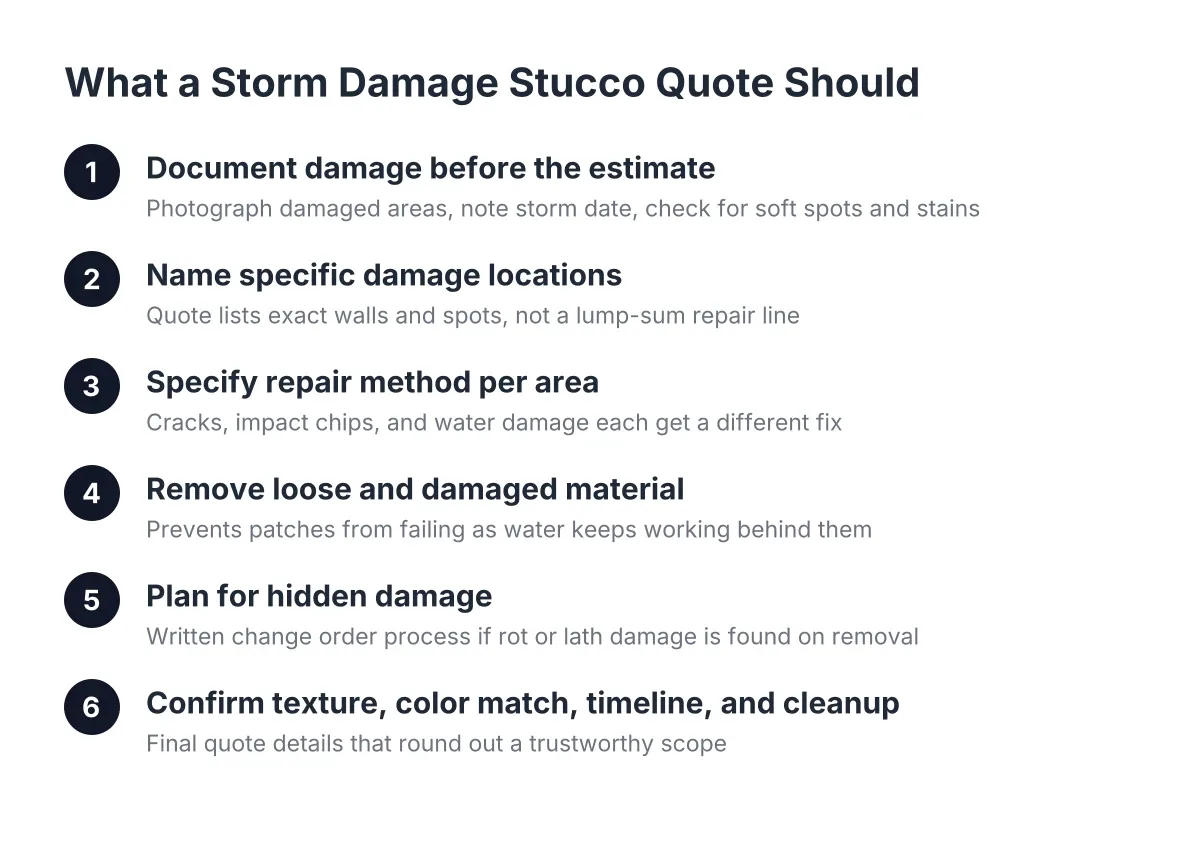
After a storm, a proper stucco storm damage inspection should cover more than the obvious dings. A crew that knows the material will tap-test around impact points to find delaminated areas, check window and door corners where cracks radiate, and look at flashing and weep screeds for wind damage. Documenting all of it with photos before repair matters, both for your own records and for any insurance adjuster reviewing a stucco claim.
Insurance timing also affects patch durability in a roundabout way. Homeowners waiting on a claim decision sometimes leave hail-fractured stucco exposed through a wet spring. Water gets into the fractures, the freeze-thaw cycle widens them, and a repair that could have been a few small patches becomes a section replacement. If a claim is pending, at minimum have loose material removed and the area temporarily sealed so the damage does not grow while paperwork moves. With Colorado home insurance premiums up 65% over the last five years partly due to hail, according to the National Association of Insurance Commissioners, keeping small damage small protects more than the wall.
Newer Homes Crack Too, and Sometimes Sooner
If your home is under five years old and already showing cracks, you are not imagining a problem. Stucco applied during fast-paced construction sometimes cures improperly, especially in hot, dry stretches, and defects show up within the first one to five years. Small cracks after the first coat of stucco are a normal part of curing during construction, but cracks appearing in the finished wall a year or three later usually point to settling, curing issues, or water paths that were never right.
Suppose a homeowner in Meridian bought a two-year-old build and now sees a crack spreading from a window corner after winter, with the builder warranty expired or the builder unresponsive. In that scenario, the repair question is the same as any other: find out why the corner cracked, fix that, then patch and match the texture. Window and door corners crack because those are the stress points where walls flex; if the flashing and sealant there are sound and the settling has slowed, a corner patch with texture matching should hold for years. A partial patch on a corner is quicker and cheaper than re-stuccoing the wall, but only if the underlying cause is handled too.
One caution for newer-home owners: do not wait years hoping a structural crack stabilizes on its own. Behind your stucco is a building paper layer that keeps water off the sheathing. Left exposed to flexing through an open crack for years, that paper turns brittle and can tear, and then you have water intrusion, not a cosmetic issue. The earlier article in this series on water damage behind stucco covers the warning signs in detail.
How to Tell If a Patch Was Done Right
You cannot see prep work after the fact, but you can watch for it during the job and judge the result afterward. A well-done patch shows a few tells:
- The crew removed loose and hollow-sounding material first, even where it widened the repair area
- They cleaned and dampened the surrounding stucco before applying patch material
- They used sealant with flex on hairline cracks and true patch compound on wider damage
- They matched your existing texture, whether that is a sand finish, lace, or dash, instead of leaving a smooth spot
- They told you to wait before painting, and gave a specific number of days based on weather
Texture matching is worth a separate mention. A patch that holds structurally but shows as a flat, obvious rectangle on your wall is only half a repair. Matching texture takes practice with a hawk and trowel, and it is one place where a crew focused on stucco all day beats a general exterior crew that patches stucco occasionally. Color matching follows the same logic; new material and old, sun-faded finish rarely match perfectly without a paint blend, and an honest contractor will tell you that up front rather than promise an invisible result.
How Long Should You Expect Your Patch to Last?
A properly prepped and cured stucco patch on a wall with no active moisture, settling, or vibration problem should last 15 to 20 years or longer, aging at the same rate as the surrounding stucco. Patches over unresolved problems commonly fail within one to three years. The patch material rarely fails; the conditions around it do.
Here is a realistic way to think about the ranges, framed as illustrative expectations rather than promises:
- Hairline crack, sealed with elastomeric sealant, cause was normal early settling that has slowed: expect 10 or more years, with the sealant flexing through seasonal movement.
- Impact hole from hail, patched after loose material was removed and fractures were mapped: expect the patch to last as long as the wall, since impact damage is a one-time event once repaired fully.
- Crack from ongoing water exposure, patched without fixing the gutter or grading: expect a repeat crack within a year or two, plus growing damage behind the wall.
- Corner crack from vibration or continued settling in a newer build, patched while movement is still active: expect the crack to telegraph back through within a few seasons, then hold once the house finishes settling and the repair is redone.
That last scenario is the honest trade-off worth naming. If your home is still settling, a patch now may need a touch-up later even with perfect workmanship. Some homeowners choose to seal the crack now to keep water out, knowing a final cosmetic repair comes after movement stops. That is a reasonable plan, not a failed repair, as long as everyone agrees on it going in.
Getting the Most Out of the Repair You Paid For
Once the patch is on the wall, a few habits stretch its life:
- Wait the full cure time before painting, and paint the patch; unpainted patch material weathers faster than the finished wall around it
- Keep sprinklers from hitting the wall, since repeated soaking is the slow killer of stucco patches
- Clean gutters and check downspout extensions each spring so roof water does not run down or pool against stucco
- Walk the exterior after each significant hailstorm and photograph anything new while the date is fresh, which helps with any future insurance conversation
- Watch shaded, damp walls for green or black growth; if it gets thick and embedded, it can take more than one cleaning treatment, so catch it early
In addition, keep a simple record of the repair: date, what was patched, what caused it, and what product was used. If a crack ever reappears near the patch, that record tells the next crew, or the same one, whether they are looking at a new problem or a returning one. For a newer home, that record also strengthens any remaining warranty conversation with your builder.
One limitation worth stating plainly: this guide covers cracks and patches in the stucco itself. If a crack is wide, steps in a stair pattern along a foundation line, or pairs with doors and windows that suddenly stick, have a structural engineer look before anyone patches anything. Stucco repair fixes the skin of the house; it cannot fix a foundation problem underneath, and covering one up delays the real fix.
The bottom line for Castle Rock homeowners is simple. How long a stucco patch holds is mostly decided before the patch material ever touches the wall: find the cause, fix the cause, prep the surface, and let the material cure on its own schedule. Get those four things right, and the crack you have been staring at becomes a spot you forget was ever there.
If you need stucco repair, Castle Rock Stucco Pros can help.
Prefer to talk it through? Call (720) 797-8506 — a quick call is usually the fastest way to get a straight answer for your situation.