Storm Damage vs. Age Cracks: Which Stucco Repairs Are Urgent in Colorado
After a hailstorm rolls through Castle Rock, homeowners face the same question: is that crack in the stucco from the storm, or was it there all along? Telling storm damage from age cracks matters for two reasons. First, it decides whether your insurance company owes you anything. Second, it tells you which repairs need attention now and which ones can wait for a dry week next month. Understanding stucco crack urgency is essential before you file.
This guide walks you through how to sort the two, step by step, the way a contractor who has walked walls with Colorado adjusters would do it. Hail is not a rare event here. Colorado had 182,591 hail insurance claims from 2013 to 2015, second only to Texas, according to Rocky Mountain Insurance Information Association. The May 2017 Front Range hailstorm alone caused $2.3 billion in insured damage, according to National Insurance Crime Bureau. Adjusters in this state see stucco claims constantly, and they know the difference between fresh impact damage and a five-year-old settling crack. You should too, before you file.
Step 1: Walk the Whole House Before You Touch Anything
Start with a full lap around the house within a few days of the storm, while the damage pattern is still fresh in your memory. Do not patch, paint, or pressure wash anything yet. Pressure washing in particular can force water behind the stucco layers, and once moisture gets behind a layered stucco wall it can grow into a larger structural problem over time.
Bring your phone and take wide shots of each wall first, then close-ups of anything suspicious. Work in the morning or late afternoon; low-angle light throws shadows across the texture and makes dents and cracks easier to see. Flat midday sun hides them.
Pay extra attention to the sides of the house that faced the storm. Hail rarely hits all four walls evenly. If damage shows up only on the west and north faces after a storm that blew in from that direction, that pattern itself is evidence.
Step 2: How to Recognize Storm Damage and Age Cracks on Stucco
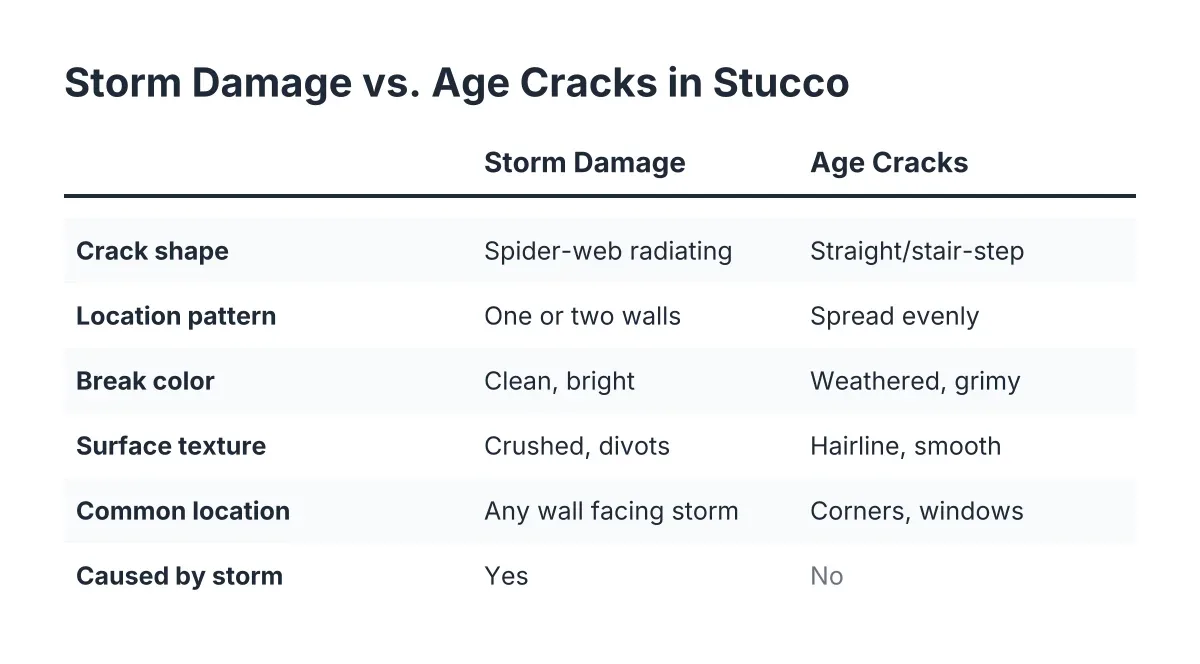
Storm damage on stucco looks like impact: round or half-moon chips, crushed spots in the texture, and cracks that radiate outward from a center point like a spider web. Age cracks look like movement: long, mostly straight or stair-stepping lines that follow windows, doors, corners, and the line where stucco meets the foundation.
Here are the tells, side by side:
- Hail and wind damage: circular divots, spatter marks in dirt or oxidized color, spider-web cracks radiating from a point, fresh white or bright material exposed inside the break, damage clustered on one or two walls.
- Age and settling cracks: hairline lines running from window corners, vertical cracks at wall corners, cracks along the foundation line, dirt or paint buildup inside the crack, damage spread evenly around the house.
The color inside the crack is a strong clue. A fresh break exposes clean, bright stucco. An old crack has weathered edges and grime worked into it. Adjusters look at exactly this when they decide whether a crack predates the storm.
One common age crack worth knowing: a corner crack where stucco sits on top of a hard concrete foundation. The foundation and the stucco expand and contract at different rates, and the softer stucco gives. That crack is usually cosmetic, not structural, and no storm caused it.
Step 3: Assessing Stucco Crack Urgency and When to Repair
Whether a crack came from hail or from age, urgency comes down to width, depth, and what sits behind it. A hairline surface crack sheds water fine for now. A wide, deep structural crack is an open door for Colorado's freeze-thaw cycles and spring rain. When assessing stucco crack urgency, you need to know what action is required immediately versus what can wait.
Use this rough triage:
- Fix within weeks: cracks wider than a credit card edge, spider-web impact zones where the texture is crushed, any spot where stucco is loose, hollow-sounding, or buckling, and any crack with staining or dampness around it.
- Fix this season: narrower structural cracks that are deep enough to need filler, and impact chips that broke through the finish coat.
- Monitor and handle with repainting: true hairline surface cracks with no depth. A good quality exterior paint floods and seals these; they do not need caulk forced into them.
Loose or buckling stucco always goes to the top of the list. Any competent repair starts by removing loose material, because leaving it in place lets rain keep swelling the wood underneath and the damage compounds every wet week you wait.
The quiet danger with waiting on wider cracks is the building paper behind the stucco. Let a structural crack sit for years and that paper gets brittle. Then normal wall flexing can tear it, and now water is reaching sheathing and framing instead of draining harmlessly. What started as a $500 crack repair becomes a water damage repair measured in thousands.
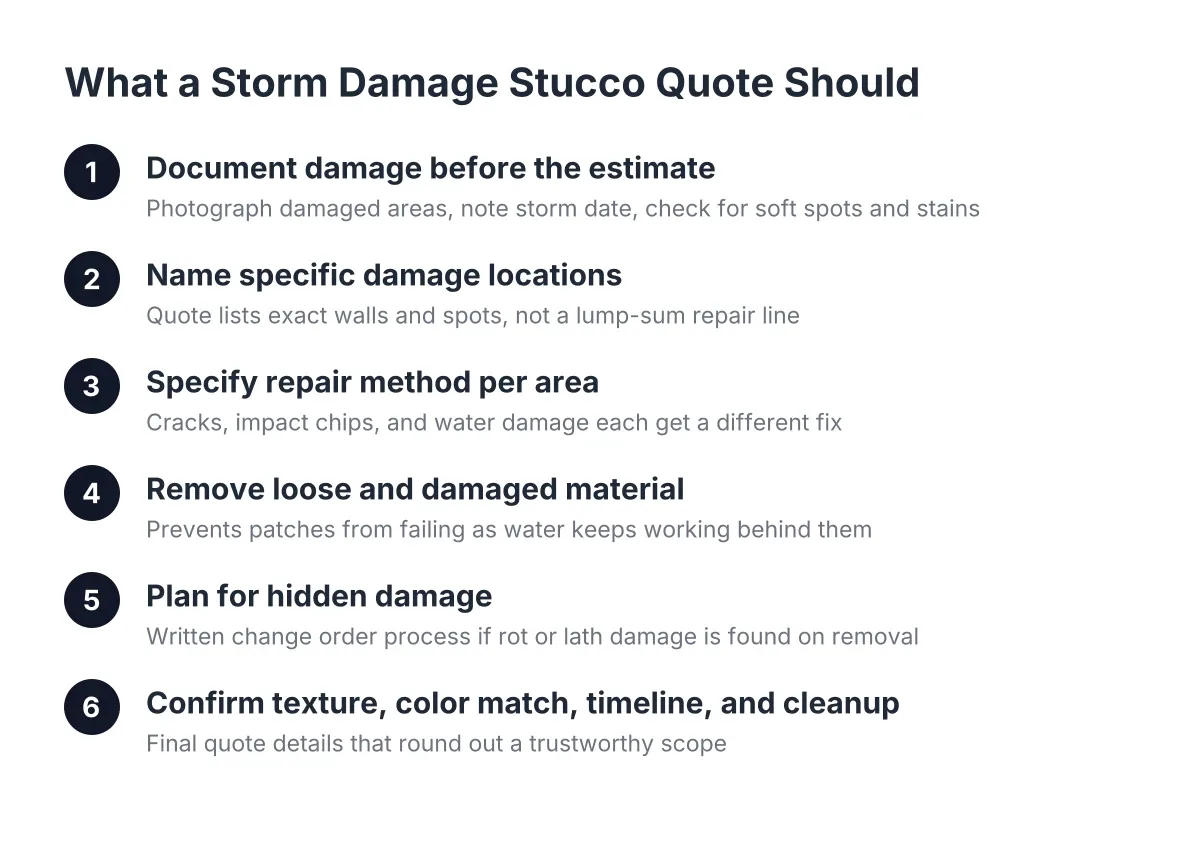
Step 4: Document Storm Damage and Age Cracks Before You File a Claim
Document everything before you call your insurance company, and be honest with yourself about which cracks are old. Adjusters who work Colorado hail claims see hundreds of stucco walls a season. Claiming a weathered settling crack as fresh hail damage does not work, and it can sour the adjuster on the legitimate damage on the same wall.
Build a simple file:
- Date-stamped wide photos of every wall, plus close-ups with a coin or tape measure for scale.
- Notes on which direction the storm came from and which walls took the hit.
- Any older photos of the house that show walls before the storm; listing photos and holiday pictures work.
- Photos of collateral damage such as dented gutters, downspouts, window screens, or AC fins on the same side. These corroborate the hail.
Insurance generally covers sudden storm damage, not gradual wear. That line is exactly why separating storm damage from age cracks up front saves you a denied claim and a frustrating appeal. Claims pressure is real in this state; Colorado home insurance premiums rose 65% over the last five years with hail cited as a major driver, according to the National Association of Insurance Commissioners. Carriers scrutinize hail claims accordingly, so a clean, honest file helps yours move.
For example, suppose a homeowner in Stonegate with a four-year-old build finds spider-web impacts across the west wall after a June storm, plus a straight hairline crack running down from a bedroom window corner on the south side. In that scenario, the west wall damage belongs in the claim with photos and gutter dents as backup. The window crack is a settling crack, likely present since the first year, and belongs on the homeowner's own repair list, possibly as a builder warranty conversation if the home is under five years old and the builder still responds.
Step 5: Get a Stucco-Specific Inspection Before the Adjuster Visit
Have someone who works with stucco every day look at the wall before or alongside the adjuster visit. Roofers and general siding crews handle most storm claims, and stucco is often an afterthought on their scope sheet. A stucco-focused inspection catches crushed brown coat under an intact-looking finish, hollow delaminated sections, and moisture readings the eye misses.
This matters for scope. An adjuster may write up visible chips only, when the real repair includes cutting back to sound material and rebuilding the layers. If the written scope only covers a skim patch, you end up with the exact problem the botched-patch crowd knows well: a repair that fails or shows within a year.
There is a limit to what any inspection can promise, though. On a wall that is decades old, heavily weathered, or repainted an off-formula color, a truly invisible blend may not be achievable, and an honest contractor will say so before work starts. If cracks are wide, growing, or paired with sticking doors and windows, bring in a structural professional before anyone patches anything.
Step 6: Plan the Repair Around Colorado Weather and the Right Sequence
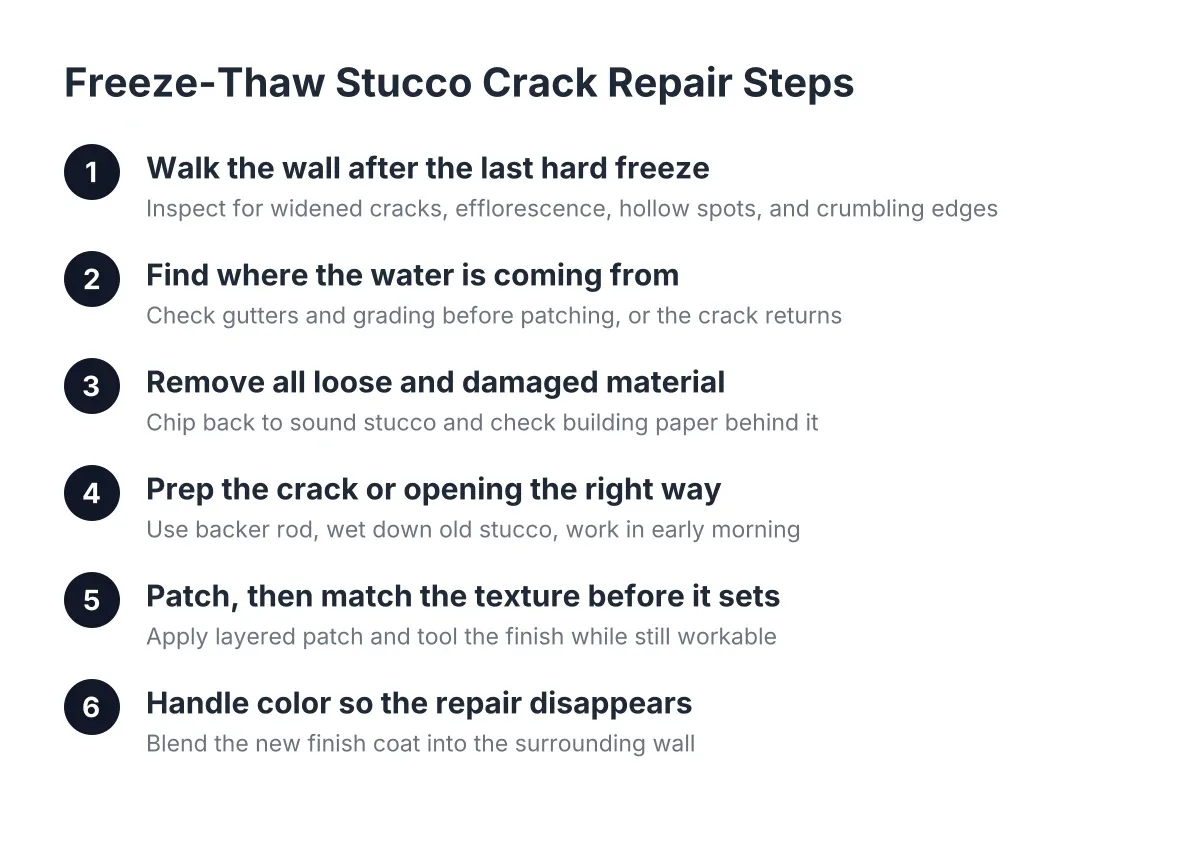
Schedule storm damage stucco repair for a stretch of dry, moderate weather, and get urgent items done before fall freeze-thaw sets in. Timing affects quality, not just convenience. Large crack repairs that involve caulking go better in the early morning; hot afternoon sun makes caulk cure too fast and behave poorly.
The sequence matters as much as the timing. A sound repair on storm-hit stucco follows this order:
- Remove all loose, cracked, or buckling material back to solid stucco.
- Inspect and repair the building paper and lath underneath if the break went that deep.
- For structural cracks, install backer rod, a closed-cell foam cord that gives the sealant a proper backing inside the crack, according to Sika, then apply sealant over it. Paint alone will not hold a wide crack.
- Rebuild the base and brown coats, working from the bottom of the repair upward.
- Float the finish coat and match the texture to the surrounding wall, then match color across the whole affected section rather than dabbing paint on the patch alone.
Also fix the cause, not just the crack. If an AC unit sits against the wall transmitting vibration, or a downspout dumps water that pools against the foundation, the same corner will crack again no matter how clean the patch is. A partial corner repair is a fair, cheaper alternative to re-stuccoing a whole wall, but only if the drainage or vibration problem gets handled too.
The Bottom Line for Castle Rock Homeowners
Storm damage and age cracks call for different paperwork but often the same trade skills. Impact damage with crushed texture, loose material, or moisture behind it is urgent; file it, document it honestly, and repair it before the weather turns. Hairline age cracks can wait for a planned repaint, while wider settling cracks deserve backer rod and sealant this season, not next year.
Colorado hail is not going anywhere. Colorado Springs, Denver, and Greeley sit among the top 10 U.S. cities for hail loss claims, together representing 10% of national hail claims from 2018 to 2020, according to Rocky Mountain Insurance Information Association. Castle Rock sits in the same corridor. Knowing which cracks are storm claims and which are maintenance puts you ahead of the next storm instead of behind the last one.
If you need stucco repair, Castle Rock Stucco Pros can help.
Prefer to talk it through? Call (720) 797-8506 — a quick call is usually the fastest way to get a straight answer for your situation.