Stucco Repair After Hail: How to Find Impact Zones and Judge the Damage
Hail hits Castle Rock hard and often. If a storm just rolled through your neighborhood, you need to know two things fast: where your stucco got hit, and how bad it is. This guide walks you through stucco repair after hail, step by step, the way a contractor who has worked alongside Colorado insurance adjusters would walk your walls with you. When conducting a hail damage inspection of stucco, you'll need to identify impact zones before the adjuster arrives. Hail claims here are not rare or exotic. The May 8, 2017 Front Range hailstorm caused $2.3 billion in insured damage, the costliest catastrophe in state history, according to the National Insurance Crime Bureau. Adjusters in Douglas County know stucco damage when they see it. You should too, before they show up.
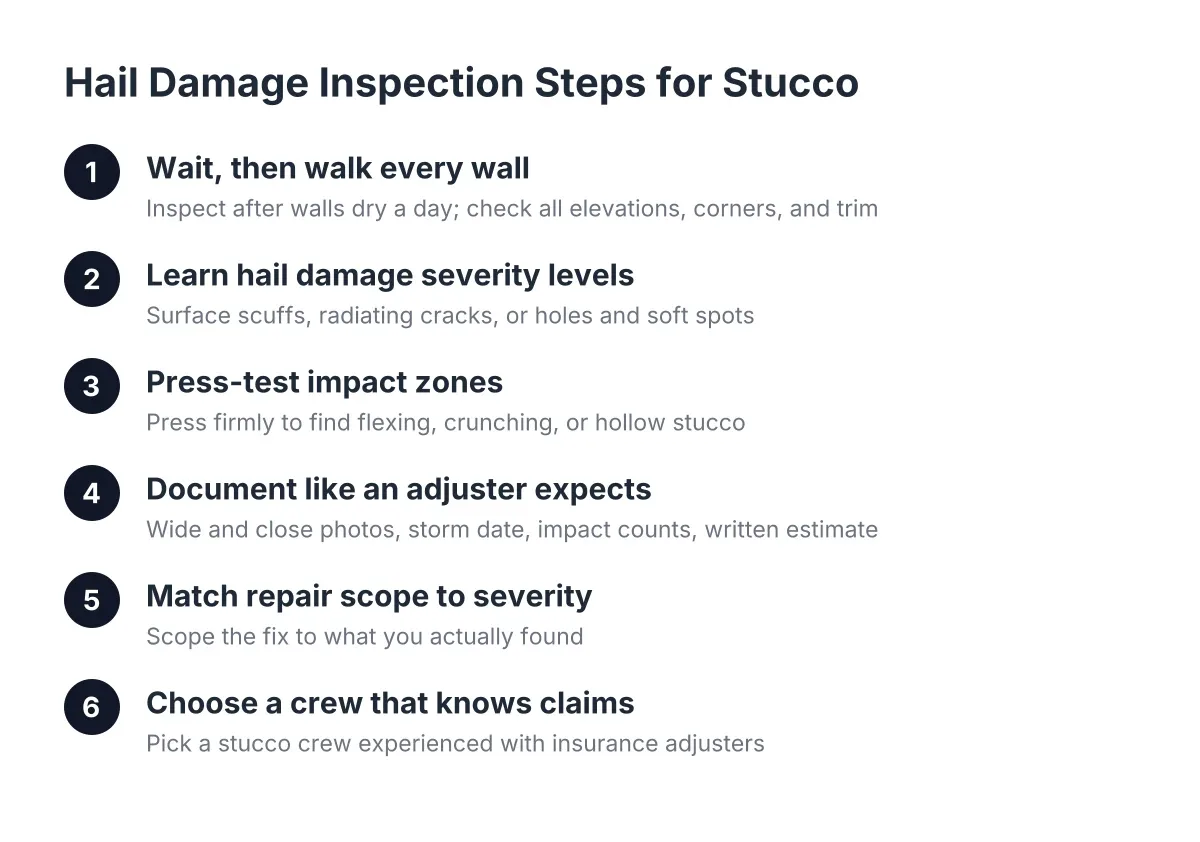
Step 1: Wait for Safe Conditions, Then Walk Every Wall
Start your inspection after the storm has fully passed and the walls have had a day to dry. Wet stucco hides chalky impact marks and can make sound stucco look stained.
Walk the full perimeter of the house, not just the side that faces the street. Hail rarely hits evenly. Wind drives it against one or two elevations, usually the west and south faces along the Front Range, while the sheltered sides stay clean. Check these zones in order:
- Walls facing the direction the storm came from
- Corners and edges, where stucco is thinnest and most exposed
- Areas around windows, sills, and door trim
- Sections near downspouts and grade level, where water already collects
- Any wall next to mechanical equipment like an AC unit, since vibration cracks there can widen after impact
Bring your phone and take wide shots of each wall before you look at anything close up. You will need these photos in Step 4.
Step 2: Learn What Hail Damage on Stucco Actually Looks Like
Hail damage to stucco falls into three levels of severity, and knowing the difference tells you whether you are looking at a cosmetic touch-up or a water problem waiting to happen.
Surface Scuffs and Chipped Finish Coat
The lightest damage looks like small circular chips or crushed spots in the finish texture, often with a lighter color showing underneath. The base coat is intact. These are cosmetic, but on a textured Castle Rock home they still need proper texture matching or the patch will read like a polka dot from the driveway.
Cracks Radiating from Impact Points
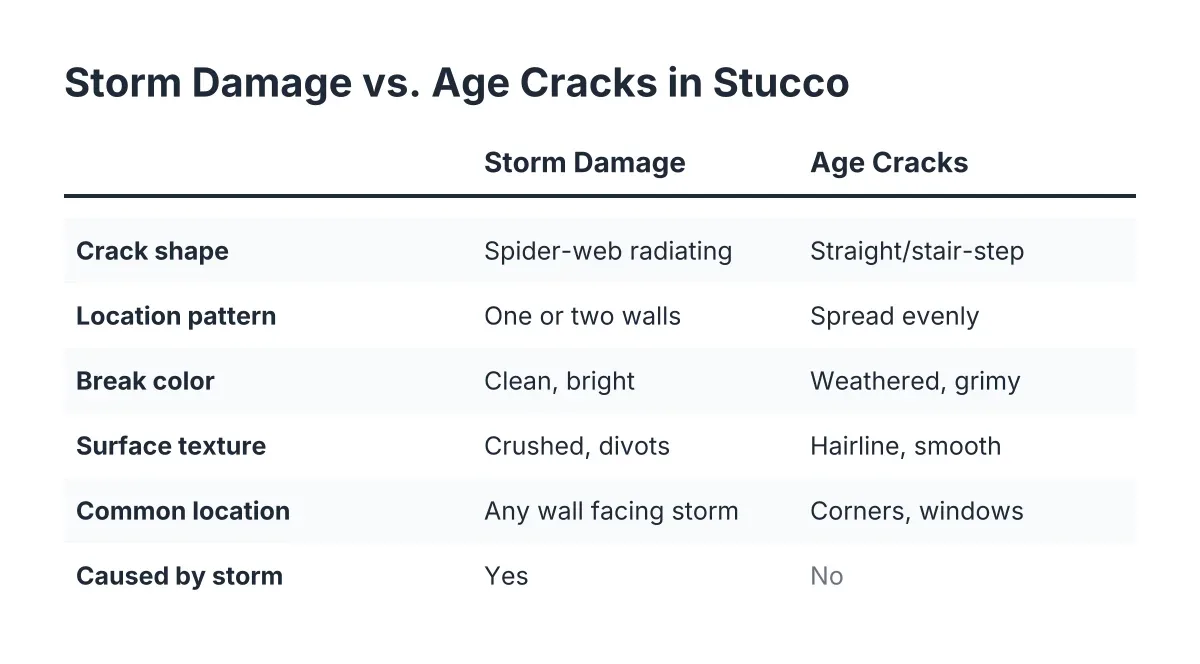
Moderate hail leaves spider-web or star-shaped cracks spreading out from a center point. This is the pattern adjusters look for, because it separates hail impact from ordinary settling cracks, which tend to run in straight or stair-step lines from windows and corners. Radiating cracks mean the impact broke through more than the finish coat. Water can now reach the layers behind it.
Holes, Crushed Spots, and Soft Areas
Severe hits punch through to the lath or leave a spot that feels soft or crumbly when you press it. This is the damage that matters most. Behind that hole sits building paper, and behind the paper sits wood framing. Once the paper is torn or the stucco is loose, every rain after the storm pushes water deeper into the wall.
Step 3: Press-Test the Impact Zones for Hidden Water Paths
Next, go back to every impact mark you found and press firmly around it with your palm. Sound stucco feels rigid. Damaged stucco flexes, crunches, or feels hollow. A thorough hail damage inspection of stucco requires testing what appears solid to the touch.
This step matters because hail damage and water damage travel together. A hit that cracked the finish coat in June becomes a dark stain spreading below a window by September. If you already had a stain or a soft spot near a sill before the storm, hail impacts nearby make that area the first priority, not the last.
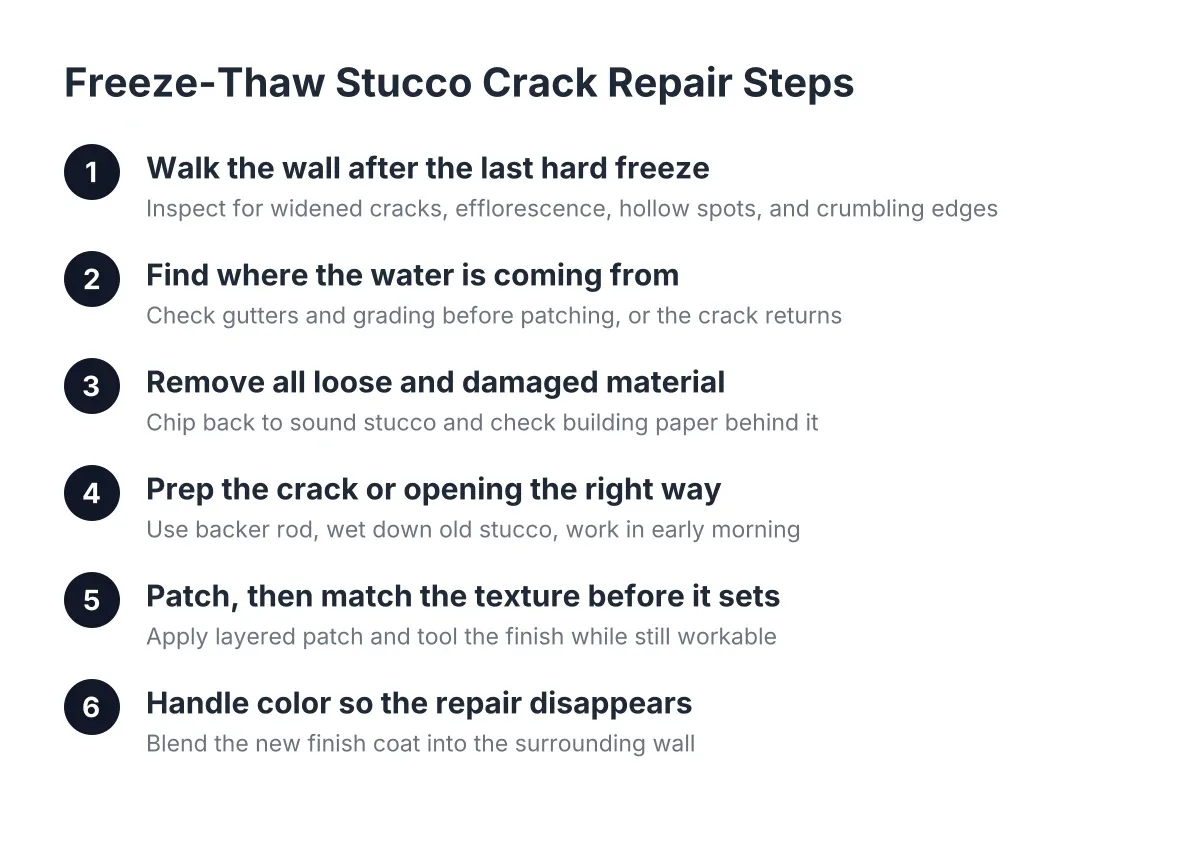
Pay attention to anything loose or starting to buckle. Loose material cannot stay on the wall. Rain gets behind it, the wood underneath swells, and the damaged zone grows every wet week you wait. Any competent crew doing stucco repair after hail will remove loose material before patching, so a wall with buckling sections is a bigger repair scope than a wall with the same number of impacts but tight stucco. Knowing that before the estimate arrives keeps you from being surprised by it.
One honest caution: pressing on the wall tells you the surface condition, not what the framing looks like. If a spot is soft, smells musty from inside, or sits near a long-ignored crack, have a professional open it up. Older cracks left for years let the building paper behind them turn brittle, and a hailstorm can be the event that finally tears it.
Step 4: Document Everything the Way an Adjuster Will Want It
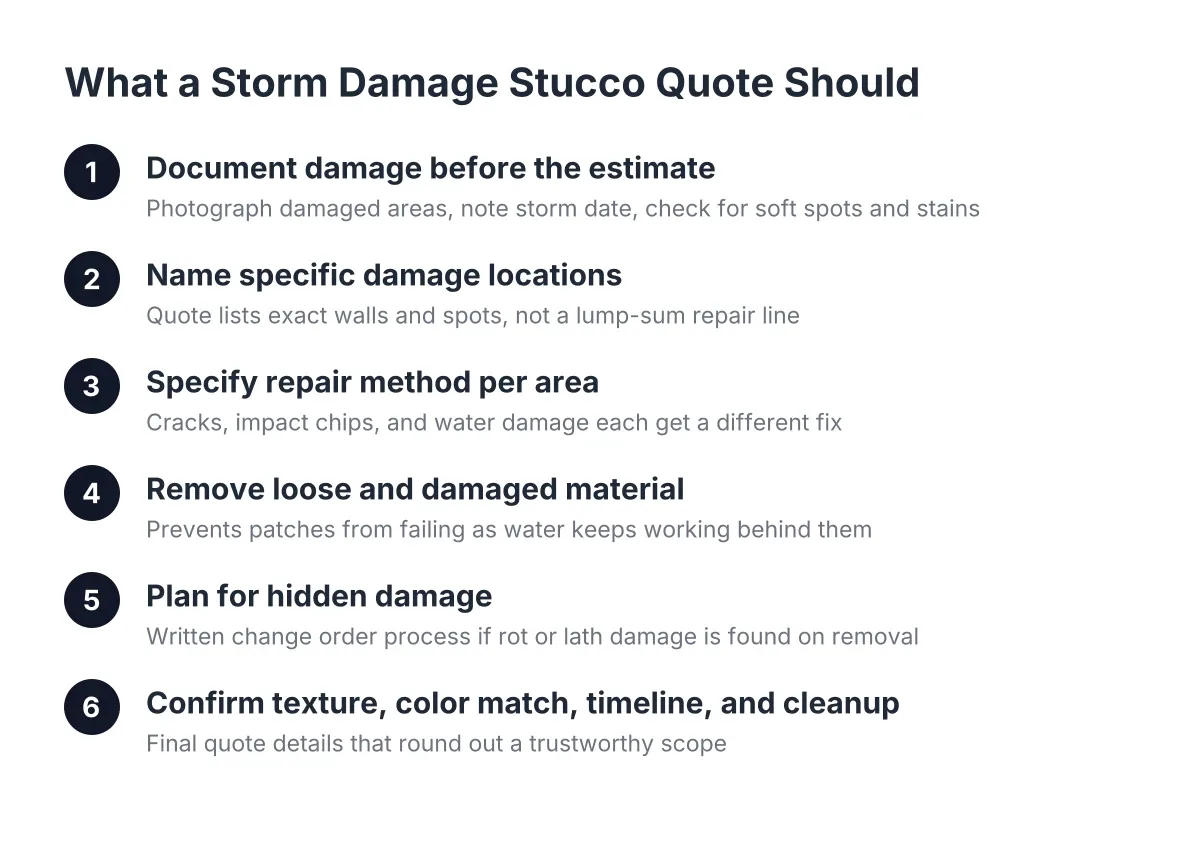
Before anyone touches the wall, build your evidence file. Insurance adjusters on a stucco claim work from photos, dates, and measurements, so give them all three.
- Photograph each wall wide, then each impact zone close, with something for scale like a coin or tape measure.
- Note the storm date. Your insurer will match your claim against verified weather data for your zip code.
- Count and mark impact points per elevation. Chalk circles show up well in photos.
- Photograph collateral damage: dented gutters, downspouts, window screens, and AC fins. These corroborate the hail size and direction.
- Get a written repair estimate that breaks out scope by wall section, not one lump number.
Colorado insurers see heavy hail claim volume, with 182,591 hail claims filed statewide from 2013 to 2015, second only to Texas, according to the Rocky Mountain Insurance Information Association. They also watch for inflated claims; the same organization reports questionable hail claim submissions rose 34% between 2018 and 2020 while total claims rose only 2%. Clean, dated, specific documentation puts your claim in the easy pile.
Does Insurance Cover Hail Damage Inspection of Stucco After a Storm?
Standard homeowners policies generally cover sudden storm damage, including hail impacts to stucco siding, subject to your deductible. What they do not cover is pre-existing wear, old settling cracks, or damage from long-term water intrusion that predates the storm. That line between storm damage and old damage is exactly where documentation earns its keep, and it is why the radiating-crack pattern from Step 2 matters. With Colorado home insurance premiums up 65% over the last five years and hail cited as a major driver, according to the National Association of Insurance Commissioners, adjusters in 2026 are looking closely. A contractor's estimate that separates hail impacts from unrelated cracks helps your claim rather than muddying it.
Step 5: Match the Repair Scope to the Severity You Found
Now use your Step 2 findings to sort the work. Not every impact needs the same fix, and paying for full re-stucco on a wall that needs stucco patching wastes money in the other direction.
For chipped finish coat, a stucco patch repair with careful texture matching handles it. On a knockdown or dash finish, the crew sprays finish coat onto the patched spot and lightly trowels it to blend with the surrounding wall. A patch that stands out later usually means someone skipped that blending step or did not identify your original finish type.
For radiating cracks, expect crack repair that opens the crack slightly, fills it properly, and refinishes the surface. A quick smear of caulk over a hail crack is the repair that fails first. Proper repair of hail damage to stucco includes opening and filling cracks rather than simply covering them.
For holes and soft zones, the damaged stucco comes off down to sound material, torn building paper gets replaced, and the wall gets rebuilt in layers, working from the bottom of the repair upward. On a badly hit corner, the cleaner long-term fix is often removing and repatching the full wall section from corner to corner rather than dotting patches across it. A spot patch there is faster and cheaper, and it can be a reasonable choice, but only if the underlying cause, like poor drainage pooling water at the foundation, gets corrected too.
Suppose a homeowner in Castle Rock finds fifteen chip marks on the west wall, three radiating cracks near a bedroom window, and one soft spot below a downspout after a July storm. In that scenario, the chips are cosmetic patch work, the cracks are moderate repairs, and the soft spot is the item that cannot wait, because it was likely wet before the hail ever fell. A written estimate should reflect those three tiers separately so the adjuster can approve each on its own merits.
Step 6: Choose a Crew That Knows Stucco and Knows Claims
Finally, pick who does the work with the same care you used inspecting it. Storm damage stucco repair sits at the intersection of two skills: matching your home's existing color and texture, and writing scope in language an adjuster can approve without a fight.
When you search "stucco repair near me" after a storm, sort the results with a few questions:
- Do they repair stucco specifically, or is stucco one line on a long list of siding work?
- Will they explain what is wrong before proposing demo? Be skeptical of anyone who wants to open the wall first and explain second.
- Can they describe how they will match your texture, not just fill the hole?
- Will their estimate break out scope by elevation and severity for your claim?
- Are they local enough that a callback about the patch six months from now reaches a person, not a call center?
A local crew that has stood in Castle Rock driveways with adjusters knows which damage patterns get approved and which get flagged. That knowledge does not change what happened to your wall, but it changes how smoothly the repair gets funded and done before the next storm season tests the patch.
Storms will keep coming; Colorado Springs, Denver, and Greeley all rank among the top 10 U.S. cities for hail loss claims, representing 10% of total claims from 2018 to 2020, according to the Rocky Mountain Insurance Information Association, and Castle Rock sits in the same corridor. Walk your walls after every serious storm, document what you find, and fix impact damage while it is still an exterior stucco repair instead of a framing problem.
If you need stucco repair, Castle Rock Stucco Pros can help.
Prefer to talk it through? Call (720) 797-8506 — a quick call is usually the fastest way to get a straight answer for your situation.