Stucco Repair Material Selection for Colorado Storms: 8 Choices That Decide How Long Your Patch Lasts
After a hailstorm rolls through Castle Rock, the repair itself is only half the decision. The other half is stucco repair material selection, and it matters more here than in milder climates. A patch that holds up fine in Phoenix can crack out in two Colorado winters. If you are staring at a crack or a field of hail dings and trying to decide what to approve before you list the house or before the next storm hits, this list walks through the material choices that separate a repair that lasts from one you pay for twice.
Colorado punishes bad material choices. The state had the second-highest number of hail insurance claims in the U.S. from 2013 to 2015, totaling 182,591 claims, according to Rocky Mountain Insurance Information Association. The May 8, 2017 Front Range hailstorm alone caused $2.3 billion in insured damage, according to National Insurance Crime Bureau. Add freeze-thaw cycles, high-altitude sun, and 40-degree daily temperature swings, and the mix in the bucket matters as much as the crew holding the trowel.
Here are eight material decisions a good local crew makes on every storm damage repair, and what each one means for how long the fix lasts.
1. Polymer-Modified Patch Mixes: Stucco Repair Material Selection for Storm Damage
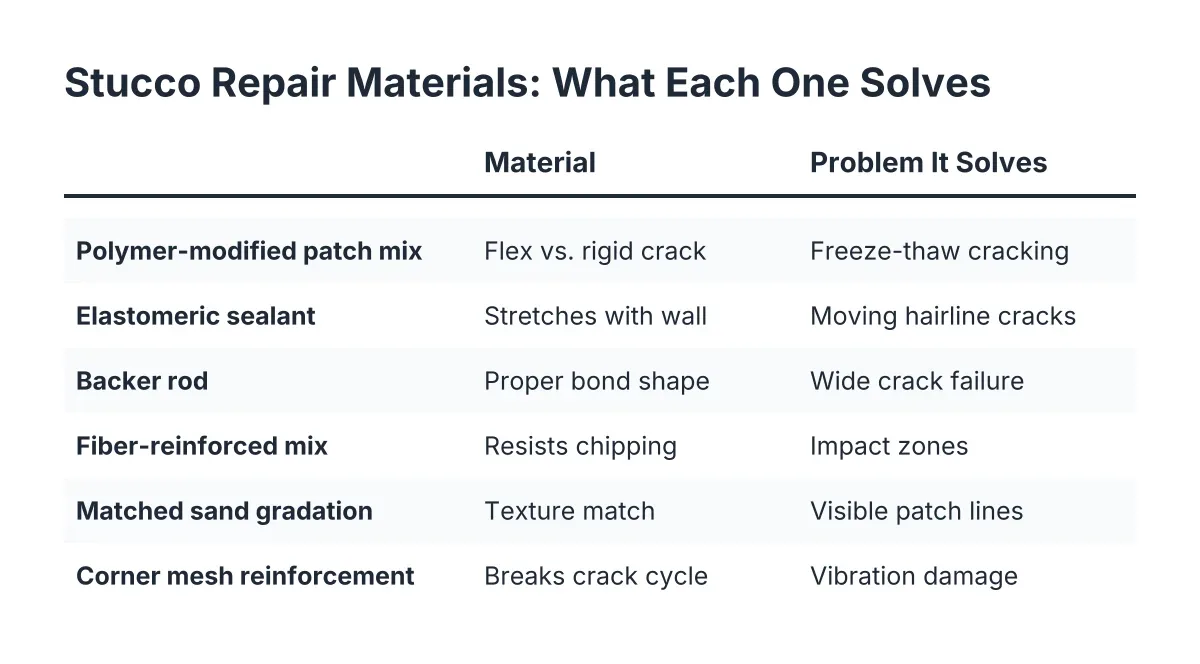
For most hail and wind damage repairs in Castle Rock, CO, a polymer-modified stucco patch outperforms a plain Portland cement mix. The polymers let the cured patch flex slightly as the wall expands and contracts through Colorado's freeze-thaw cycles, instead of cracking along the edge of the repair. Plain cement patches are rigid, and rigid patches tend to telegraph a hairline crack right at the bond line within a season or two.
There is a practical bonus for pre-listing sellers on a timeline. Polymer-modified, rapid-setting products can replace the traditional three-coat system with a single application for repair work. That means no separate scratch and brown coats, which cuts a multi-day job down and gets the wall ready for texture and color sooner. If your realtor flagged stucco damage 45 days before listing, this is the material category that keeps you on schedule.
2. Elastomeric Sealants for Cracks That Move
Hairline cracks from settling or storm flexing need a sealant that stretches, not a hard filler that snaps. Elastomeric stucco sealants stay flexible after curing, so when the wall moves a fraction of an inch in a January cold snap, the sealant moves with it. A rigid filler in the same crack pops loose, and now water has a path behind your stucco siding again.
Timing matters with these products in Colorado. Larger crack repairs with sealant go better in the early morning than in hot afternoon sun, because heat makes the material cure too fast and behave poorly in the joint. A crew that schedules crack work around the weather, not just around their calendar, is telling you something about how they handle materials.
3. Backer Rod: The Cheap Material That Makes Wide Cracks Hold
Backer rod is a closed-cell foam cord pressed into a crack before sealant goes on, and according to Sika, it creates the backing or foundation the sealant needs inside the joint. Without it, sealant in a wide crack bonds to three surfaces instead of two and tears itself apart as the wall moves. With it, the sealant forms the right shape and stretches the way it was designed to.
It costs almost nothing, which is exactly why it gets skipped. If you are comparing two quotes for stucco crack repair in Castle Rock and one crew mentions backer rod for your wider cracks while the other just says "we'll caulk it," you have learned something useful about both.
4. Fiber-Reinforced Mixes and Stucco Repair Material Selection for Impact Zones
Hail damage to stucco in Castle Rock tends to concentrate on west and south-facing walls, on corners, and on the lower few feet where bounce-back and ground debris hit. For those zones, fiber-reinforced patch material earns its cost. Properly cured fiber-reinforced repairs flex with adjoining materials and resist chipping from everyday impacts, like a lawn mower clipping a corner or a kid's bike leaning against the wall.
This is a targeted upgrade, not a whole-house decision. A smart approach uses fiber reinforcement where impacts recur and standard polymer-modified mix everywhere else, which keeps the repair budget pointed at visible, vulnerable spots. For a seller spending $500 to $4,000 on targeted fixes before listing, that kind of triage is the whole game.
5. Match the Sand to the Texture, Not Just the Color
Texture matching starts in the bag, not on the wall. The fineness of the sand in the repair mix has to match the texture of your existing finish; coarse sand on a fine sand-float wall sticks out from the curb no matter how well the color matches. A patch that is the right color but the wrong grain reads as "repaired here" to every buyer and inspector who walks the property.
This is where a crew focused on stucco shows its value over a general handyman service. Color and texture matching is a material decision first and a technique decision second. Ask any crew quoting your repair what sand gradation they plan to use and how they will match your finish; a specific answer is a good sign.
6. Mesh and Corner Reinforcement Where Walls Take Abuse
Corner damage on stucco homes often traces back to vibration from nearby mechanical equipment, like an air conditioning condenser humming against the wall for years, made worse by poor drainage pooling water at the foundation. Patching that corner without corner mesh means the same vibration cracks the same spot again. Embedding metal or fiberglass corner reinforcement in the new material breaks that cycle.
The materials themselves are not exotic. Patch compound, latex additive, and corner mesh are stocked at general hardware stores. What you are paying a pro for is knowing which corners need reinforcement, removing all the loose material first, and building the repair from the bottom up so each lift supports the next.
7. Do Not Forget What Is Behind the Stucco
The building paper behind your stucco is a material choice too, and on older Castle Rock homes it is often the weakest link. That paper gets brittle with age, the way something bakes and hardens in an oven, especially after decades of rain cycles. If a structural crack sits open for years, normal wall flexing can tear that brittle paper, and then you are dealing with water damage inside the wall, not just a surface fix.
Therefore, any storm damage stucco repair that opens the wall should include replacing the paper and any damaged lath in the repair area, not just skimming new material over old problems. Before anything goes back on, all loose or buckling stucco has to come off; leaving it in place lets rain keep expanding the wood behind it and the damage keeps growing under a patch that looks fine. If a quote does not mention what happens behind the surface, ask.
8. Finish Coats That Survive Colorado Sun and Freeze
The final coat is what buyers and adjusters see, and it faces the harshest exposure. At Castle Rock's elevation, UV breaks down cheap finish coatings fast, and trapped moisture in a non-breathable coating spalls off in freeze-thaw. Acrylic finish coats hold color well and shed water, while traditional cement-based color coats breathe better on older walls. The right call depends on what is already on your house, which is another reason material selection for stucco repair starts with looking at the existing wall, not with whatever is on the truck.
One honest limitation: no finish coat makes a repair fully invisible from every angle in every light, especially on a wall with decades of sun fading. A good texture and color match gets close enough that an inspector or buyer does not flag it, and that is the realistic standard to hold a crew to.
How Material Choices Fit a Pre-Listing Timeline in Castle Rock, CO
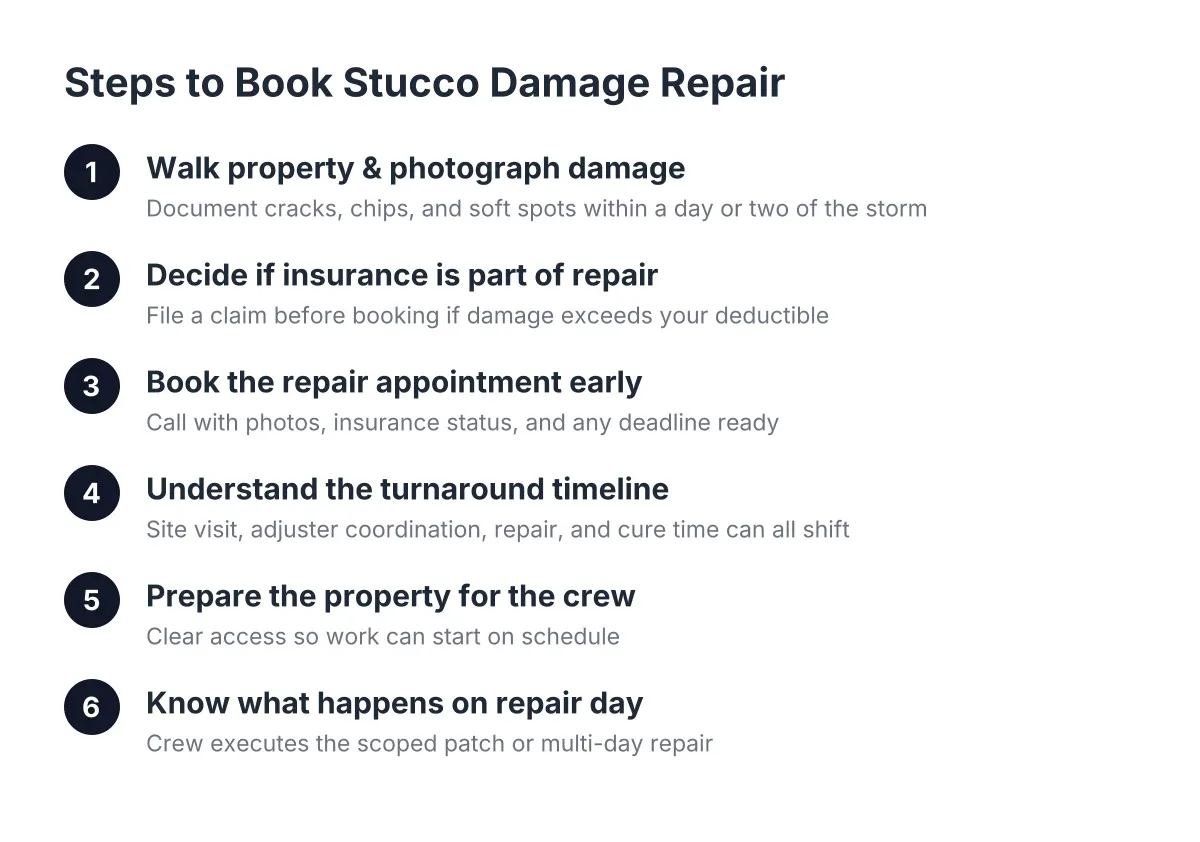
Suppose a homeowner in The Pinery gets a pre-listing inspection back with "stucco cracking and impact damage, southwest elevation" flagged, with a listing date six weeks out. In that scenario, the material plan might look like this:
- Elastomeric sealant over backer rod for the two wider settling cracks near the window corners
- Rapid-setting polymer-modified patch for the hail impact spots, applied in one coat instead of three
- Corner mesh embedded at the chipped corner near the AC unit
- A texture pass with sand matched to the existing finish, then a color coat blended to the surrounding wall
As an illustrative estimate, targeted work like that often lands in the low four figures rather than the cost of re-stuccoing a full elevation, and the rapid-setting materials keep the job to days instead of weeks. The exact number depends on wall access, how much loose material has to come off, and what the paper behind it looks like once the wall is open.
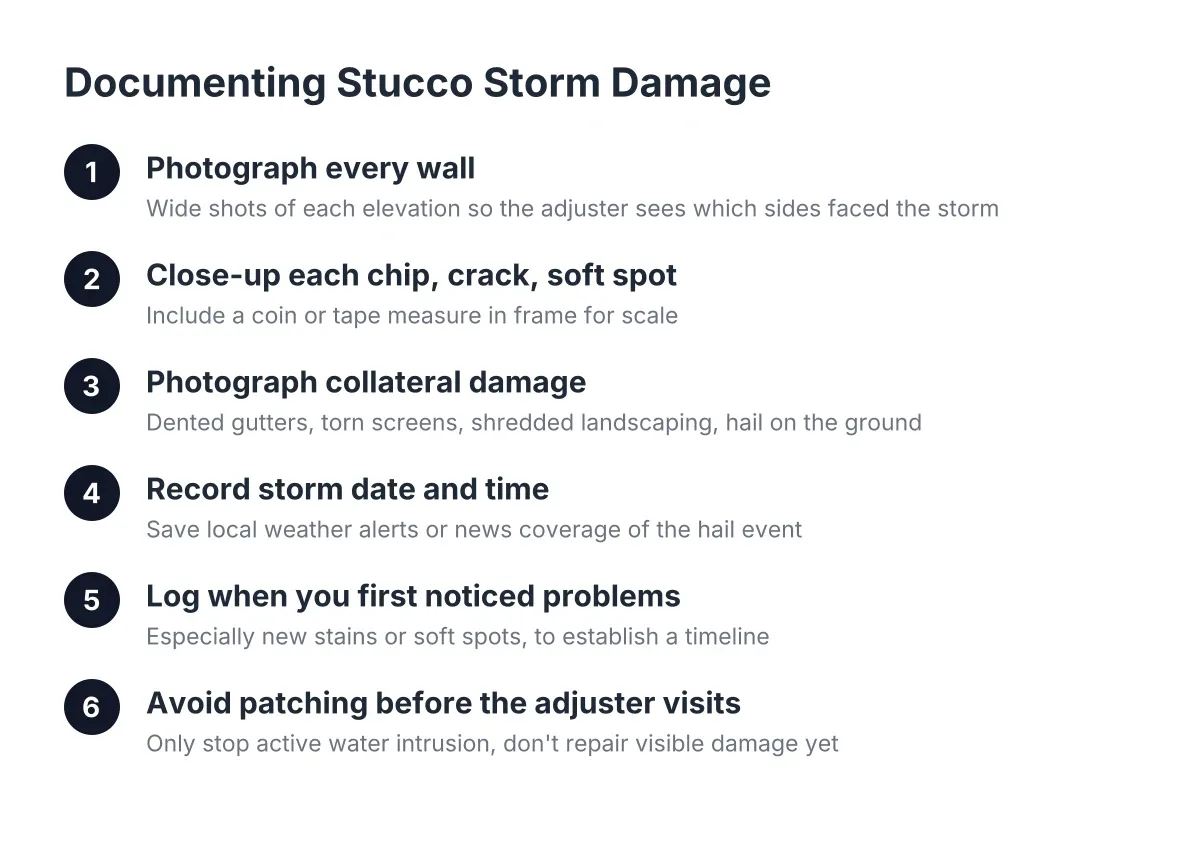
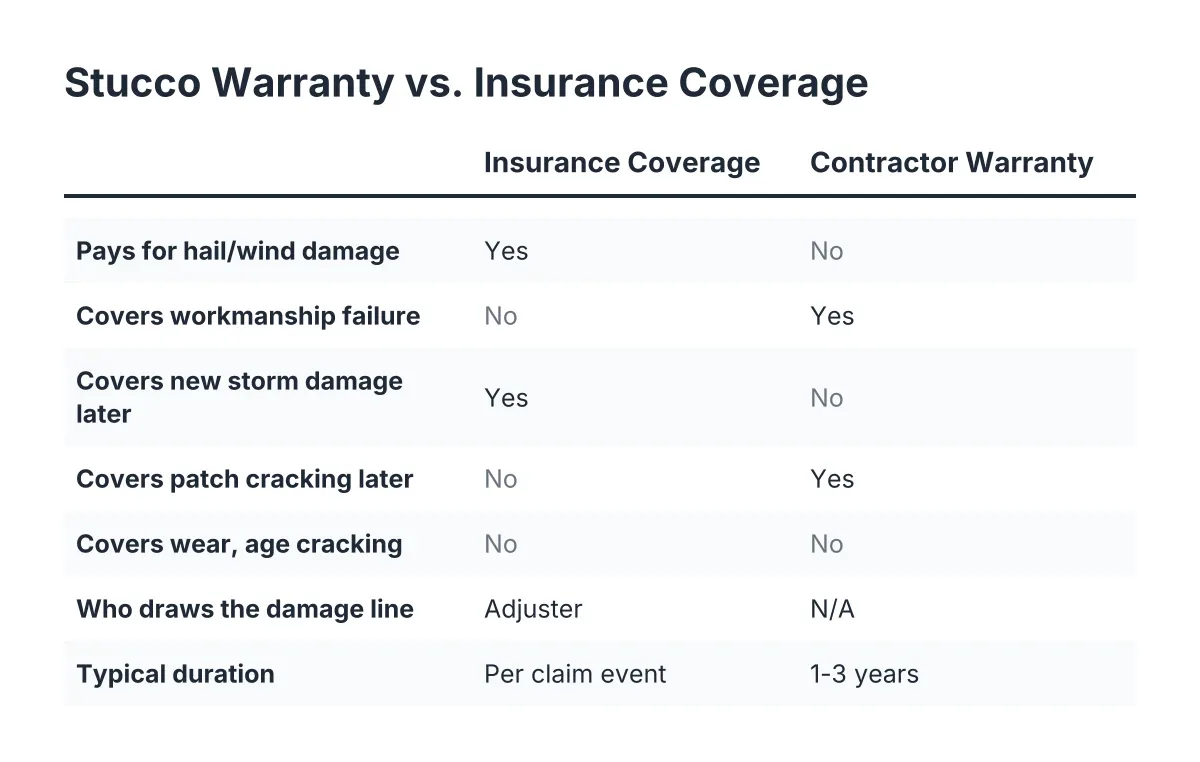
Insurance can change the math too. With Colorado home insurance premiums up 65% over the last five years and hail cited as a major driver, according to National Association of Insurance Commissioners, more homeowners are weighing a claim against paying out of pocket for smaller repairs. Material selection matters either way; adjusters scope repairs by what it takes to restore the wall properly, and a repair spec that names real materials holds up better in that conversation than "patch and paint."
Questions Worth Asking Before You Approve the Repair
You do not need to become a materials expert. You need a crew that can answer plain questions plainly. Before you sign off on hail or wind damage repairs in 2026, ask:
- What patch material are you using, and is it polymer-modified or plain cement?
- Will you use backer rod and elastomeric sealant on the wider cracks?
- How will you match the sand fineness and texture of my existing finish?
- What happens if the building paper behind the damaged area is torn or brittle?
- Are you removing all loose material before patching, or patching over it?
A local stucco crew that works this material every week answers those in a sentence each. A generalist guesses. For a Castle Rock homeowner watching a crack spread or prepping a house for market, that difference shows up on the wall a year later, long after the invoice is paid. And if the damage runs deeper than the surface, into framing or widespread water intrusion, bring in a professional to open the wall and assess it before anyone picks a patch product.
If you need stucco repair, Castle Rock Stucco Pros can help.
Prefer to talk it through? Call (720) 797-8506 — a quick call is usually the fastest way to get a straight answer for your situation.