Storm Damage Stucco Repair Terms Explained: A Plain-English Glossary
If you're a Castle Rock homeowner staring at a repair quote full of unfamiliar words, this storm damage stucco repair glossary is for you. It explains the terms contractors, adjusters, and inspectors use when hail, wind, or water gets into your stucco siding. Use it to read a quote line by line, ask better questions on the phone, and spot problems on your own walls before they grow. No sales talk, just plain definitions.
- Stucco: the cement-based coating on your walls
- Hairline Crack: a thin surface crack
- Spider Cracking: a web of small cracks from impact
- Hail Spalling: chips and pockmarks from hailstones
- Delamination: stucco separating from the wall behind it
- Efflorescence: white chalky stains from moisture
- Weep Screed: the drainage strip at the bottom of the wall
- Moisture Barrier: the water-blocking layer behind stucco
- Lath: the mesh that holds stucco to the wall
- Scratch Coat and Brown Coat: the base layers under the finish
- Finish Coat: the visible top layer with the texture
- Texture Matching: making a patch blend with the old wall
- Color Matching: getting the patch to match the wall's color
- Stucco Patching: repairing a defined damaged area
- Elastomeric Coating: a flexible paint-like sealer
- Moisture Testing: checking for water trapped in the wall
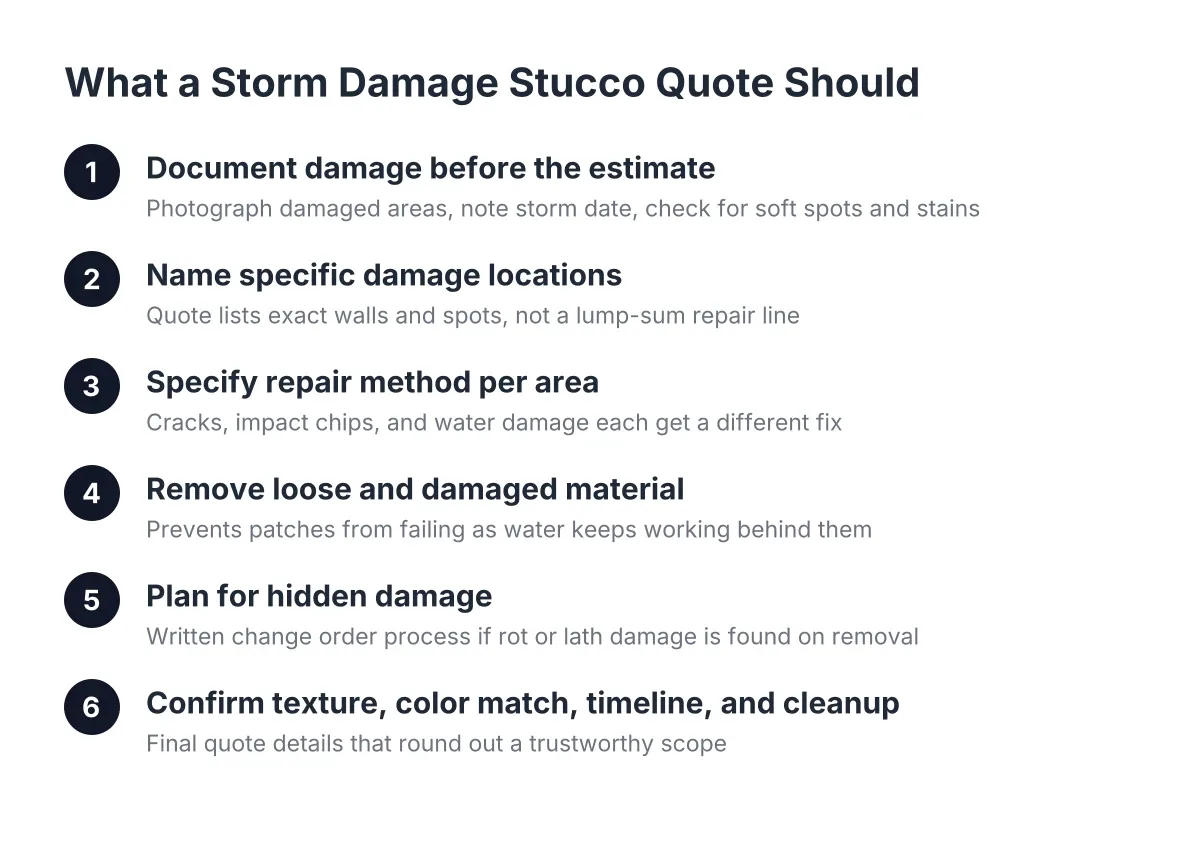
- Scope of Work: the written list of what a repair covers
- Insurance Supplement: a request to adjust an insurance claim
Types of Storm Damage You'll Hear About
These are the terms that describe what a storm actually did to your walls, and they show up early in any glossary for storm damage stucco repair because they decide everything that follows. The name a contractor uses for the damage tells you how deep the repair goes.
Stucco Damage: Storm Repair Glossary Terms
Stucco is a cement-based coating applied in layers over a wall to create a hard, textured exterior surface. It handles Colorado sun and cold well, but hail and wind-driven rain can crack or chip it. Knowing whether your home has traditional three-coat stucco or a thinner modern system matters, because repairs and costs differ between them. A local contractor should identify which one you have before quoting anything.
Hairline Crack
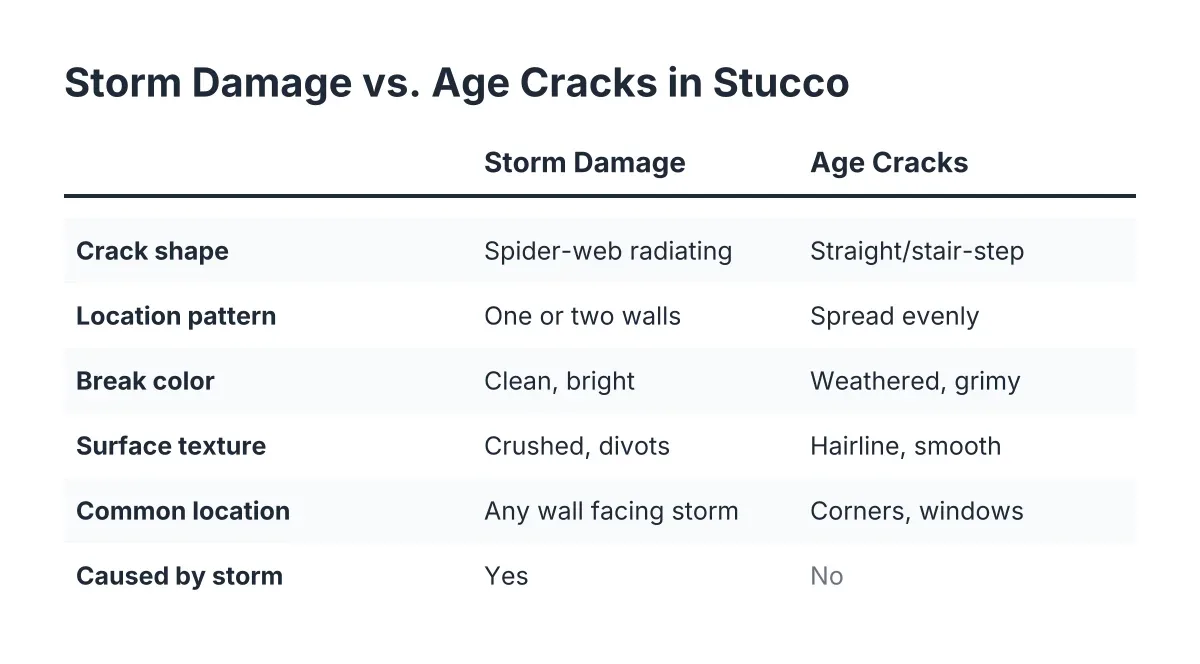
A hairline crack is a thin crack in the stucco surface, about the width of a credit card edge or less. Most homes get a few from normal settling, and they are usually cosmetic. After a storm, though, new hairline cracks can let water in, so they are worth sealing during stucco crack repair. If a quote lists hairline cracks separately from wider cracks, that is a good sign the contractor is pricing honestly rather than lumping everything together.
Spider Cracking
Spider cracking means a cluster of small cracks radiating out from a central point, like a web. On stucco it usually marks an impact spot, often from large hail or wind-blown debris. Spider cracks matter because the center of the web may be crushed below the surface, not just cracked on top. A careful contractor will probe that center point instead of just coating over the whole pattern.
Hail Spalling
Hail spalling is chipping or pitting where hailstones knocked small chunks out of the stucco's finish coat. It looks like shallow pockmarks scattered across the wall, heaviest on the side the storm came from. Spalling exposes the layers underneath to water, so it should be patched even when it looks minor. Adjusters look for spalling patterns when deciding whether damage is storm-related, so photograph it before any repair starts.
Delamination
Delamination means the stucco has separated from the wall behind it, even if the surface still looks intact. You can sometimes find it by tapping the wall: solid stucco sounds sharp, and delaminated areas sound hollow. Storms cause it when water gets behind the stucco and breaks the bond. Delamination changes the job from surface patching to removing and rebuilding a section, so expect a bigger scope if a contractor finds it.
Efflorescence
Efflorescence is a white, chalky, or crystal-like stain that forms on stucco when water moves through it and leaves minerals behind on the surface. The stain itself wipes off, but it is a symptom, not the problem. It tells you water is getting into or behind the stucco somewhere. If you see efflorescence after a storm, ask about stucco water damage repair, not just a cleaning.
Behind the Wall: Storm Damage Stucco Repair Layers and Parts
Stucco is a system, not a single coat. When storm water gets past the surface, these are the parts a contractor will name.
Weep Screed
A weep screed is a metal strip at the bottom of a stucco wall that lets trapped water drain out. It sits near the foundation and has small openings the wall drains through. If dirt, mulch, or concrete covers the weep screed, water backs up inside the wall instead of escaping. A contractor who checks your weep screed during an estimate is looking at the whole system, which is what you want.
Moisture Barrier
A moisture barrier is the water-resistant paper or wrap installed behind stucco to keep water off the wood structure of your home. Stucco itself is not waterproof; the barrier is what actually protects the framing. Storm damage that tears or bypasses this barrier leads to rot and mold if ignored. If a repair quote includes replacing the barrier, the contractor is fixing the cause, not just the cosmetics.
Lath
Lath is the wire mesh or similar backing that stucco grips as it hardens, holding it to the wall. When impact damage or water rusts or tears the lath, new stucco has nothing to hang onto. Repairs that go down to the lath cost more than surface work because the damaged mesh gets cut out and replaced. Seeing "replace lath" on a quote means the damage went past the surface.
Scratch Coat and Brown Coat
The scratch coat and brown coat are the two base layers in traditional three-coat stucco, applied under the finish you see. The scratch coat grips the lath, and the brown coat builds thickness and a flat surface. Storm damage deep enough to reach these layers needs a full rebuild of that section, not a skim over the top. If a contractor mentions these coats, they are describing a deeper, more involved repair.
Finish Coat
The finish coat is the top layer of stucco, the part that carries the color and texture you see from the street. Much hail damage lives only in this layer, which is the best-case repair scenario. A finish coat repair is faster and less invasive than work that reaches the brown coat or lath. Ask which layer the damage stops at; the answer drives the price more than the size of the damaged area.
Repair Work and Matching: Storm Damage Stucco Solutions
These terms describe what the crew actually does, and they explain why two quotes for the same wall can read so differently.
Stucco Patching
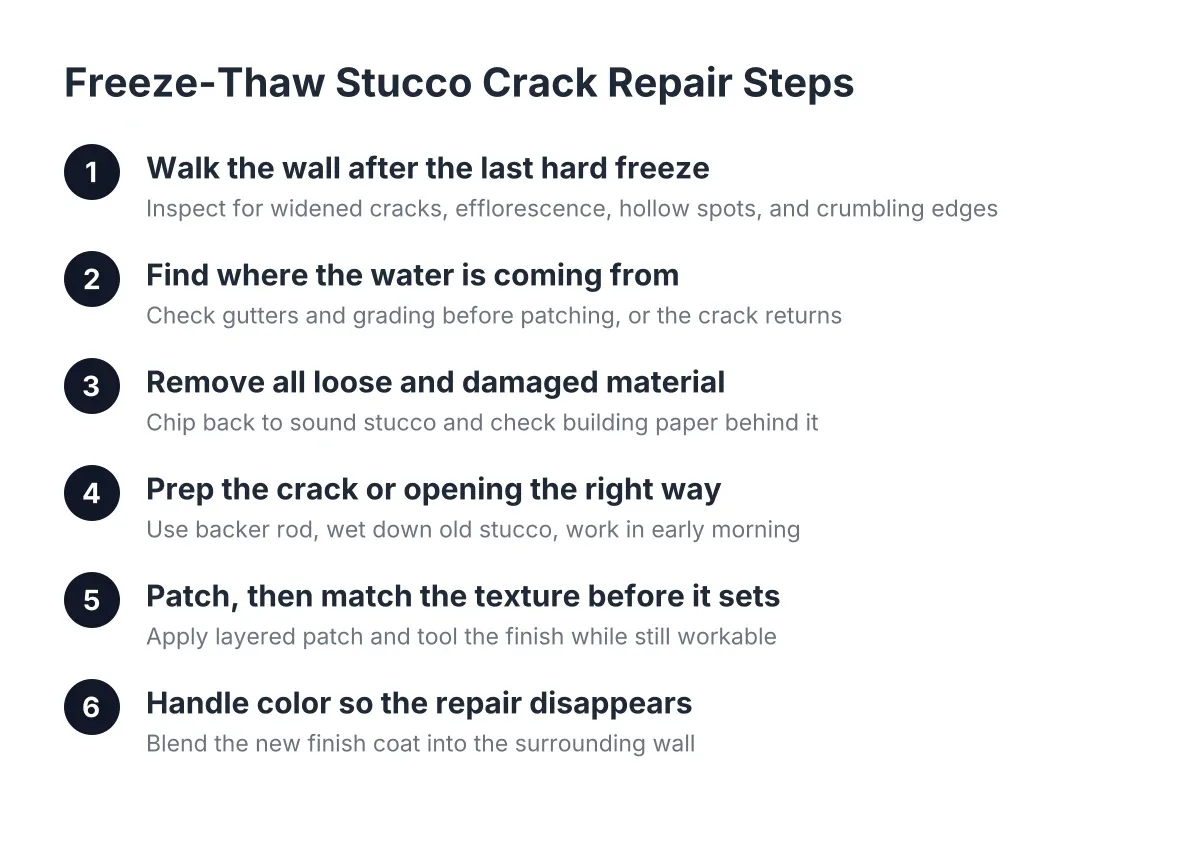
Stucco patching means cutting out a damaged section of stucco and rebuilding it in layers to match the surrounding wall. Done right, a patch is cut back to solid material, tied into the existing lath, and built up coat by coat. Done wrong, it is mortar smeared over a hole. Ask any contractor how they tie a patch into the old wall; a specific answer is a good sign.
Texture Matching
Texture matching is the craft of finishing a patch so its surface pattern blends with the rest of the wall. Stucco textures vary widely, and a patch with the wrong texture stands out even when the color is right. This is where experience with the material shows, and it is a fair thing to ask about before hiring anyone for exterior stucco repair. A contractor who does texture matching daily will talk about it in specifics, not generalities.
Color Matching
Color matching means tinting the patch or the finish coat so the repaired area matches the color of the existing wall. Sun-faded stucco rarely matches fresh material straight from the bag, so good color matching accounts for the aging around the patch. Sometimes the honest answer is that a whole wall section needs recoating to look uniform. A contractor who tells you that upfront is saving you from a patch you'll notice every time you pull into the driveway.
Elastomeric Coating
An elastomeric coating is a thick, flexible, paint-like layer applied over stucco that stretches to bridge hairline cracks and shed water. It can be a good finishing step after crack repair on a wall with lots of fine cracking. It is not a fix for deep cracks, delamination, or water already trapped behind the wall. If a quote leans on coating alone for real storm damage, ask what happens to the moisture underneath.
Moisture Testing
Moisture testing means using a meter or probe to measure how much water is inside a stucco wall or the framing behind it. It matters after storms because stucco can look dry on the outside while the wall behind it stays wet. Testing before repair keeps you from sealing moisture inside, where it rots wood quietly for years. For any suspected water damage, ask whether the contractor tests before they patch.
Pricing and Paperwork
The words on the quote and the insurance forms matter as much as the work itself. Understanding them protects your money.
Scope of Work
A scope of work is the written list of exactly what a repair job includes: the areas, the layers, the materials, and the finish. It is the document that prevents the "I thought that was included" argument later. Compare scopes, not just totals, when you get more than one quote. For a sense of how scope drives price on storm jobs, see this guide to what storm damage stucco repair costs.
Insurance Supplement
An insurance supplement is a request to your insurance company to pay for damage or work found after the original claim estimate was written. Storm damage stucco repair often turns up hidden problems, like wet sheathing or torn moisture barrier, once the wall is opened. A supplement is the normal, legitimate way to cover that added work. If a contractor mentions supplements, they are describing standard claim paperwork, not asking you to pay more out of pocket.
Using These Terms
You now have what this glossary for storm damage stucco repair set out to give you: the vocabulary to read a quote line by line and ask sharper questions. When a Castle Rock contractor says "the damage stops at the finish coat" or "we found delamination near the weep screed," you'll know what that means for the work and the price. That knowledge is the difference between hoping a repair was done right and knowing what to ask for.
If you need stucco repair, Castle Rock Stucco Pros can help.
Prefer to talk it through? Call (720) 797-8506 — a quick call is usually the fastest way to get a straight answer for your situation.