Stucco Water Damage Terms Explained: A Plain-English Glossary
If you're a Castle Rock homeowner reading repair quotes full of words like "efflorescence" and "weep screed," this stucco water damage glossary is for you. It explains the terms contractors use in plain English, so you can read an estimate line by line, ask better questions, and spot problems on your own walls. Each entry starts with a short definition you can trust on its own, then tells you why the term matters for your repair. Nothing here requires a construction background.
- Efflorescence: white chalky streaks left by water
- Delamination: stucco layers separating from each other
- Spalling: stucco surface flaking or crumbling off
- Hairline Crack: thin surface crack, common and usually minor
- Weep Screed: metal strip at the wall base that drains water
- Moisture Barrier: the water-blocking layer behind stucco
- Lath: the mesh or wire that stucco grips onto
- Substrate: the wall material under the stucco system
- Flashing: metal pieces that steer water away from joints
- Kick-Out Flashing: flashing where a roof edge meets a wall
- Moisture Testing: checking how wet the wall is inside
- Invasive Testing: probing through the stucco to check for rot
- Stucco Patching: filling and repairing a damaged section
- Texture Matching: making the repair blend with the old finish
- Remediation: removing and rebuilding a failed wall section
- Scratch Coat and Brown Coat: the base layers under the finish
- Elastomeric Coating: flexible paint that bridges small cracks
- Scope of Work: the written list of what a repair includes
Signs and Symptoms of Water Damage
These are the terms you'll hear when someone describes what's wrong with your wall. In this part of the stucco water damage glossary, the words all point to the same question: is water getting in, and how long has it been there? If you want a walkthrough of what to look for, see 7 signs of water damage in stucco.
Efflorescence
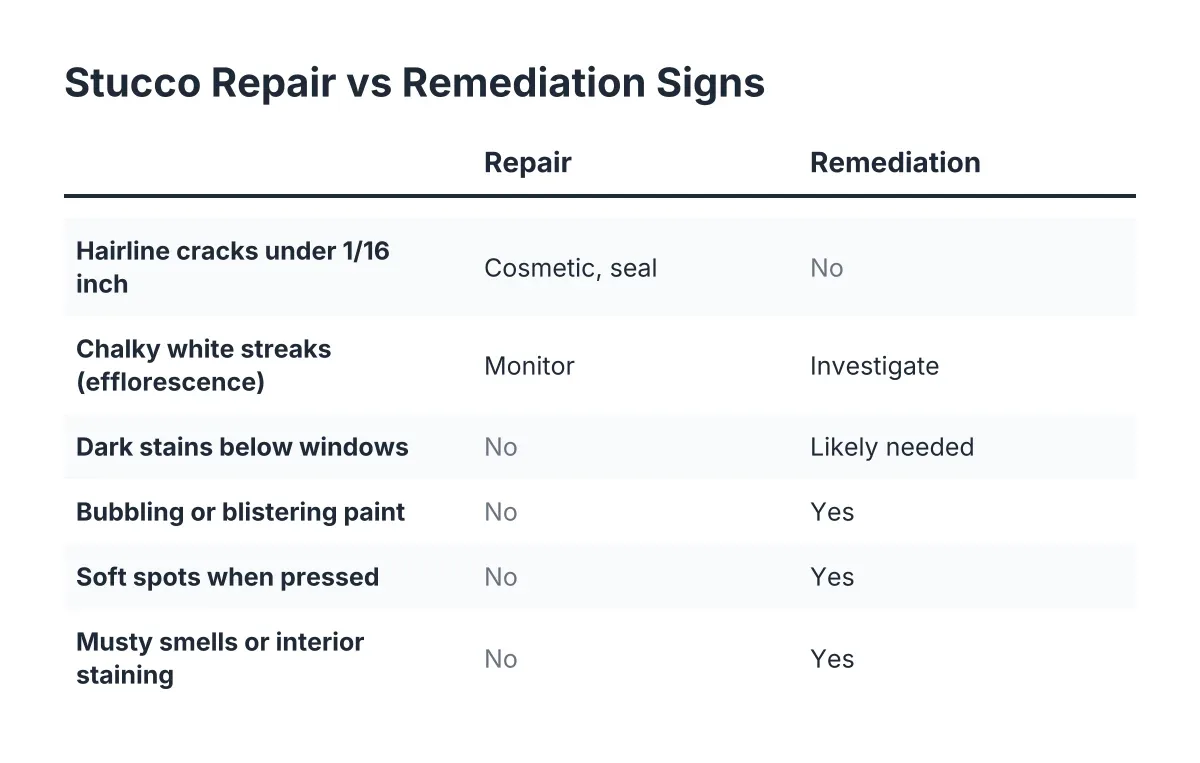
Efflorescence is a white, chalky, or crystal-like deposit that forms on stucco when water moves through the wall and leaves minerals behind as it dries. Think of it as a water trail. The stain itself wipes off, but it tells you moisture has been passing through the stucco, which means the source needs to be found. If a contractor points out efflorescence, expect the conversation to turn to where the water is coming from, not just cleaning the stain.
Delamination
Delamination means the layers of a stucco wall have separated from each other, usually because trapped water broke the bond between them. A delaminated section often sounds hollow when you tap it. This matters because the surface can look fine while the wall underneath has failed. Delamination usually means the affected area needs to be removed and rebuilt, not just coated over.
Spalling
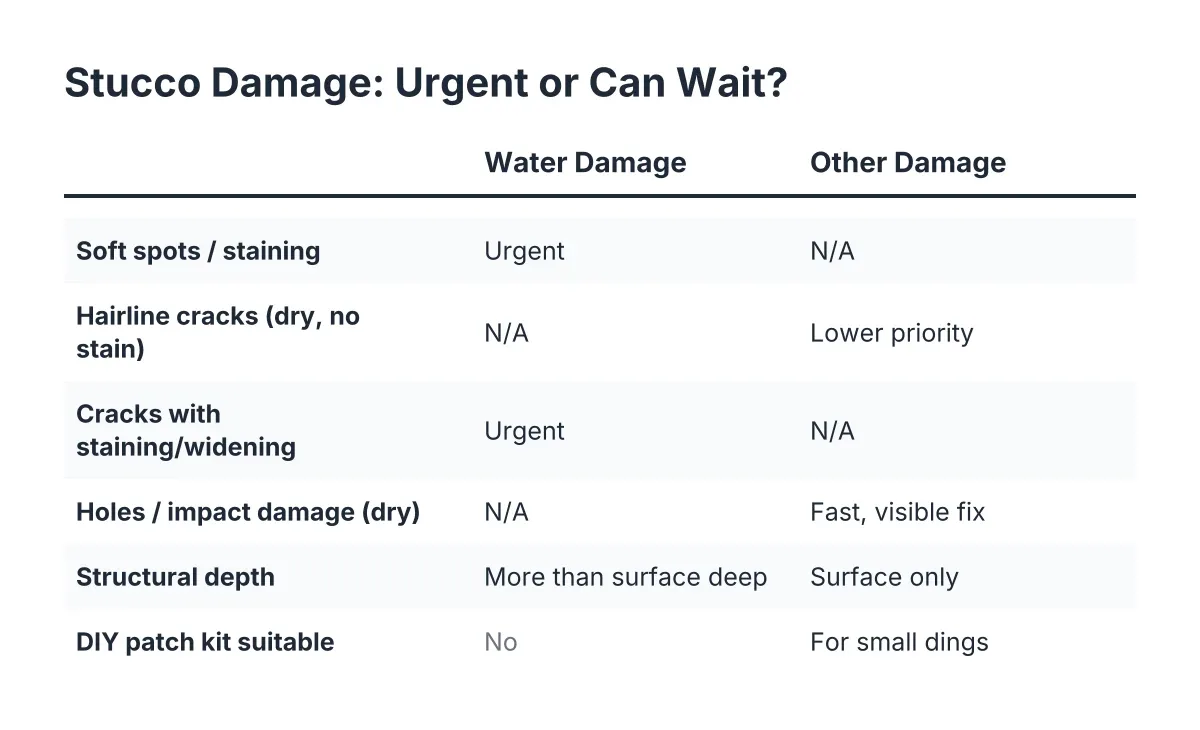
Spalling is when the surface of stucco flakes, chips, or crumbles away, often after water inside the wall freezes and expands. Castle Rock's freeze and thaw swings make this a common sight on older stucco siding. Small spalled spots can be patched, but widespread spalling suggests water is getting behind the finish. A good contractor will check for the moisture source before quoting a patch.
Hairline Crack
A hairline crack is a thin crack in the stucco surface, about the width of a credit card edge or less, caused by normal settling and temperature changes. Most hairline cracks are cosmetic. The concern is what they become: any crack is a door for water, and cracks that widen or run diagonally from windows deserve a closer look. Stucco crack repair on hairline cracks is one of the cheaper, faster jobs in the trade.
The Parts Behind the Wall
Stucco is a system, not a coating. When water damage shows up, these hidden parts are usually where the story starts.
Weep Screed
A weep screed is a metal strip installed at the bottom of a stucco wall that lets water drain out of the wall system. Water that gets behind stucco is supposed to run down and exit here. If soil, concrete, or landscaping buries the weep screed, water has nowhere to go and soaks back into the wall. Contractors often check this strip first because a blocked weep screed causes damage that shows up higher on the wall.
Moisture Barrier
A moisture barrier is the water-resistant paper or wrap installed behind stucco to keep water off the wood structure of your home. Stucco itself absorbs some water by design; the barrier is what actually protects the house. When a repair quote mentions replacing the barrier, it means the damage went past the stucco into the layers behind it, which raises the scope of the job.
Lath
Lath is the wire mesh or metal netting attached to the wall that gives stucco something to grip as it cures. Rusted or failed lath means the stucco above it will crack and loosen no matter how well it was applied. If your quote includes new lath, the contractor is rebuilding that section of wall from the structure out, not just skimming the surface.
Substrate
The substrate is the wall material underneath the whole stucco system, usually plywood or a similar sheathing over the wood framing. This is what rot attacks when water sits in a wall too long. A repair that includes substrate replacement is a bigger job than a surface patch, because the crew has to open the wall, cut out damaged wood, and rebuild before any stucco goes back on.
Flashing
Flashing is thin metal installed at joints, edges, and openings to steer water away from places it could enter the wall. Windows, doors, and rooflines all depend on it. Bad or missing flashing is one of the most common root causes of stucco water damage, and repairing the stucco without fixing the flashing means the same leak comes back. Ask any bidder how they plan to handle flashing at the damaged area.
Kick-Out Flashing
Kick-out flashing is a small angled piece of flashing installed where a roof edge dies into a wall, made to kick rainwater away from the stucco below. When it's missing, roof runoff pours down one spot on the wall for years. That spot often shows staining, soft stucco, or rot behind it. If you see a dark streak below a roof-to-wall joint, this term will likely come up in your estimate.
Inspection and Testing
Moisture Testing
Moisture testing means using a meter or probe to measure how much water is inside a wall, instead of guessing from the surface. Surface readings with a handheld meter are quick and non-destructive. The results tell a contractor whether the wall is dry, damp, or wet enough to hide rot. A quote based on actual moisture readings is worth more than one based on a glance from the driveway.
Invasive Testing
Invasive testing means drilling small holes or opening a section of stucco to check the condition of the barrier, lath, and wood behind it. It leaves marks that get patched afterward, which is why contractors ask permission first. It matters because surface tools can miss rot deep in the wall. If a contractor recommends invasive testing before quoting a large repair, that's caution, not upselling.
Repairs, Coatings, and Paperwork
Stucco Patching
Stucco patching is the repair of a damaged section by removing the failed material and applying new stucco in layers to fill the area. It's the right fix when damage is limited to a defined spot and the wall behind it is sound. Patching costs less than tearing off a full wall, which is why an honest assessment of how far the damage goes matters so much. Our cost guide for stucco water damage walks through what pushes a job from patch to rebuild.
Texture Matching
Texture matching is the craft of finishing a stucco repair so its pattern, depth, and color blend with the existing wall. It's the difference between a repair you forget about and a patch you notice every time you pull into the driveway. Texture matching takes practice with the specific finish on your home, so ask to see how a contractor handles it. It's a fair test of whether a crew works with stucco every day or once in a while.
Remediation
Remediation means removing a failed section of the stucco system down to the structure, fixing the water problem and any rot, and rebuilding the wall correctly. It's the heavier alternative to patching, used when damage runs deep or wide. The word signals a bigger scope, longer timeline, and higher cost than a patch. This guide on repair versus remediation explains how contractors decide which one your wall needs.
Scratch Coat and Brown Coat
The scratch coat and brown coat are the first two layers of a traditional stucco wall, applied under the visible finish coat. The scratch coat grips the lath, and the brown coat builds thickness and a flat surface. When a quote lists these coats, the contractor is rebuilding the wall in proper layers rather than smearing one thick coat over the hole. Proper layering is why a good patch lasts as long as the wall around it.
Elastomeric Coating
An elastomeric coating is a thick, flexible paint applied over stucco that stretches to bridge hairline cracks and shed water. It works well as protection over a sound, repaired wall. It does not fix damage underneath, and coating over wet or rotted stucco traps the problem inside. If someone offers coating as the whole fix for soft or stained stucco, ask what they found about the moisture source first.
Scope of Work
A scope of work is the written section of an estimate that lists exactly what the contractor will do, from tear-out through texture matching. It's the part of the quote that protects you. A clear scope names the areas being repaired, the layers being replaced, and how the finish will be matched. Two bids with different prices often have different scopes, so compare the work described, not just the numbers.
Using These Terms
What this stucco water damage glossary gives you is footing: you can now read a Castle Rock repair quote line by line and know what each item means for your wall. When a contractor mentions the weep screed or recommends invasive testing, you'll understand why, and you can ask what the scope of work covers before you sign. If a term on your estimate isn't here, ask the person who wrote it to explain it in plain words; anyone who works with stucco every day can.
If you need stucco repair, Castle Rock Stucco Pros can help.
Prefer to talk it through? Call (720) 797-8506 — a quick call is usually the fastest way to get a straight answer for your situation.