Stucco Water Damage vs. Other Exterior Damage: What’s Urgent Before You List
If you're getting a house ready to sell in Castle Rock and your realtor flagged something on the exterior, the first question is simple: is this stucco damage before listing affecting your timeline? The answer changes your budget and your market position. A hairline crack is a quick patch. A soft spot under a window can mean opening the wall. This list walks through how to tell stucco water damage from other exterior damage, what's urgent before your listing goes live, and what can wait for the next owner's honey-do list.
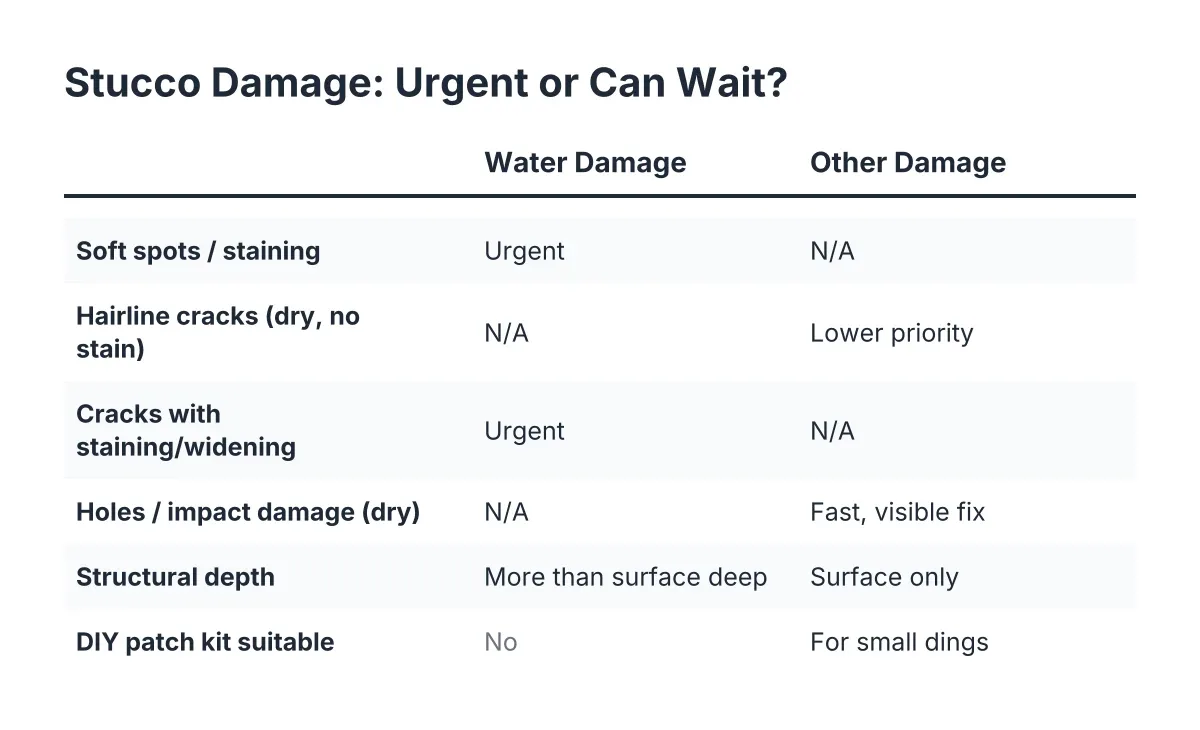
The short version: water damage moves up the list every time. Everything else gets triaged by what a buyer, an inspector, or a listing photo will notice.
1. Learn the tells that separate stucco water damage from other wear
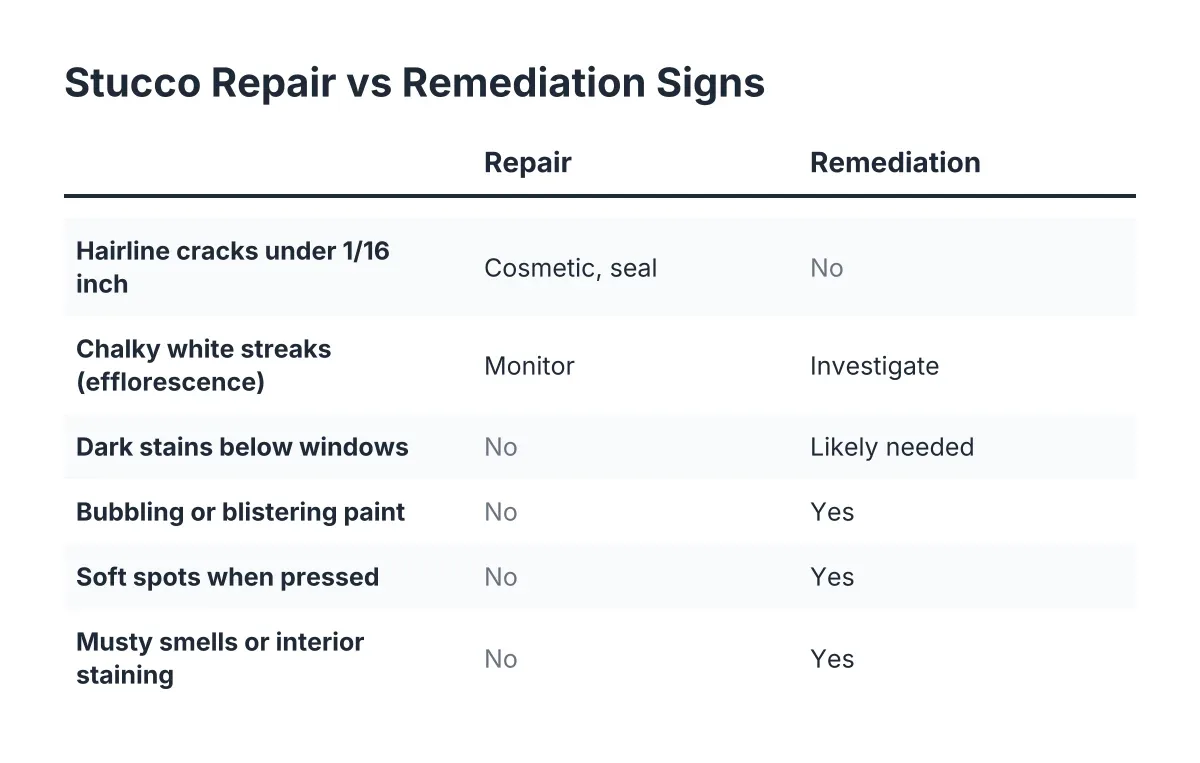
Water damage in stucco shows up as staining, soft spots, bubbling, or white chalky streaks called efflorescence. Other exterior damage, like impact chips, hairline cracks, or faded color, stays dry and firm to the touch. Press gently on a stained area; if it flexes or feels spongy, water has been sitting behind the stucco and the repair is more than surface deep.
Here are the signs that point to water, not just age:
- Dark or rust-colored stains below windows, at wall bottoms, or under roof lines
- A soft spot in a stucco wall that gives when you press it
- Bubbling or blistering in the finish coat
- White mineral streaks (efflorescence) trailing down the wall
- Stucco that sounds hollow when you tap it, next to areas that sound solid
- Musty smell or interior drywall stains on the same wall
If none of those are present and you're only looking at hairline cracks or faded texture, you're in cosmetic territory. That's a stucco patching job, not a wall opening.
2. Treat soft spots and stains as urgent, even on a tight listing timeline
A soft spot means the base layers, and possibly the sheathing behind them, have absorbed water. Left alone, that turns into stucco rot behind the wall, and rot is exactly the kind of finding that makes a buyer's inspector write a scary paragraph. Fixing stucco damage before listing costs less than the price reduction a buyer will demand after inspection.
Timing matters here. Suppose a homeowner in Castle Pines is listing in six weeks and finds a soft patch under a second-story window. In that scenario, a focused repair, cutting out the damaged section, replacing wet material, and matching the texture, typically runs days, not weeks. Waiting until the buyer's inspector finds it means renegotiating under pressure instead of fixing on your own schedule.
3. Put hairline cracks lower on the list, but don't skip them
Hairline cracks under about 1/16 inch are usually normal settling and thermal movement, not water intrusion. They rank below water damage in urgency, but they still hurt listing photos and give buyers a reason to wonder what else is wrong. Stucco crack repair on these is straightforward: clean the crack, fill it, and blend the texture so the patch disappears.
However, cracks change category when they widen, run diagonally from window corners, or show staining along their edges. Those cracks are letting water in, and they belong in the urgent column with the soft spots. When in doubt, have someone who knows the material look before you assume it's cosmetic.
4. Handle holes and impact damage as fast, visible wins
Holes from woodpeckers, hail, ladders, or removed fixtures are the easiest exterior defect to knock out before photos. Stucco hole repair is contained work: clean the opening, patch the base layers, and match the finish. Unlike water damage, a dry hole doesn't spread, so the urgency is about appearance, not structure.
That said, an old hole that's been open through a few Colorado freeze-thaw cycles may have let moisture in around its edges. A good crew checks the material around the hole before patching. If it's dry and solid, it's a quick fix. If it's soft, you've found hidden stucco damage before listing, and other patches on that wall deserve a second look too.
5. Know when a patch kit helps and when it hurts your sale
A stucco patch kit from the hardware store works for small, dry, cosmetic dings, think nail holes or a chip the size of a quarter. For anything larger, DIY patches tend to flash in listing photos: the texture doesn't match, the color sits wrong, and buyers spot the repair from the curb. A visible patch can raise more questions than the original crack did.
For a pre-listing repair, texture matching is the whole game. Castle Rock homes carry a range of stucco finishes, and blending a patch into the existing texture and color is what makes the repair invisible in photos and in person. If the repair will show in your listing shots, it's worth having it done by someone who matches texture for a living.
6. Identify vulnerable spots before your pre-listing inspection
Most stucco water damage starts at penetrations and transitions, not in the middle of a flat wall. Ten minutes with a garden hose off and your eyes open can tell you where a buyer's inspector will linger. Walk the house and check these spots:
- Window sills and the corners below them, the most common staining location
- Where the roof meets a stucco wall, especially if kickout flashing is missing
- Around hose bibs, light fixtures, vents, and anything else that pokes through the stucco
- The bottom edge of walls where stucco meets grade or concrete
- Under gutters and downspouts that overflow or dump water against the wall
Finding a problem yourself, weeks before listing, keeps you in control of the fix. Finding it in the buyer's inspection report means you fix it anyway, on their timeline, and often at a negotiated discount larger than the repair cost.
7. Understand what repair versus remediation actually means for your budget
Repair means the damage stopped at the stucco: cut out the bad section, patch, and match the texture. Remediation means water reached the paper, sheathing, or framing behind the wall, so the crew opens a larger area, replaces wet material, fixes the flashing or entry point, and rebuilds the stucco over it. Same wall, different scope, different cost.
For pre-listing budgets, the difference is real. As a rough illustration, a contained crack or hole repair might land in the low hundreds, while a remediation that opens a wall section and replaces sheathing can run into the low thousands. That's why an in-person look matters; a crew that inspects before quoting can tell you which job you actually have, instead of selling you the bigger scope sight unseen.
8. Ask for moisture testing when the surface looks fine but something's off
Stucco moisture testing uses a probe or scanning meter to read what's behind the surface without tearing it open. It's worth requesting when you have interior stains on an exterior wall, a musty smell, or a past leak that was "fixed" but never verified. A dry reading gives you documentation to hand a buyer; a wet reading tells you exactly where to open the wall, and nowhere else.
For sellers, that documentation has value beyond the repair. A moisture test result plus a repair invoice answers the inspection question before it's asked. It shows the buyer you found the problem, fixed it, and verified the wall is dry, which is a stronger position than hoping nobody presses on that stain.
9. Weigh stucco water damage against other pre-listing repairs by ROI, not by size
When you're triaging a repair list against a listing date, rank stucco water damage and other exterior fixes by what they cost you if a buyer finds them, not by how big they look. A faded wall costs you some photo appeal. Documented rot behind stucco can cost you the deal, or a five-figure credit at the negotiating table. Hail is a fact of life on the Front Range; the May 2017 hailstorm alone caused $2.3 billion in insured damage across Colorado, according to the Rocky Mountain Insurance Information Association, so buyers and inspectors here look hard at exterior condition.
A practical pre-listing order for 2026 looks like this: fix anything soft, stained, or actively leaking first; patch holes and visible cracks second; and address purely cosmetic fading last, only if budget remains. Keep the spend targeted at defects a buyer will see or an inspector will flag. A full exterior overhaul rarely pays back on a house you're leaving; a clean, matched repair on a visible defect usually does.
10. Bring in a local pro when the damage crosses the surface
One honest limitation: no article can tell you from a photo whether your wall needs a patch or a wall opening. If you've found softness, spreading stains, or interior moisture on a stucco wall, that's the point where a local stucco repair crew should put eyes and a moisture meter on it. Structural framing damage, widespread rot, or suspected mold behind the wall may also need trades beyond stucco, and a straight-shooting crew will tell you that instead of papering over it.
For everything else on this list, the cracks, the holes, the texture matching, the workflow is simple. Inspect first, quote the actual scope, fix the defect, and blend the repair so it disappears from your listing photos. That's the version of exterior stucco repair that gets a Castle Rock house to market on time without spending a dollar the sale won't return.
If you need stucco repair, Castle Rock Stucco Pros can help.
Prefer to talk it through? Call (720) 797-8506 — a quick call is usually the fastest way to get a straight answer for your situation.