7 Signs of Water Damage in Stucco: Cracks, Stains, and Soft Spots Explained
If you spotted a stain, a bubble, or a soft spot on your stucco and started searching for answers, you want to know two things: is there hidden damage behind the wall, and what will it take to fix it. This guide walks through the signs of stucco leak before things get expensive, and sorts them honestly into what is cosmetic and what means opening the wall. That distinction matters, because a hairline crack and a soft spot can look similar from ten feet away and cost wildly different amounts to repair.
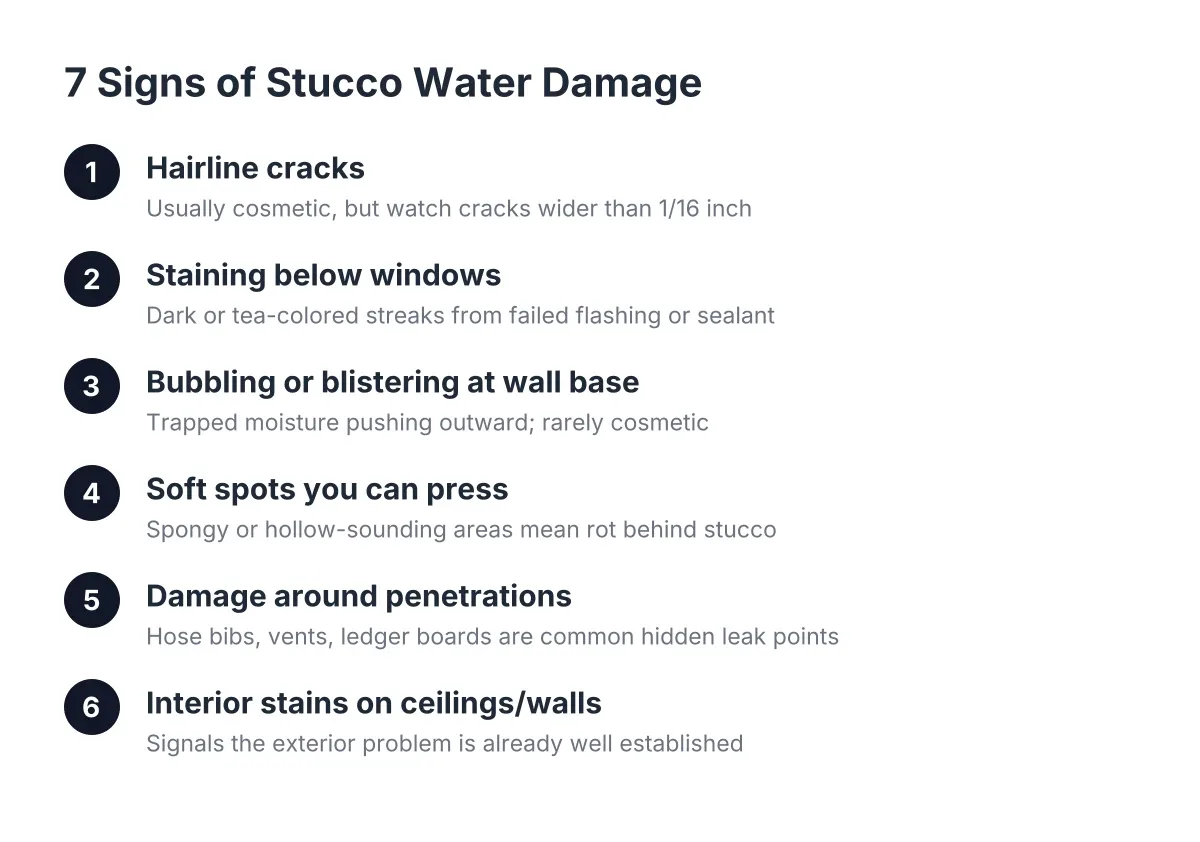
Here is the straight version. Stucco itself handles water fine. The trouble starts when water gets behind the stucco and stays there. What happens when stucco gets wet on the surface is nothing; what happens when the framing behind it stays wet for months is rot. The seven signs below are roughly ordered from least to most serious, so you can read your own wall against them.
This matters double if you are getting a house ready to list in Castle Rock, Lone Tree, or Stonegate. Buyers' inspectors look for exactly these signs, and a stain you ignored in March becomes a repair credit negotiation in June.
1. Hairline Cracks: Usually Cosmetic, but Watch the Width
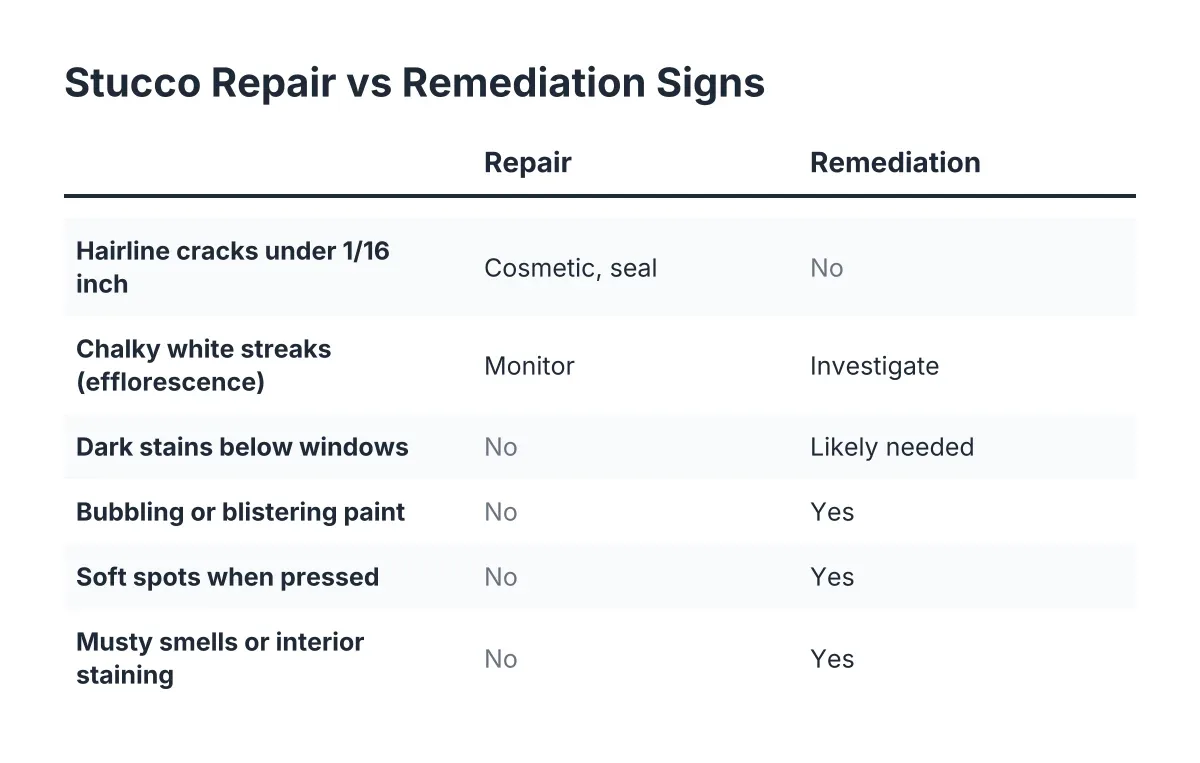
Hairline cracks under about 1/16 inch are the most common stucco complaint and usually the least serious. Stucco is a cement product, and cement shrinks and moves with Colorado's freeze-thaw swings. Fine cracking is normal aging, not proof of water damage behind the wall.
However, cracks are also the front door for water. Can stucco cracks cause water damage? Yes, if they are wide enough and positioned where water runs. A crack wider than a credit card, a crack that keeps growing, or a stair-step crack near a window corner deserves attention. Straightforward stucco crack repair handles these before they become the entry point for a bigger problem.
If you are prepping to sell, sealing and matching hairline cracks is one of the cheapest exterior fixes you can make. It cleans up your listing photos and removes an easy line item from the inspection report.
2. Staining and Discoloration Below Windows
Dark streaks or tea-colored stains running down from window corners are one of the clearest signs of stucco leak development. Windows are the number one leak point in stucco walls because the flashing and sealant around them fail long before the stucco does. When water sneaks in at the window and works its way down, it carries tannins from the wood framing and paper behind the stucco, and that is what stains the surface.
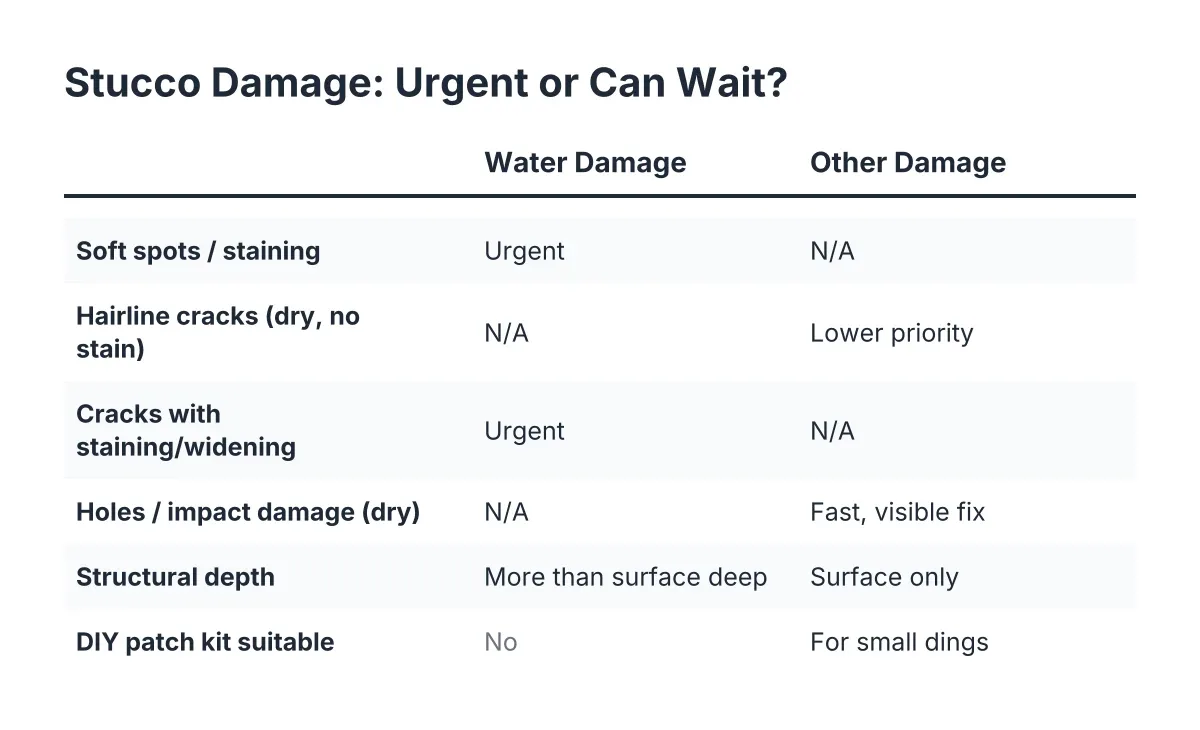
A single faint stain after a hard rain that dries within a day is often just surface runoff. A stain that stays dark, keeps growing, or shows up in the same spot every storm points to water traveling behind the wall. Location matters more than color; stains directly under window corners and where rooflines meet walls are the ones to take seriously.
3. Bubbling, Blistering, or Peeling at the Base of the Wall
When water gets trapped behind stucco, it pushes outward as it tries to escape, and the surface bubbles or blisters. You see this most often along the bottom few feet of a wall, where water that entered higher up has drained down and pooled. Peeling paint over stucco in the same zone tells the same story.
This one is rarely cosmetic. Bubbling means moisture is already sitting between the stucco and whatever is behind it. Painting over it hides the symptom for a season and traps the water more thoroughly, which speeds up the rot. If your realtor suggested a quick repaint before listing and you have blistering stucco, fix the stucco first; a fresh coat over a wet wall is the kind of shortcut inspectors are trained to catch.
4. Soft Spots You Can Press With Your Thumb
A soft spot in a stucco wall is the sign that separates surface problems from structural ones. Healthy stucco is hard; you should not be able to dent it with your thumb. If a section gives under light pressure, feels spongy, or sounds hollow when you knock on it, the material behind it has broken down. That usually means the lath, the paper, or the sheathing has been wet long enough to fail.
Do a simple walk-around test:
- Press firmly on the stucco below every window corner
- Knock along the bottom two feet of each wall and listen for hollow spots
- Check anywhere a stain or crack already caught your eye
- Pay extra attention to walls that never get direct sun
Soft spots almost always mean opening the wall. There is no honest way to quote that repair from the sidewalk, because nobody knows how far the rot runs until the stucco comes off. Any contractor who prices a soft-spot repair without cutting an inspection opening is guessing, and you will pay for the guess one way or another.
5. Missing or Damaged Stucco Around Penetrations
Every hole in your wall is a candidate leak. Hose bibs, light fixtures, dryer vents, deck ledger boards, and cable penetrations all pass through the stucco, and the sealant around them ages faster than the stucco itself. Cracked or missing stucco around these spots lets water straight into the wall cavity.
For example, a deck ledger bolted through stucco without proper flashing is one of the most common sources of hidden rot in Castle Rock homes built in the 1990s and 2000s. The leak is slow, the damage is invisible, and the first sign is often a soft band of stucco along the ledger line years later. Stucco patching around penetrations is inexpensive; replacing rotted rim joists is not.
6. Interior Clues: Water Stains on Ceilings and Walls
Can water leak through stucco far enough to show up inside? It can, and when it does, the exterior problem is well established. A water damage ceiling stain in a room that shares an exterior stucco wall, musty smells in one corner of a room, or interior paint bubbling on an outside wall all point back to the stucco system. Water follows the path of least resistance, so an interior stain may sit several feet from the actual entry point outside.
Interior signs mean the water has crossed the entire wall assembly: stucco, paper, sheathing, insulation, and drywall. At that stage you are past crack repair and into stucco water damage repair, which usually involves removing a section of the exterior, replacing what rotted, and matching the new stucco to the old texture. Texture matching is where a lot of repairs go wrong cosmetically, and a mismatched patch on the front of a house is exactly what a buyer's eye lands on first.
7. Damage After Hail: The Colorado-Specific Sign
Front Range hail cracks and chips stucco, and those impact points become water entries the same way any crack does. Colorado's May 2017 hailstorm caused $2.3 billion in insured damage, the costliest catastrophe in state history, according to the National Insurance Crime Bureau. In addition, Colorado home insurance premiums rose 65% over the last five years with hail cited as a major driver, according to the National Association of Insurance Commissioners. Hail is not a rare event here; it is a maintenance schedule.
After any serious hailstorm, walk your stucco and look for chips, spider cracks, and dents, especially on west- and south-facing walls. Small impact damage repaired promptly is routine exterior stucco repair. The same damage left through a winter of freeze-thaw cycles widens, admits water, and turns a patch job into a tear-off.
How to Identify Stucco Leak Patterns
Reading signs water damage stucco presents is about patterns, not any single symptom. One hairline crack means almost nothing. A crack below a window, plus a stain in the same spot, plus a hollow sound when you knock is a pattern, and patterns are what an honest inspection confirms or rules out. Here is the rough sorting:
- Likely cosmetic: hairline cracks, faint stains that dry fully, small chips away from windows and penetrations
- Needs a real look: widening cracks, recurring stains, damaged sealant around windows and fixtures, hail impact damage
- Means opening the wall: soft spots, bubbling or blistering, interior water stains on exterior walls, musty smells
Suppose a homeowner in Stonegate is six weeks from listing and finds a soft patch below a bedroom window. In that scenario, a typical crew would cut a small inspection opening, check how far the moisture and rot extend, and only then scope the repair. If the rot stops at one stud bay, the fix might land in the high hundreds to low thousands as an illustrative estimate. If the sheathing has failed across the wall, the scope changes entirely, and knowing that before listing beats discovering it during the buyer's inspection.
One honest limitation: no visual checklist replaces stucco moisture testing on a wall you cannot see behind. If you have multiple signs from the serious column, or the wall backs a bathroom or kitchen, bring in someone local who works stucco specifically and will inspect before quoting. Stucco water damage that gets diagnosed accurately once costs less than damage patched twice.
What This Means Before You List or Repaint
If you are the homeowner racing a listing date, the order of operations matters. First, walk the exterior with the checklist above before you schedule painters, because paint locks in whatever is behind it. Next, get real cracks and patches repaired and texture matched so the wall reads as one surface in photos. Then paint.
The signs water damage stucco gives you are early warnings, and early is where repairs stay cheap. A wall that shows staining or softness will not heal on its own, and Colorado's freeze-thaw winters make every season of delay more expensive than the last. Catching it at the crack stage instead of the rot stage is the difference between a line item and a project.
If you need stucco repair, Castle Rock Stucco Pros can help.
Prefer to talk it through? Call (720) 797-8506 — a quick call is usually the fastest way to get a straight answer for your situation.