Stucco Siding Replacement Terms Explained: A Plain-English Glossary
If you are getting quotes to fix or replace the stucco on your Castle Rock home, the paperwork can read like a foreign language. This stucco siding replacement glossary explains the terms contractors use, in plain English, so you can read a quote line by line and know what you are paying for. Each entry takes less than thirty seconds to read. Use it to talk with providers on equal footing and to spot problems before they cost you money.
- Stucco: cement-based coating on your exterior walls
- Lath: the mesh stucco grips onto
- Scratch coat: the first rough layer
- Brown coat: the middle leveling layer
- Finish coat: the visible top layer with texture
- Three-coat stucco: the traditional full system
- One-coat stucco: a thinner, faster system
- EIFS: synthetic stucco over foam board
- Weather-resistive barrier: the paper layer that sheds water
- Weep screed: the metal strip that drains water at the wall's base
- Hairline crack: a thin surface crack
- Delamination: stucco separating from the wall
- Efflorescence: white mineral stains that signal moisture
- Texture matching: blending a patch into the existing finish
- Fog coat: a thin cement wash to even out color
- Remediation: fixing hidden water damage, not just the surface
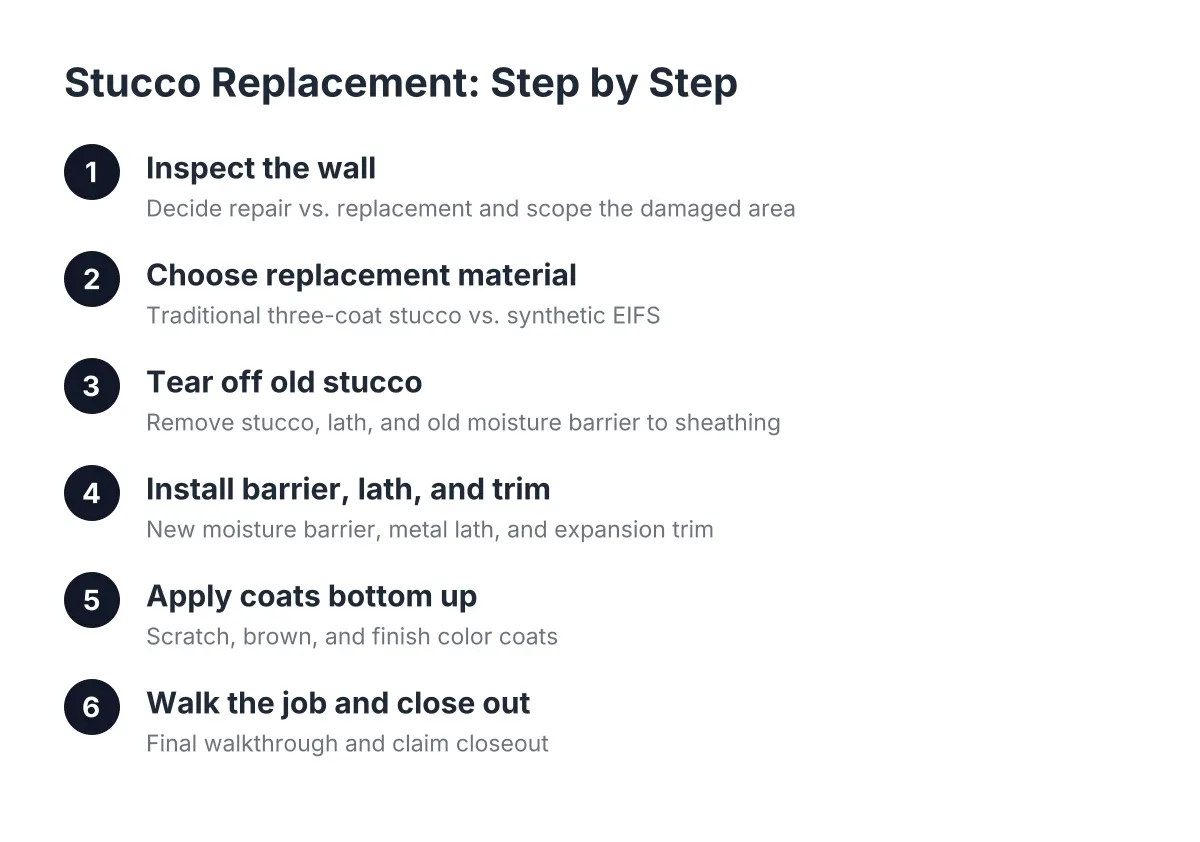
- Tear-off: removing old stucco down to the sheathing
- Fiber cement siding: a common replacement material for stucco
- Scope of work: the written list of what the contractor will do
Materials and Wall Layers in Stucco Siding Replacement
Stucco walls are built in layers, and most quote confusion starts with which layer needs work. These entries cover the parts of the wall itself.
Stucco
Stucco is a cement-based coating, mixed with sand and water, that hardens into a tough shell on the outside of your house. It handles Colorado sun and dry air well, which is why so many Castle Rock homes have it. When stucco cracks or takes on water, the fix depends on how deep the damage goes. Knowing the layers below the surface helps you understand why two quotes for the same wall can differ so much.
Lath
Lath is the wire mesh or metal grid fastened to your wall that fresh stucco grips as it hardens. Think of it as the skeleton under the skin. If a contractor says the lath is rusted or loose, the repair means opening the wall, not just patching the surface. That is a bigger job, and a quote that mentions lath replacement should cost more than a surface patch.
Scratch Coat
A scratch coat is the first layer of stucco, pressed into the lath and scored with grooves so the next layer can grab on. You never see it on a finished wall, but it carries the load. A patch that skips a proper scratch coat can pop loose within a few seasons. Ask any provider doing stucco patching whether their repair rebuilds all the layers.
Brown Coat
The brown coat is the middle layer of a stucco wall, applied over the scratch coat to level the surface and add thickness. It gives the wall most of its strength. If a crack runs through the brown coat, a cosmetic fill will not hold. A contractor who talks about the brown coat is looking past the surface, which is a good sign.
Finish Coat
The finish coat is the top layer of stucco, the part you see, carrying the wall's color and texture. Repairs to the finish coat alone are the cheapest kind of stucco crack repair. The hard part is matching, since a new finish coat next to a thirty-year-old one can stand out. That is where texture matching earns its keep.
Three-Coat Stucco
Three-coat stucco is the traditional system: scratch coat, brown coat, and finish coat over lath, about seven-eighths of an inch thick in total. It is heavy, durable, and common on older Castle Rock homes. Repairs on three-coat walls take more material and more steps than repairs on thinner systems. If your quote says three-coat, expect the work to be built up in stages with drying time between them.
One-Coat Stucco
One-coat stucco is a thinner system that combines the scratch and brown coats into a single base layer, often over foam insulation board. Many newer homes have it because it goes up faster. It is a legitimate system, but it cracks differently than three-coat stucco and repairs need to match the original thickness. Ask which system your house has before comparing quotes; the answer changes the price.
EIFS
EIFS stands for Exterior Insulation and Finish System, sometimes called synthetic stucco, which layers a thin acrylic finish over foam board instead of cement over mesh. It looks like stucco but behaves differently, especially around water. EIFS traps moisture if it is not drained correctly, so water damage behind it can spread quietly. If your inspector or contractor says EIFS, make sure whoever repairs it has worked with that system before.
Fiber Cement Siding
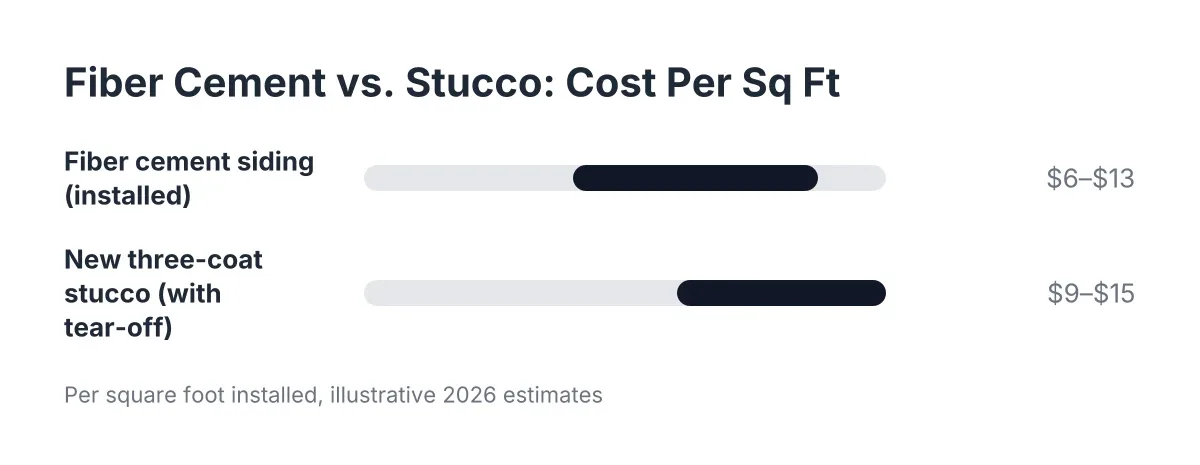
Fiber cement siding is a board made of cement, sand, and cellulose fibers that many homeowners choose when they stop repairing stucco and replace the wall covering entirely. It resists rot and hail and comes in lap boards or panels. It is one of the main options weighed in a full stucco siding replacement, and it changes the look of the house more than a re-stucco does. Our guide on fiber cement siding as a stucco replacement walks through when that trade makes sense.
Damage, Moisture, and Warning Signs in Stucco Siding Replacement Glossary
These are the terms you will hear when someone diagnoses what is wrong with your wall, and half the questions in this stucco siding replacement glossary come from this stage.
Hairline Crack
A hairline crack is a thin surface crack, about the width of a credit card edge or less, that runs through the finish coat of stucco. Most homes develop a few as the house settles and the material shrinks. On their own they are cosmetic, but they give water a way in, and Castle Rock's freeze and thaw cycles widen them over time. Sealing them early is the cheapest stucco repair you will ever buy.
Delamination
Delamination means a layer of stucco has separated from the layer beneath it, leaving a hollow spot behind an intact-looking surface. Contractors find it by tapping the wall and listening for a dull, drummy sound. Delaminated stucco will eventually fall away, so the loose section has to come off and be rebuilt. If a quote includes cutting out delaminated areas, that is why the patch is larger than the visible damage.
Efflorescence
Efflorescence is the white, chalky mineral stain that appears on stucco when water moves through the wall and leaves salts behind as it dries. The stain itself wipes off; the message does not. Efflorescence means moisture is getting into or behind the stucco somewhere. Treat it as a prompt to find the water source, not just a cleaning problem.
Weather-Resistive Barrier
A weather-resistive barrier is the layer of building paper or house wrap installed behind stucco to shed any water that gets through the coating. Stucco is not waterproof; this barrier is the real defense. If it was installed wrong or has torn, water reaches the wood framing, and that is when stucco water damage repair gets serious. A contractor who checks the barrier during an open repair is doing the job right.
Weep Screed
A weep screed is the perforated metal strip at the bottom edge of a stucco wall that lets trapped water drain out. Soil or concrete piled against it blocks the drainage and wicks moisture up into the wall. Stains or crumbling stucco near the ground often trace back to a buried or missing weep screed. It is a small part with an outsized role in keeping walls dry.
Repair, Replacement, and the Paper Trail
These terms show up when the diagnosis turns into a quote.
Texture Matching
Texture matching is the craft of finishing a stucco patch so its pattern and color blend into the surrounding wall. Every finisher's hand is different, so a good match takes trial panels and patience. A cheap patch that ignores texture will be visible from the street forever. If matching your home's existing texture matters to you, ask to see how the provider approaches it before work starts.
Fog Coat
A fog coat is a thin, sprayed-on wash of cement and pigment that evens out the color across old and new stucco without adding a full new layer. It is often the last step after patching, used instead of paint so the wall can still breathe. If your patched areas match in texture but not in color, a fog coat is usually the fix a contractor will suggest.
Remediation
Remediation means repairing the damage behind the stucco, such as wet sheathing, rotted framing, or a failed barrier, instead of only fixing the surface. It costs more than patching because the wall gets opened up, but it stops the same problem from coming back. If one bid says patch and another says remediation, they are not bidding the same job. Ask the cheaper bidder what they found behind the wall.
Tear-Off
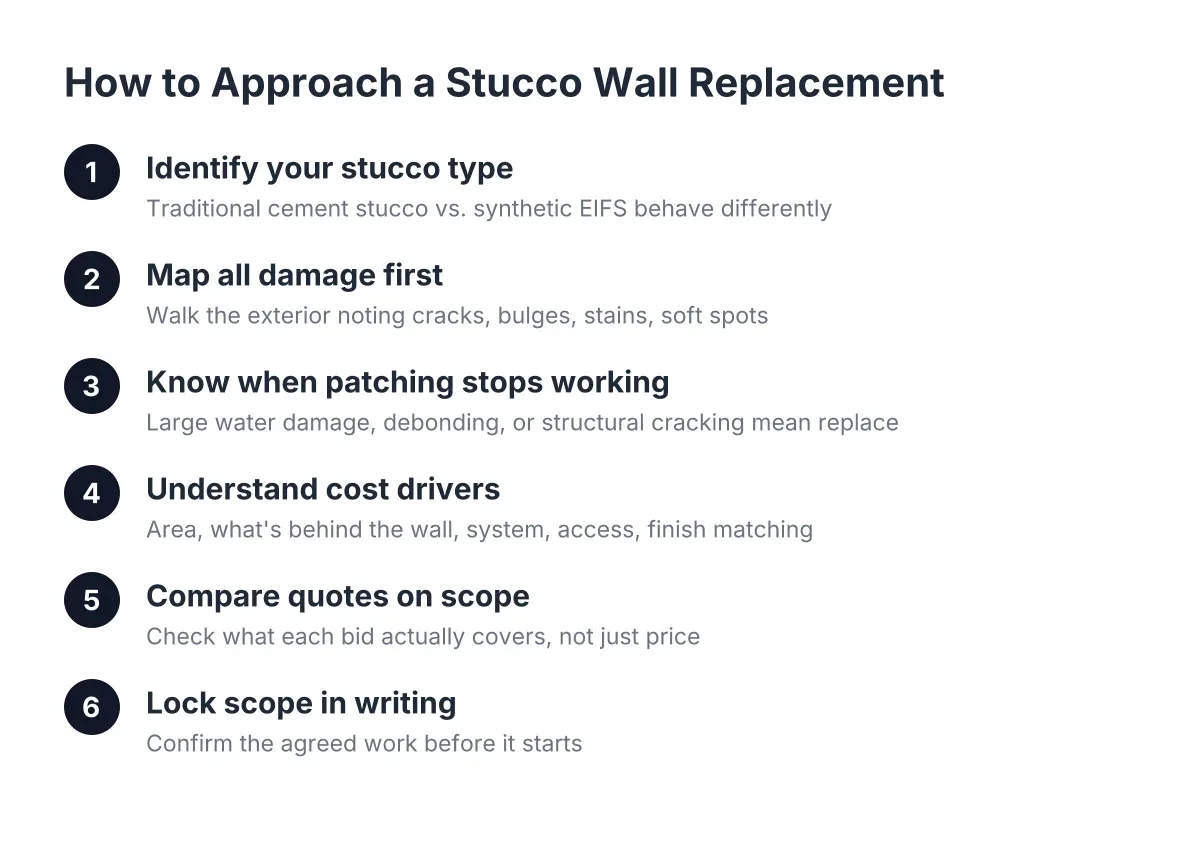
A tear-off is the removal of old stucco down to the sheathing so new stucco or a different siding can be installed. It is the point where repair ends and replacement begins, and it drives most of the cost in a full wall redo. Homeowners usually reach this point when cracks and water damage outrun what patching can fix. Our article on when patching stops making sense covers how to make that call.
Scope of Work
A scope of work is the written section of a quote that lists exactly what the contractor will do, layer by layer and wall by wall. It is the single most useful page in any bid. A vague scope ("repair stucco as needed") leaves room for surprises; a specific one names the coats, the barrier work, and the finish steps. Compare scopes, not just totals, when bids differ, and read up on what drives the price of a stucco wall redo so the line items make sense.
Using These Terms
You now know the difference between a hairline crack and delamination, and between a patch and remediation. That is what this stucco siding replacement glossary is for: read your next quote line by line, ask which layers the work reaches, and make sure texture matching is part of the plan. A homeowner who knows these nineteen terms asks sharper questions, and sharper questions get straighter answers.
If you need stucco repair, Castle Rock Stucco Pros can help.
Prefer to talk it through? Call (720) 797-8506 — a quick call is usually the fastest way to get a straight answer for your situation.