Stucco vs Siding Replacement: When Patching Stops Making Sense in Castle Rock
A crack in your stucco does not mean you need a new exterior. That is the first thing worth saying, because a lot of homeowners comparing quotes get pushed in one of two bad directions: a cheap patch on a wall that needed more, or a full stucco vs siding replacement pitch for damage a patch would have handled. As a repair-first shop in Castle Rock, we see both mistakes. This article lays out how to tell the difference, what stucco siding actually costs to replace, and how stucco compares to other siding options if you do reach the point of replacing it.
The short version: repair first when the damage is local and the wall behind the stucco is dry. Replace when the failure is in the system itself, not the surface. Everything below is about telling those two situations apart before you sign anything.
Repair or Replace: Start With What Is Actually Failing
Stucco fails in two different ways, and they call for different answers.
Surface failure means the finish coat or brown coat has cracked, chipped, or worn, but the wall behind it is sound. Hairline cracks around windows, a hole from a ladder or a hailstone, staining near a downspout. These are stucco crack repair and stucco patching jobs. A crew that knows the material fixes the crack, matches your home's texture and color, and you move on.
System failure means the problem runs deeper than the surface. Water has gotten behind the stucco and stayed there. The stucco has separated from the wall, which is called delamination. Or the original installation was wrong from day one, so new cracks keep opening no matter how many times someone patches them. Patching a system failure is like painting over rot; it looks fine for a season, then the problem comes back bigger.
Here are the signs that point toward replacement of a wall section, or in the worst cases the whole exterior:
- Cracks wider than about a quarter inch, or cracks that reopen after being properly repaired
- Stucco that sounds hollow when you tap it across a large area, not just one spot
- Soft, stained, or bulging spots below windows, which usually means water damage inside the wall
- Chunks falling off, or stucco you can pull away from the wall by hand
- The same wall needing repair every year or two, especially on a home under ten years old
One or two of these in a small area is still a repair conversation. Several of them across a whole elevation is a replacement conversation.
The Newer Home Problem: When Stucco Fails Early
Stucco siding, done right, should last decades. Traditional cement stucco routinely goes 50 years or more with basic maintenance. So when a home in Stonegate, Meridian, or Carriage Club starts showing wide cracks or delamination at year three or four, the material is not the problem. The installation usually is.
Common installation shortcuts on newer builds include stucco applied too thin, missing or badly lapped weather barrier behind the stucco, no control joints on long wall runs, and finish coats rushed before the base coats cured. Colorado's swings between freezing nights and warm afternoons punish all of those shortcuts fast.
Suppose a homeowner in Meridian bought a house four years ago and now has a spiderweb of cracks across the south wall, plus a soft spot under one window. Say the builder's warranty window has closed and the builder stopped returning calls. In that scenario, the right move is not endless patching. It is opening a test spot, finding out whether the weather barrier and lath were done correctly, and then deciding whether that wall needs to come off and be redone. Patching over a bad substrate just resets the clock on the same failure.
One honest caveat here: if your home is still under an active, responsive builder warranty, pursue that first. Independent repair work on a wall the builder should be fixing can complicate your claim. A repair contractor can tell you what is wrong; the warranty fight itself is between you and the builder.
What Replacement Costs Compared to Repair
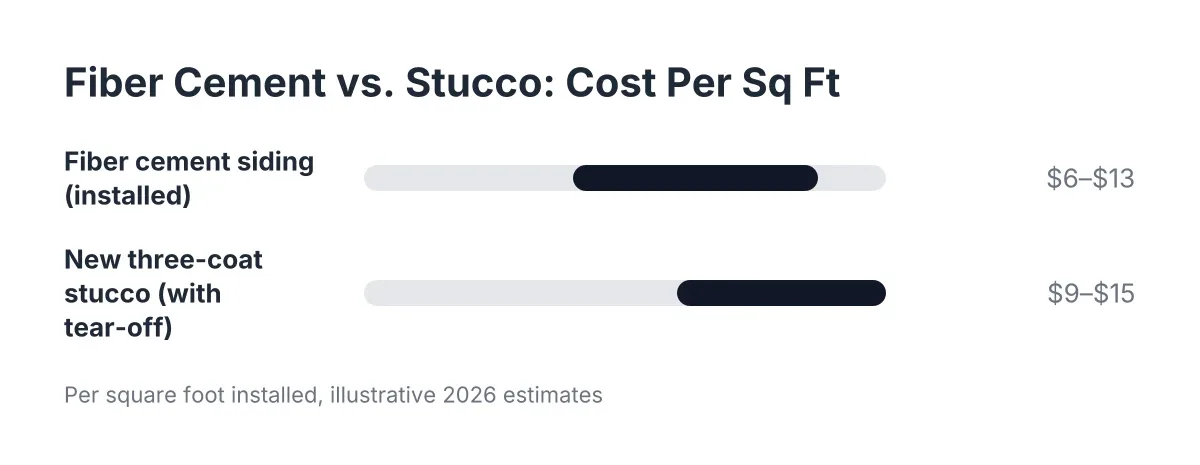
There is no single stucco price per sq ft that fits every house, but the shape of the numbers matters when you are comparing quotes in 2026.
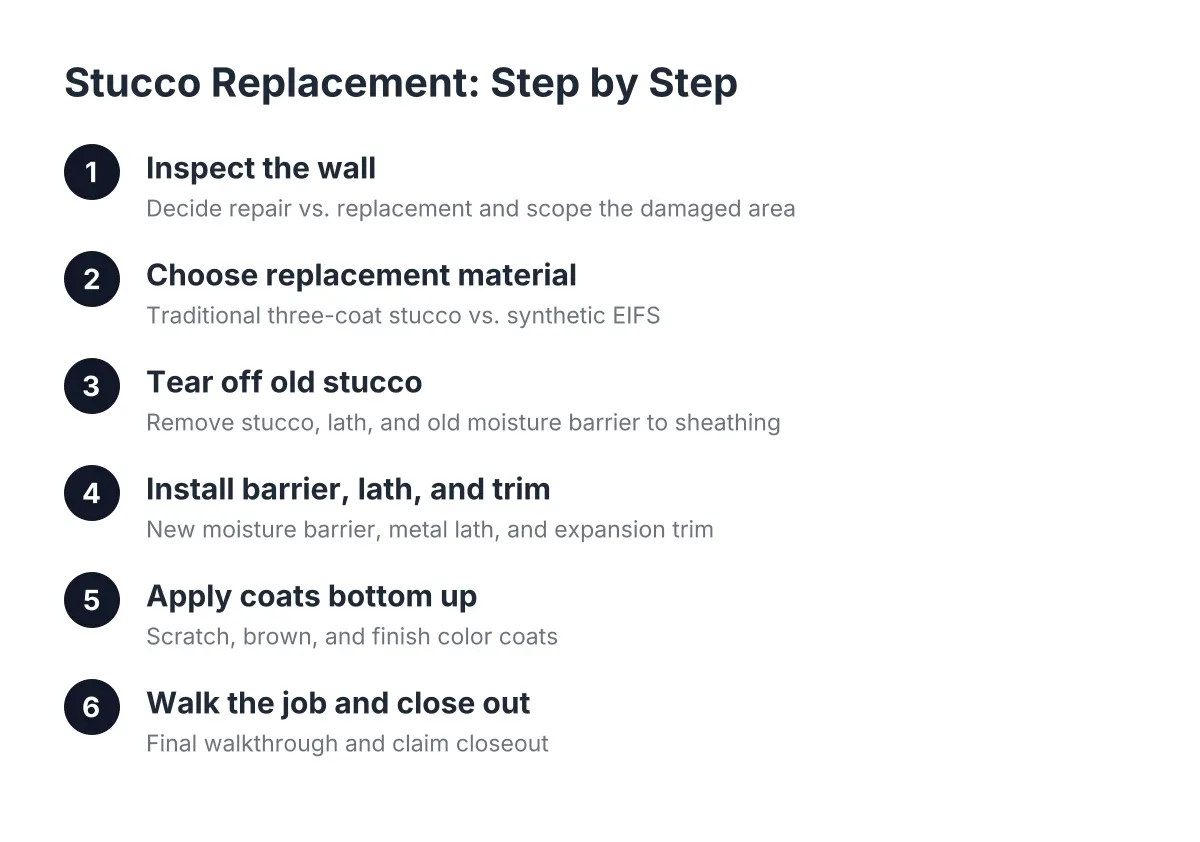
As rough, illustrative estimates: small stucco crack repair and patching jobs in the Castle Rock area often land in the hundreds of dollars to low thousands, depending on access, texture matching, and how much wall is involved. Replacing the stucco on a single wall section, including tear-off, new weather barrier, lath, and a three-coat system, typically runs into the several-thousand-dollar range. Full exterior stucco replacement on an average home is a five-figure project, because you are paying for demolition and disposal on top of new stucco installation cost.
That gap is why scoping matters so much. If one quote says patch for $900 and another says replace the wall for $7,000, neither contractor is necessarily lying. They are answering different questions. The $900 quote assumes the wall behind the stucco is fine. The $7,000 quote assumes it is not. Before you compare prices, make both contractors show you what they think is happening under the surface and why. Ask what they found, not just what they charge.
A few cost drivers worth asking every bidder about:
- Whether the price includes tear-off and disposal or just new material over the old
- How many coats the new stucco system includes, and cure time between them
- Whether texture matching to the untouched walls is included, or the whole elevation gets refinished
- What happens to the price if they open the wall and find water damage in the sheathing
That last one is where hidden costs live. A contractor who will not discuss it before signing is a contractor planning to discuss it after.
Stucco vs Siding: Comparing Your Options If You Do Replace
If a wall or a whole exterior genuinely needs replacement, you have a real choice to make, because you are not obligated to put stucco back. Here is how the main options compare for Colorado's climate.
Traditional stucco
Traditional three-coat cement stucco is the standard on most Castle Rock homes. It handles sun and temperature swings well, resists fire, and can last 50 years or more when installed correctly. It is also the easiest option when you are only replacing one wall, because a good crew can match the texture and color of the rest of the house. Its weaknesses: it is labor-heavy to install, it will hairline crack over time as the house moves, and it depends entirely on the quality of the installation.
Synthetic stucco (EIFS)
EIFS, sometimes called synthetic stucco, is a foam-backed system with an acrylic finish. EIFS vs traditional stucco comes down to insulation versus forgiveness. Additionally, eIFS insulates better and resists surface cracking, but it is far less forgiving of water intrusion; moisture that gets behind EIFS has a hard time drying out. Modern drainable EIFS systems address this, but installation quality matters even more than with cement stucco. If an inspection finds trapped moisture in EIFS, replacement is more often the answer than repair.
Fiber cement siding
Fiber cement, the category most people know as Hardie board, is the strongest non-stucco contender in Colorado. It stands up to hail better than vinyl, resists fire, and holds paint well. In the fiber cement siding vs vinyl comparison, fiber cement costs more up front but lasts longer here. The stucco siding vs hardie plank decision usually turns on looks and neighborhood consistency; on a stucco street, a lone fiber cement house reads as a mismatch, and in some HOA neighborhoods it is not allowed at all.
Vinyl and wood siding
Vinyl is the cheapest to install, which is why stucco vs vinyl siding cost comparisons favor vinyl on day one. But Front Range hail is brutal on vinyl, and hail is not a small factor here. Colorado home insurance premiums rose 65% over the last five years, with hail cited as a major driver, according to the National Association of Insurance Commissioners. A siding material that cracks in every big storm turns into a recurring claim and a recurring deductible. Wood siding looks warm but needs regular refinishing and is the weakest of the group on fire resistance, which matters along the Front Range.
How the stucco vs siding trade-offs net out
For most Castle Rock homes that already have stucco, putting stucco back is the practical answer for partial replacement, because matching the rest of the house matters. For full exterior replacement, the stucco vs siding question opens up: fiber cement becomes a legitimate alternative, vinyl is a cost play with hail risk, and EIFS is worth considering only with a proven installer and a drainable system. Durability, insulation, hail performance, and neighborhood fit weigh differently for every house, which is why two neighbors can reasonably make different choices.
How to Choose: A Straightforward Path
You do not need to become a stucco expert. You need a clear sequence.
- Diagnose before pricing. Have someone who works on stucco daily, not a generalist, look at the damage and tell you whether it is surface or system failure. Ask them to show you the evidence, like hollow sounds, moisture readings, or what a test opening reveals.
- Check the warranty box. If the home is under five years old and the builder is still responsive, push the warranty claim first.
- Get quotes that answer the same question. Make every bidder state whether they are pricing a repair or a replacement, and what assumptions they are making about the wall underneath.
- Match the fix to the failure. Local damage with a dry wall gets stucco patching and texture matching. A failed system gets stucco siding replacement on the affected walls, done over a corrected weather barrier.
- Choose material last. Only after you know the scope does the stucco versus fiber cement versus vinyl question even matter.
The honest summary from a shop that makes its living on repairs: most cracked stucco in Castle Rock does not need replacement, and anyone who jumps to a full tear-off without opening the wall is guessing with your money. But when the system behind the stucco has failed, more patching is the expensive path, not the cheap one. The right contractor is the one who can tell you which situation you are in and show you how they know.
If you need stucco repair, Castle Rock Stucco Pros can help.
Related guide: stucco siding replacement — Complete Guide
Prefer to talk it through? Call (720) 797-8506 — a quick call is usually the fastest way to get a straight answer for your situation.