Stucco Texture Matching Terms Explained: A Plain-English Glossary
If you're getting quotes for stucco repair in Castle Rock, you'll run into words that contractors use every day but rarely explain. This stucco texture matching glossary breaks down those terms in plain English so you can read a quote line by line, ask better questions, and spot a crew that knows the material. Each entry starts with a short definition you can understand on its own, then explains why it matters when your stucco needs fixing. Nothing here requires a background in construction, just a house with stucco on it.
- Texture matching: making the patch look like the rest of the wall
- Finish coat: the top layer you actually see
- Brown coat: the flat middle layer under the finish
- Scratch coat: the first rough layer that grips the wall
- Lath: the mesh or wire the stucco hangs onto
- Aggregate: the sand or grit that shapes the texture
- Float finish: a sandy, even texture rubbed smooth
- Dash finish: a bumpy texture thrown or sprayed on
- Lace (skip trowel) finish: raised patches troweled flat on top
- Sand finish: a fine, uniform gritty surface
- Hairline crack: a thin surface crack, usually cosmetic
- Feathering: blending the patch edge into the old wall
- Fog coat: a thin cement-based color coat over stucco
- Efflorescence: white powdery residue from moisture
- Delamination: stucco separating from the layer beneath it
- Weep screed: the metal strip at the bottom that drains water
- Mockup (test patch): a small sample patch done before the full repair
- Scope of work: the written list of exactly what the crew will do
The Layers Under Your Stucco
Stucco is not one material. It is layers, and most repair problems trace back to one of them. Knowing the layers helps you follow what a contractor says when they open up a damaged section.
Finish Coat
The finish coat is the top, visible layer of stucco that carries the texture and often the color. When people talk about stucco texture matching, this is the layer being matched. A patch can be structurally sound and still look wrong if the finish coat texture or color is off. If a quote mentions redoing the finish coat over a wider area than the damage itself, that usually means the crew is blending the repair so it does not stand out.
Brown Coat
The brown coat is the flat middle layer of stucco that sits between the base layer and the finish. Its job is to give the wall an even, level surface so the finish coat goes on uniformly. If the brown coat is wavy or cracked, no finish work on top will hide it. A crew that talks about rebuilding the brown coat is telling you the damage goes deeper than the surface.
Scratch Coat
The scratch coat is the first layer of stucco, scored with grooves so the next layer can grip it. You will hear this term when damage goes all the way to the wall, such as a hole or serious water damage. Replacing the scratch coat means the repair is a full rebuild of that section, not a surface patch. Expect that to affect both the timeline and the price of the job.
Lath
Lath is the wire mesh or netting attached to the wall that stucco locks onto as it hardens. Rusted or torn lath is a common find behind cracked or bulging stucco, especially where water got in. If a contractor says the lath needs replacing, the repair involves stripping stucco down to the wall itself. That is normal for water damage repair and worth asking about in any quote for a larger patch.
Textures and Finishes: Stucco Texture Matching Explained
Every stucco wall has a named texture, and matching it is the whole game. This part of the stucco texture matching glossary covers the finishes you are most likely to have on a Castle Rock home. If you are not sure which one is on your walls, this guide to identifying your home's stucco texture walks through them with more detail.
Texture Matching
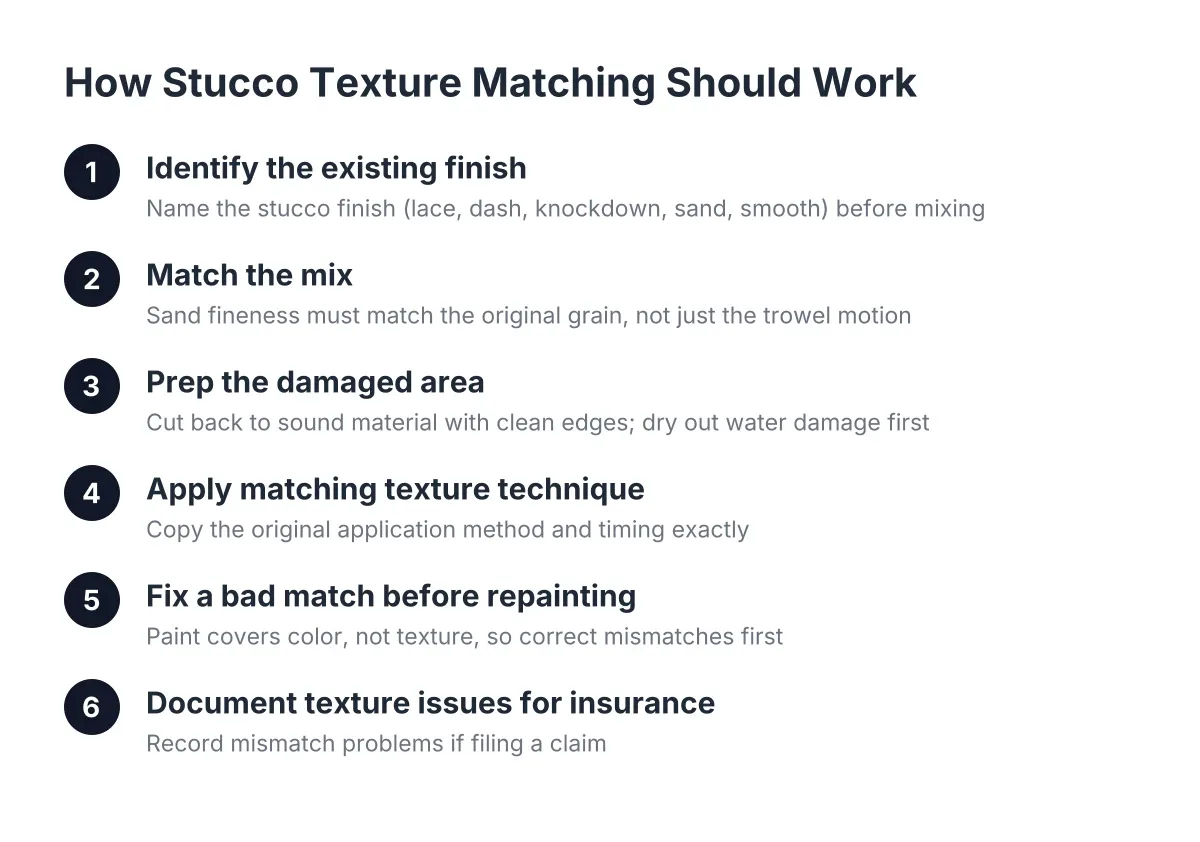
Texture matching means recreating the pattern, depth, and grit of your existing stucco so a repair blends in instead of standing out. It is a hand skill, not a product you buy, which is why two crews can patch the same crack with different results. A patch that holds but looks like a scar is a texture matching failure, and it is the most common complaint homeowners have after stucco repair. Our page on stucco color and texture matching in Castle Rock explains how the process works on a real repair.
Aggregate
Aggregate is the sand or fine gravel mixed into stucco that gives the surface its grit and shape. The size of the aggregate changes how a texture looks and feels, so a patch mixed with the wrong sand will read differently even from across the yard. A contractor who asks about matching aggregate size is paying attention to the right details. One who never mentions it may be planning to slap on a generic mix.
Float Finish
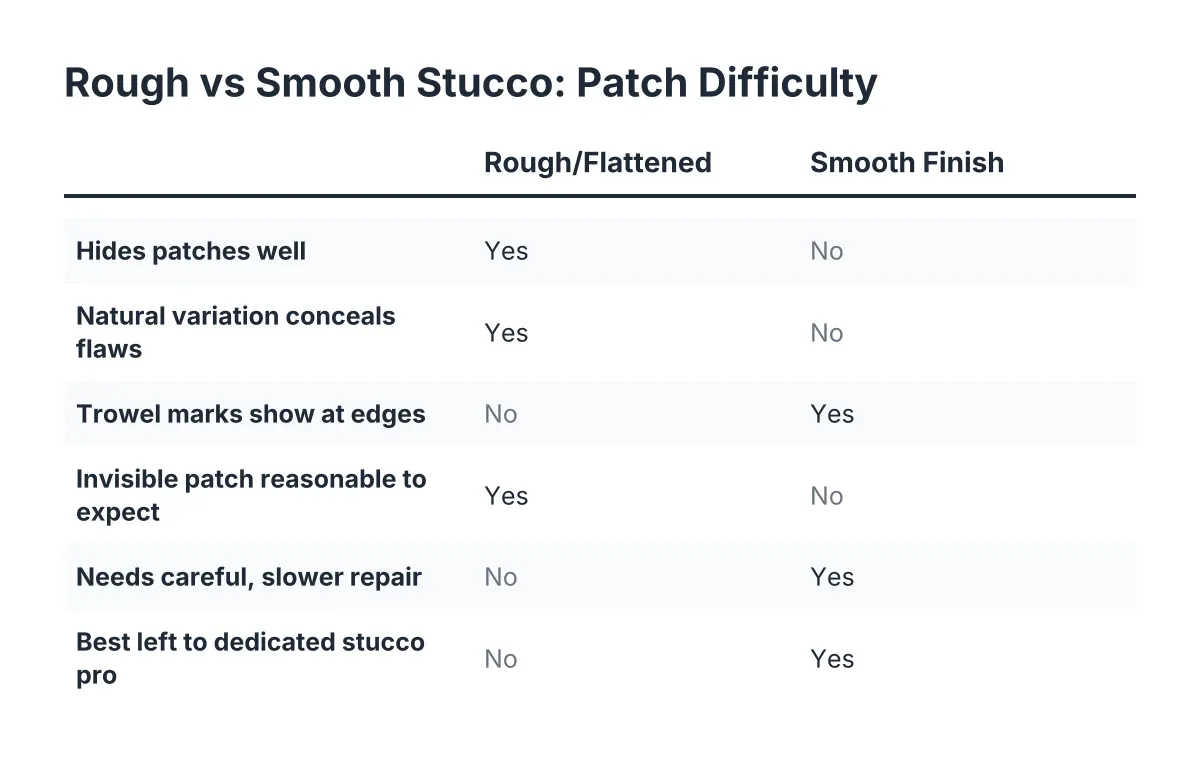
A float finish is a sandy, even stucco texture created by rubbing the wet surface with a flat tool called a float. It is one of the most common finishes on newer homes because it is clean and uniform. That uniformity cuts both ways: a float finish hides small flaws well but shows a poorly blended patch clearly. Matching it comes down to using the right sand and the right hand pressure.
Dash Finish
A dash finish is a bumpy, pebbled stucco texture made by throwing or spraying wet material onto the wall. The randomness is the look, and recreating random by hand takes practice. A dash patch that is too even or too heavy jumps out in low sunlight. Ask any crew quoting a dash repair how they plan to apply the patch material, by hand or by sprayer, and why.
Lace (Skip Trowel) Finish: Texture and Glossary of Stucco Matching
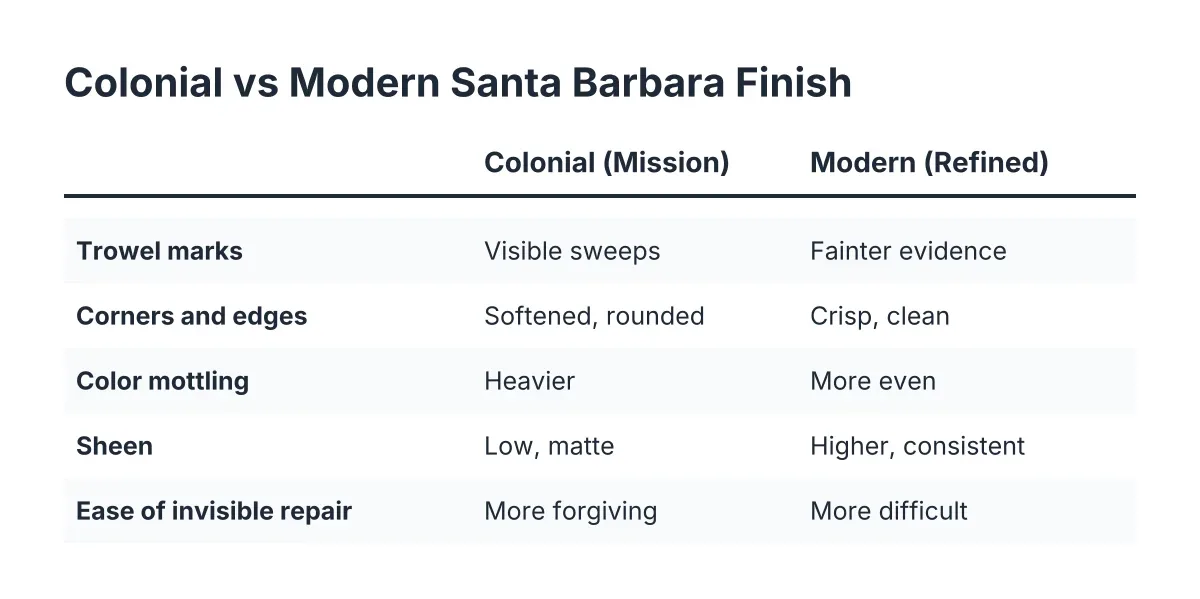
A lace finish, also called skip trowel, is a stucco texture where blobs of material are troweled partly flat, leaving raised islands with smooth tops. It is common across Colorado and hard to fake, because the pattern depends on timing, trowel angle, and how wet the material is. This is the finish where texture matching skill shows most. A test patch is worth asking for before a crew commits to a full wall.
Sand Finish
A sand finish is a fine, uniform stucco texture with a light gritty feel and no raised pattern. It looks simple, but small differences in sand size or troweling show up as a visible halo around a patch. Color matching matters more here because there is no heavy pattern to distract the eye. Crews sometimes recommend a fog coat over sand finishes to even out the color after a repair.
Damage and Repair Terms
These are the words that show up when something is wrong with the wall and on the quote to fix it.
Hairline Crack
A hairline crack is a thin surface crack in stucco, about the width of a credit card edge or less. Most are cosmetic and come from normal settling or temperature swings, which Castle Rock delivers in abundance. They still deserve stucco crack repair, because even thin cracks let water in over time. Wider cracks, or cracks that follow a stair-step pattern, can point to movement behind the wall and deserve a closer look.
Feathering
Feathering means tapering the edge of a stucco patch so it thins out and blends into the surrounding wall instead of ending in a hard line. A patch with no feathering leaves a visible ridge or outline, one of the classic mistakes covered in why texture matching fails in stucco repairs. Good feathering often means the repair area is larger than the damage itself. That is a sign of care, not padding.
Fog Coat
A fog coat is a thin, cement-based color coating sprayed over stucco to refresh or even out its color without adding texture. It is not paint; it soaks into the stucco and lets the wall keep breathing. Contractors often suggest a fog coat when a patch matches in texture but not in color, or when the whole wall has faded unevenly. It can be a practical way to make an older wall and a new patch read as one surface.
Efflorescence
Efflorescence is the white, powdery residue that appears on stucco when water moves through it and leaves minerals behind on the surface. The powder itself wipes off, but it is a symptom, not the problem. It tells you moisture is getting into or behind the stucco. If you see it near a crack or at the base of a wall, mention it when you call about repair, because it can change the scope of the job.
Delamination
Delamination means a layer of stucco has separated from the layer beneath it, often showing up as a hollow sound when you tap the wall or a visible bulge. You cannot fix delamination by coating over it; the loose material has to come off. This is one reason two quotes for the same wall can differ, because one crew found delamination and the other did not check. Tap testing a wall takes minutes and is worth asking for.
Weep Screed
A weep screed is the metal strip at the bottom edge of a stucco wall that lets trapped moisture drain out. If soil, concrete, or mulch buries it, water backs up into the wall and causes damage from the inside. Many stucco water damage repairs trace back to a blocked or missing weep screed. A contractor who checks yours during an estimate is looking at causes, not just symptoms.
Quotes and Paperwork
Mockup (Test Patch)
A mockup, or test patch, is a small sample of the repair texture applied to the wall so you can approve the match before the full job. On tricky finishes like lace, a mockup is the cheapest insurance you can get. It costs the crew a little time and saves everyone an argument later. If a provider offers one without being asked, that is a good sign about how they work.
Scope of Work
A scope of work is the written section of a quote that lists exactly what the crew will do, layer by layer and area by area. It should tell you whether the price covers just filling a crack or cutting back, rebuilding coats, and blending the finish. Vague scopes lead to surprise costs and mismatched patches. For a sense of what drives the numbers, see how much stucco texture matching costs, then compare quotes against their scopes, not just their totals.
Using These Terms
You do not need to talk like a contractor; you just need to follow one. What this stucco texture matching glossary gives you is enough vocabulary to read a quote line by line, ask what layer the damage reaches, and request a test patch before anyone touches the whole wall. When a local crew explains a repair and the words match what you have read here, you will know the conversation is on solid ground.
If you need stucco repair, Castle Rock Stucco Pros can help.
Prefer to talk it through? Call (720) 797-8506 — a quick call is usually the fastest way to get a straight answer for your situation.