Stucco Leak Repair Timeline: What Happens Step by Step After Water Gets In
If you found a stain, a soft spot, or bubbling on your stucco, the question that matters is simple: is this a surface fix, or does the wall need to come open? Stucco leak repair runs on a timeline, and knowing that timeline helps you compare quotes and spot a contractor who is guessing. This guide walks through the process step by step, from the first inspection to the final color coat, so you know what a fair scope looks like before anyone picks up a hammer.
Here is the short version. Cosmetic damage means the finish is affected but the layers behind it are dry and solid. Real water intrusion means the stucco, the paper behind it, or the framing has been wet long enough to soften or rot. The steps below show how a crew tells the difference, and roughly how long each stage takes.
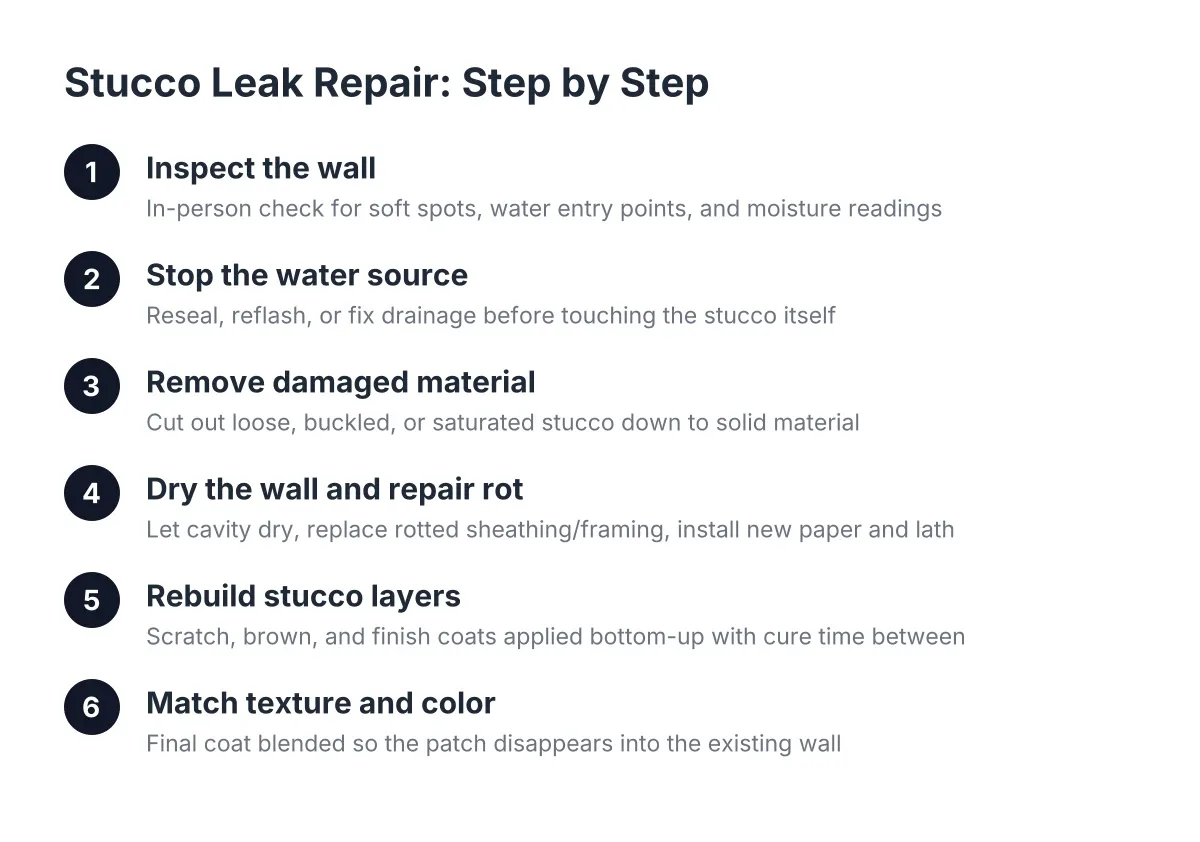
Step 1: Inspect the Wall Before Anyone Quotes a Number
Start with an in-person inspection, not a phone estimate. A crew that quotes stucco leak repair sight unseen is selling a scope, not diagnosing a problem. The inspection usually takes under an hour on a typical Castle Rock home.
A careful inspector does three things. First, they press on the stained or bubbled area to feel for soft spots and delamination, where the stucco has separated from the wall behind it. Second, they trace where the water is coming from, since the stain is often below the actual entry point. Common entry points include window corners, roof-to-wall joints, penetrations like vents or electrical boxes, and grade-level areas where water pools against the foundation.
Third, they may use stucco moisture testing, a meter reading through the wall or a small probe, to confirm whether the layers behind the finish are wet. This matters for quote comparison. If one bid is triple another, the first question to ask is what each contractor found behind the wall, and how they found it.
What the Inspection Reveals About Stucco Leak Repair Costs
A hairline crack with dry material behind it is a crack repair, often a few hundred dollars. A soft spot that gives under hand pressure means moisture has been sitting behind the stucco, and that usually means opening the wall. Staining alone sits in between; fresh stains after one storm may be surface runoff, while recurring stains in the same spot point to an active leak.
Step 2: Stop the Water Source First
Fix the entry point before you fix the stucco. Patching over an active leak buys you a clean-looking wall that fails again within a season or two. This step can be same-day if the source is a failed sealant joint, or it can add a week if a window flashing detail needs rework.
Typical source fixes include resealing window perimeters, correcting flashing at a roof-to-wall joint, sealing penetrations, and improving drainage so water stops gathering at the foundation. That last one matters more than most homeowners expect. Repeated heavy rain pooling near a foundation can cause slight settling, which cracks stucco at the corners and keeps reopening repairs. Keeping water out of penetrations like vents and electrical boxes is the single most important goal of any patch in those areas.
Step 3: Remove All Loose and Damaged Material
Next, the crew cuts out everything that is loose, buckled, or saturated. This is the step where cheap bids cut corners. Leaving soft or buckling stucco in place lets rain keep expanding the wood behind it, so the damage spreads under your new patch.
For a small soft spot, removal might be a two-foot-square cutout done in a morning. For a longer-running leak, the opening grows until the crew reaches dry, solid material on all sides. Expect this stage to take half a day to a full day for most residential repairs.
This is also where hidden costs show up, and where an honest contractor explains them before the inspection, not after demolition. A good quote states the assumed opening size and the price per additional square foot if the rot runs farther than expected. That single line item is the difference between a surprise bill and a predictable one.
Why Older Cracks Cost More to Open
A structural crack left alone for years does quiet damage you cannot see. The building paper behind the stucco dries out and turns brittle, and normal wall flexing can tear it. Once that paper tears, water reaches the sheathing directly. This is why two similar-looking cracks can carry different prices; one still has intact paper behind it, and the other has stucco moisture damage reaching the wood.
Step 4: Dry the Wall and Repair the Rot
Once the wall is open, everything behind it needs to dry before rebuilding starts. Depending on how wet the cavity is and the weather, drying takes one to several days. Rushing this step traps moisture behind new stucco and restarts the whole problem.
With the cavity dry, the crew replaces rotted sheathing and any damaged framing, then installs new building paper and lath, lapped so water sheds outward. Where wood repair pieces are bonded in with construction adhesive, the adhesive needs about 24 hours to cure before further work on that joint, according to Loctite. Plan for this stage to take one to three days on a typical repair.
Step 5: Rebuild the Stucco Layers From the Bottom Up
Stucco goes back on in layers, and each layer needs cure time. A standard rebuild runs scratch coat, brown coat, then finish coat, with a day or more between coats depending on temperature and humidity. Work proceeds from the bottom of the repair upward, which keeps each course properly supported and shedding water the right way.
For Castle Rock homes, weather drives this schedule. Cold snaps and fast-drying summer afternoons both affect cure quality, so a crew that pads the timeline by a day is protecting the repair, not padding the bill.
Here is the full timeline at a glance for a typical single-area repair:
- Inspection and moisture testing: under an hour
- Source fix (sealant, flashing, drainage): same day to one week
- Demolition and removal of loose material: half a day to one day
- Drying and rot repair: two to four days, including cure times
- Stucco rebuild, scratch through finish coat: three to five days with cure time between coats
- Texture matching and color blending: final day
End to end, most residential stucco leak repair jobs run one to two weeks of calendar time, with crew on site for roughly half of that. Remediation of a whole wall or multiple elevations runs longer.
Step 6: Match the Texture and Color So the Patch Disappears
The last step is the one you will look at every day. Texture matching means replicating your home's existing finish, whether that is a knockdown dash, where finish coat is sprayed on and lightly troweled down to blend, or a smoother trowel finish. Color is blended to the existing wall, though a fresh finish coat weathers in over a few months before it fully blends.
This is a fair tiebreaker between quotes. Ask each contractor how they handle texture matching and whether the person doing the finish work does stucco specifically or does siding of all kinds. On a newer build in Stonegate or Meridian, a mismatched patch on the front elevation is visible from the street, and redoing it costs more than doing it right once.
How to Compare Stucco Leak Repair Quotes Against This Timeline
Use the six steps above as a checklist when quotes come in. A complete bid names the water source fix, states the assumed opening size with a unit price for extra square footage, includes drying time, and covers texture matching. A bid that skips straight from "patch the stucco" to a price is pricing step 5 and ignoring steps 1 through 4.
Suppose a homeowner in Carriage Club gets two quotes for a soft spot under a bedroom window: one for $900 and one for $3,800. In that illustrative scenario, the low bid likely covers a surface patch over the soft area, while the higher bid includes opening the wall, replacing rotted sheathing, new paper and lath, and a full three-coat rebuild. Neither number is wrong on its face; they are prices for two different jobs. Your job is to find out which job your wall actually needs, and the inspection in step 1 is what answers that.
One honest limitation: no contractor knows the full extent of stucco water damage until the wall is open. Framing damage that reaches structural members, or moisture problems tied to how the siding was installed originally, may call for a structural engineer or a larger remediation scope. A straightforward local contractor will tell you that at the inspection, before the quote, not after the deposit clears.
If you need stucco repair, Castle Rock Stucco Pros can help.
Prefer to talk it through? Call (720) 797-8506 — a quick call is usually the fastest way to get a straight answer for your situation.