Stucco Crack Repair Terms Explained: A Plain-English Glossary
If you're getting quotes for stucco repair on your Castle Rock home, you're going to run into words that contractors use every day but never explain. This stucco crack repair glossary breaks down those terms in plain English so you can read a quote line by line, ask better questions, and spot a problem before it grows. Nothing here requires a construction background. Each entry is short enough to read while the estimator is still in your driveway.
- Hairline Crack: thin surface crack, usually cosmetic
- Structural Crack: wide crack that signals movement
- Spider Cracking: web pattern of fine cracks
- Efflorescence: white powdery stains from moisture
- Delamination: stucco separating from the wall
- Spalling: stucco chipping or flaking off
- Scratch Coat: first rough layer of stucco
- Brown Coat: second leveling layer
- Finish Coat: outer layer you actually see
- Lath: mesh backing that holds stucco on
- Weep Screed: metal strip that drains water at the base
- Elastomeric Sealant: flexible caulk for moving cracks
- Texture Matching: making the patch blend with the wall
- Color Matching: tinting the patch to match the old finish
- Patch Repair: fixing one damaged spot, not the whole wall
- Moisture Intrusion: water getting behind the stucco
- Substrate: the wall material under the stucco
- Control Joint: planned gap that lets stucco flex
Types of Cracks and Damage
Most of the confusion in a stucco quote starts with what kind of damage you have. These are the terms that describe what's wrong, and this is where a stucco crack repair glossary earns its keep, because the difference between a hairline crack and a structural one changes the whole job.
Hairline Crack
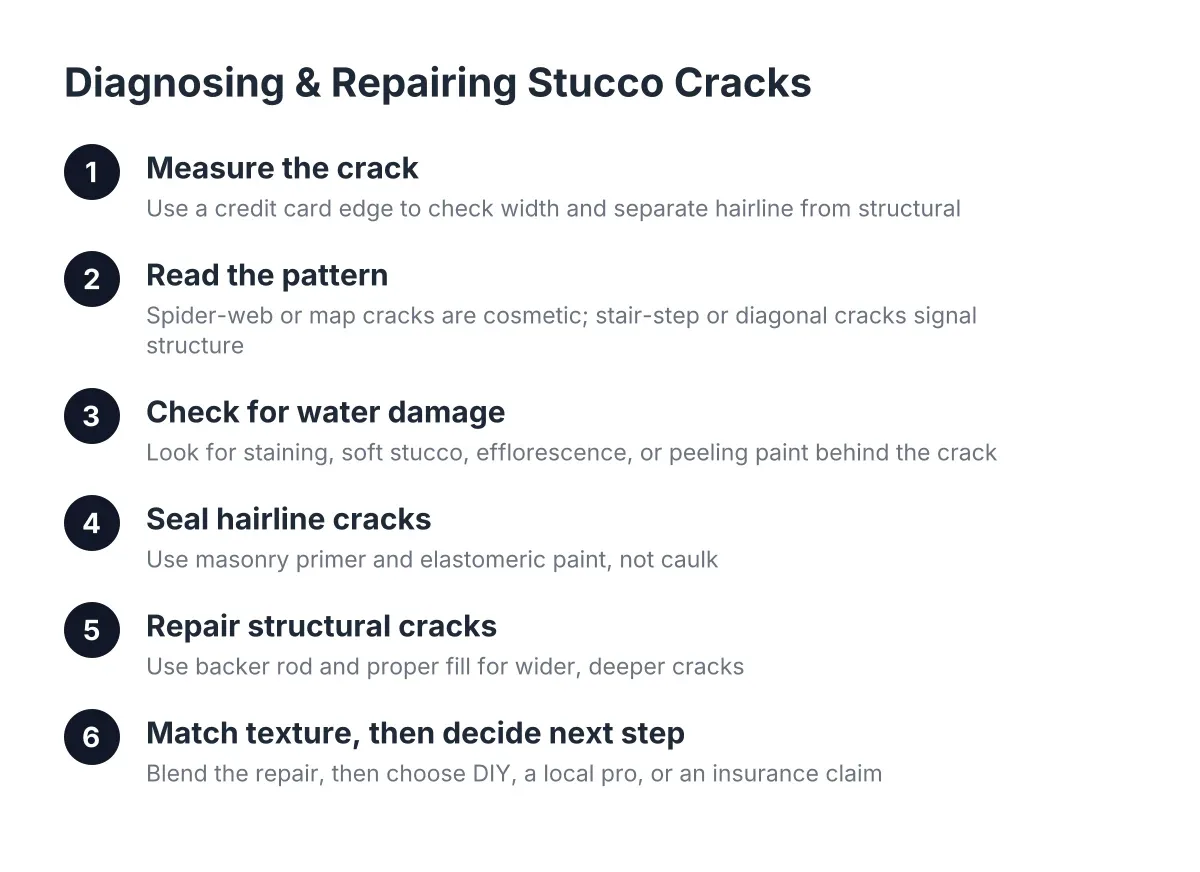
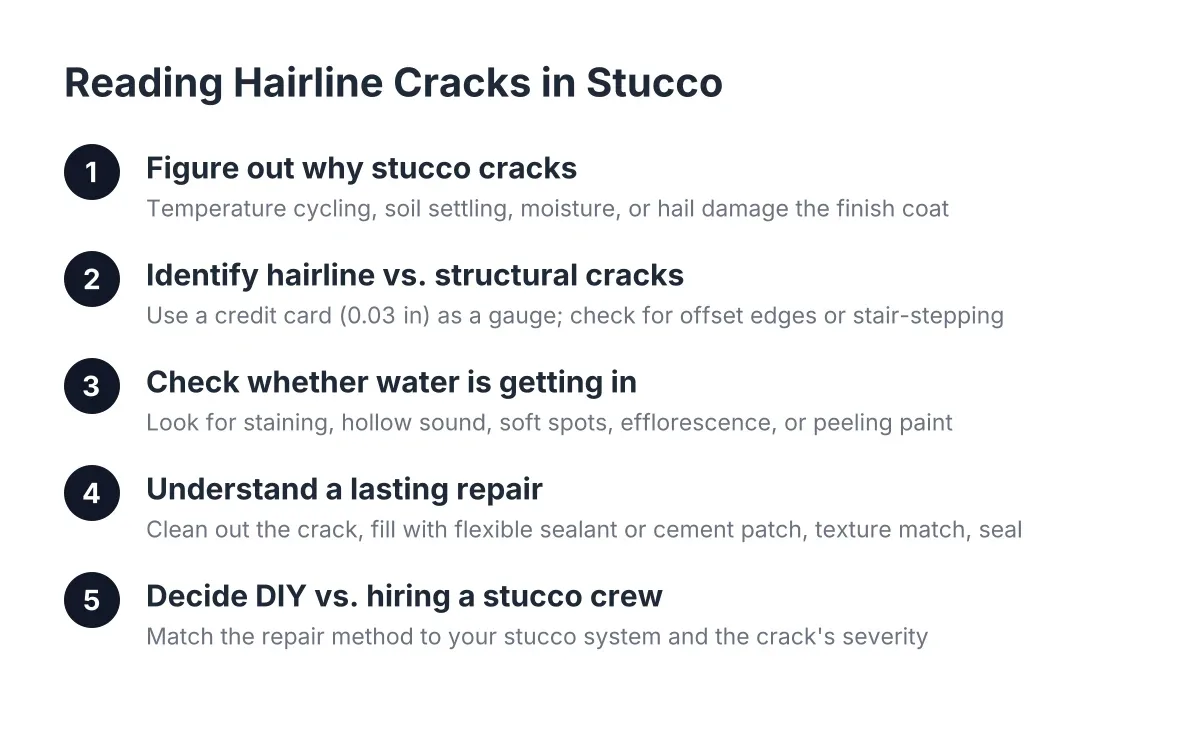
A hairline crack is a thin surface crack in stucco, about the width of a credit card edge or less. Most hairline cracks come from normal settling, temperature swings, or the stucco curing, and they're often cosmetic. They still matter because Colorado freeze-thaw cycles can widen them over time and let water in. If a provider calls your cracks hairline, expect a smaller, simpler repair. For help telling the difference yourself, see hairline vs. structural stucco cracks.
Structural Crack
A structural crack is a wider crack, often wider than a nickel's edge, that points to movement in the wall or foundation behind the stucco. These cracks tend to run diagonally from window and door corners, keep growing, or show one side sitting higher than the other. They matter because patching the surface without fixing the movement means the crack comes back. A provider who flags a structural crack should explain what's moving and why before quoting a fix.
Spider Cracking
Spider cracking means a web-like pattern of fine cracks spreading out from a center point. It usually shows up when the base coat cured too fast, was mixed wrong, or was applied too thin. Spider cracking is mostly a surface problem, but a large patch of it can mean the finish coat needs to be redone rather than spot-fixed. That distinction changes the size of the quote, so ask which one your estimator sees.
Efflorescence
Efflorescence is the white, powdery, or chalky staining that shows up on stucco when water moves through it and leaves minerals behind. It's not dirt, and scrubbing it off doesn't fix anything, because the stain is a symptom of moisture passing through the wall. If a provider points out efflorescence, they're telling you water is getting in somewhere. The real question to ask is where the water comes from, not how to clean the stain.
Delamination
Delamination means the stucco has separated from the wall behind it, even if the surface still looks solid. Contractors often find it by tapping the wall and listening for a hollow sound. It matters because delaminated stucco can't just be sealed; the loose section has to come off and be rebuilt. If your quote mentions delamination, expect the repair area to be larger than the visible crack.
Spalling
Spalling is when the surface of the stucco chips, flakes, or pops off in pieces. It usually happens after water gets into the material and freezes, which is a common pattern in Castle Rock winters. Spalling tells you the damage has moved past a simple crack into material failure. Repairs typically involve removing the failed area down to sound stucco and rebuilding it in layers.
Parts of a Stucco Wall
When an estimator talks about coats, lath, and screeds, they're describing the layers of your wall. Knowing these terms helps you understand how deep a repair goes.
Scratch Coat
A scratch coat is the first layer of stucco, applied directly over the lath and scored with horizontal grooves so the next layer grips it. It's the foundation of a traditional three-coat stucco wall. If your damage goes down to the scratch coat, the repair involves rebuilding the wall in layers, which takes more time than a surface fix. A quote that mentions the scratch coat is describing a deeper repair, not an upsell.
Brown Coat
A brown coat is the second layer of stucco, applied over the scratch coat to level and strengthen the wall. It gives the wall its thickness and flat surface. Cracks that reach the brown coat are more serious than finish-coat cracks because they run through most of the wall's body. A repair that stops at the brown coat and skips a proper finish coat will look wrong and wear fast.
Finish Coat
A finish coat is the outer layer of stucco, the part with the color and texture you see from the street. Many hairline cracks live only in this layer, which makes them cheaper and faster to fix. The catch is matching: a new finish coat patch has to match your existing texture and color, or the repair will stand out. Ask any provider how they handle finish-coat matching before they start.
Lath
Lath is the wire mesh or backing material fastened to the wall that gives stucco something to grab onto. Think of it as the skeleton under the skin. If lath is rusted, torn, or pulling loose, the stucco above it will crack and sag no matter how many times the surface gets patched. Damaged lath means the repair includes tearing out a section and rebuilding from the wall out.
Weep Screed
A weep screed is a metal strip installed at the bottom of a stucco wall that lets trapped water drain out. Without a working weep screed, water sits inside the wall and causes rot, staining, and cracking from the bottom up. If soil, mulch, or concrete covers your weep screed, water can't escape. An estimator who checks the base of your walls first is checking this, and that's a good sign.
Substrate
The substrate is whatever the stucco system is attached to, usually plywood or another sheathing over the wall framing. It's the last line of defense before water reaches the inside of your house. When a provider says the substrate is damaged, they mean water got all the way through, and the job now includes water damage repair, not just stucco crack repair. That's a bigger scope, and it's worth confirming what they found and how far it spreads.
Repair Methods and Materials
These are the terms you'll see on the quote itself, describing what the crew will actually do.
Elastomeric Sealant
An elastomeric sealant is a flexible, rubber-like caulk made to fill cracks that open and close as the wall moves with temperature changes. Standard rigid fillers crack again as soon as the wall shifts; elastomeric products stretch instead. It's a common, legitimate fix for hairline cracks. It's not the right fix for structural cracks or delamination, so be cautious if it's the only line item for major damage.
Texture Matching
Texture matching means shaping the new stucco patch so its surface pattern blends with the rest of the wall. Stucco textures vary from smooth to heavy, and a patch with the wrong texture is visible from the curb even if the color is right. This is skill work, done by hand, and it's a fair thing to judge a local crew on. Ask how they'll blend the patch edges into the surrounding wall.
Color Matching
Color matching means tinting the finish coat or paint on a patch so it blends with the existing wall color. Stucco fades in Colorado sun, so matching the original color from years ago often looks worse than matching today's faded shade. Good color matching accounts for that. If a provider offers color and texture matching together, they're quoting a repair meant to disappear, not just hold.
Patch Repair
A patch repair, or stucco patching, means fixing one damaged section of the wall instead of re-coating or replacing the whole side. It's the right call when damage is contained to a spot: a crack, a hole, or a small failed area. The trade-off is blending, since every patch has edges that need texture and color matching. A patch quote should say how big the patch area is and how the edges will be handled.
Moisture Intrusion
Moisture intrusion means water getting behind the stucco where it can rot wood, rust lath, and feed mold. It's the root cause behind many stucco problems, from staining to spalling to soft spots in the wall. Cracks are often the entry point, which is why fixing them early is cheaper than fixing what water does later. Fine surface cracks can also hint at what's happening behind the wall, so mention any interior stains or musty smells to your estimator.
Control Joint
A control joint is a planned, built-in gap or metal strip in a stucco wall that gives the material room to expand and shrink without cracking. Walls without enough control joints crack wherever the stress decides to release, often near windows and corners. You can't retrofit them easily, but knowing the term helps you understand why a provider says certain cracks are predictable. Cracks at a failed control joint get sealed differently than cracks in the field of the wall.
Using These Terms
You now have enough vocabulary to read a stucco quote line by line and know what each item means for scope and cost. When an estimator says brown coat, weep screed, or elastomeric sealant, you can follow the reasoning instead of nodding along. That's what this stucco crack repair glossary is for: fewer surprises, sharper questions, and a repair you understand before anyone mixes a bucket.
If you need stucco repair, Castle Rock Stucco Pros can help.
Prefer to talk it through? Call (720) 797-8506 — a quick call is usually the fastest way to get a straight answer for your situation.