Why Small Stucco Cracks Become Big Problems: The Water Damage Timeline
A hairline crack in your stucco looks like nothing. You could cover it with a credit card edge. But crews who repair stucco every day in Castle Rock will tell you the same thing: small stucco cracks become big problems on a schedule, and water sets the pace. Understanding the stucco water damage timeline helps you judge how urgent the repair is, what a fair fix looks like, and why two bids for the "same crack" can be hundreds of dollars apart. The crack itself is rarely the issue. What matters is what the crack lets happen behind the wall, month after month, while nobody is watching.
This guide walks through that timeline step by step. If you are gathering quotes right now, or you own a rental and just found cracks during a turnover walkthrough, this will help you judge how urgent the repair is, what a fair fix looks like, and why two bids for the "same crack" can be hundreds of dollars apart.
Step 1: Understand Why Stucco Cracks in the First Place
Before you worry, know what you are looking at. Stucco is a cement-based coating applied in layers over a wood or block wall, with a water-resistant building paper behind it. It is hard, and hard materials crack when things move.
Common causes in Castle Rock homes include:
- Normal curing. Small cracks often show up after the first coat of stucco goes on. That is part of the material drying, not a defect.
- Temperature swings. Colorado walls expand in afternoon sun and shrink overnight. The stucco flexes a little every day.
- Different materials meeting. Where stucco sits on a concrete foundation, the harder concrete and softer stucco expand at different rates. Corner cracks there are usually minor.
- Settling and vibration. New homes settle. Homes near busy roads take constant small vibration.
- Impact. Hail is a real factor here. Colorado home insurance premiums rose 65% over the last five years, with hail cited as a major driver, according to the National Association of Insurance Commissioners. The same storms that dent gutters chip and crack stucco siding.
So cracking itself is normal. The question is never "why did it crack." The question is "what happens next," and that is where the timeline starts.
How Stucco Water Damage Develops Along a Timeline
A hairline crack becomes a water problem through a slow, repeating cycle. Rain or snowmelt wicks into the crack. The moisture sits against the layers behind the stucco. Freeze-thaw cycles, which Castle Rock gets dozens of times each winter, push the crack wider. A wider crack takes in more water, and the cycle speeds up.
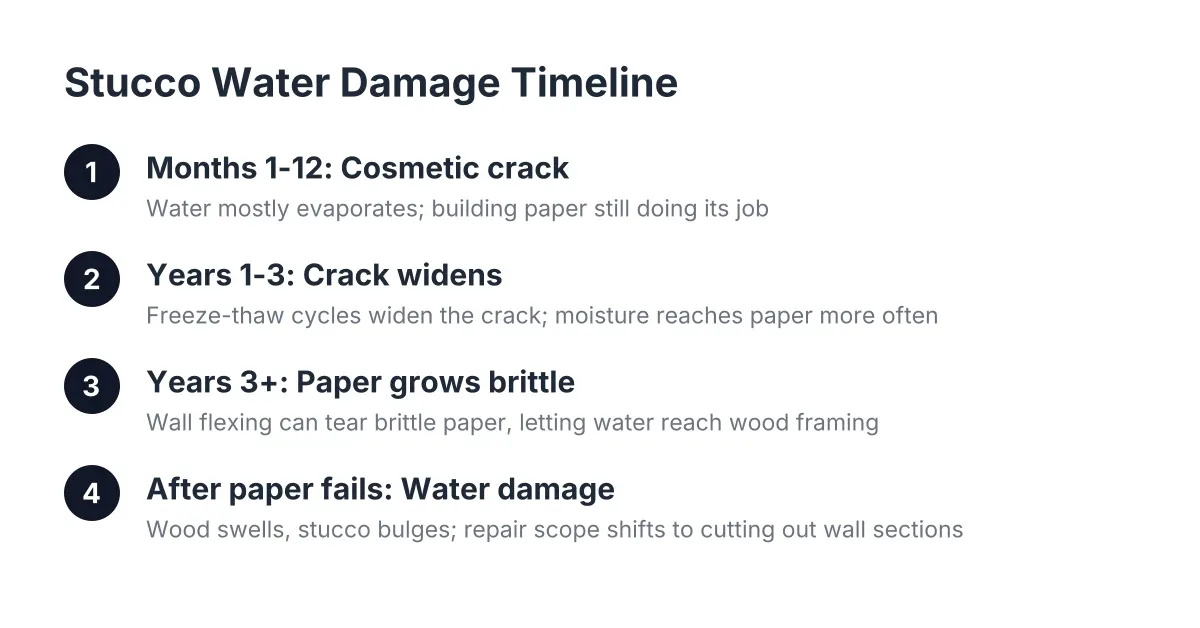
Here is the rough timeline a crew sees play out, framed as general stages rather than exact dates:
- Months 1 to 12: The crack is cosmetic. Water that gets in mostly evaporates back out. The building paper behind the stucco is still doing its job.
- Years 1 to 3: Freeze-thaw widens the crack. Moisture starts reaching the paper layer more often. You may notice the crack "growing" after each winter.
- Years 3 and beyond: The building paper behind an unrepaired structural crack grows brittle with age and moisture exposure. When the wall flexes, that brittle paper can tear. Once it tears, water reaches the wood framing directly. This stucco water damage timeline—from initial crack through years of gradual penetration—shows why early repair prevents expensive replacement.
- After the paper fails: Now you have stucco water damage, not a crack. Wood swells, stucco bulges or buckles, and the repair scope changes from caulk and texture matching to cutting out sections of wall.
That last jump is the one that stings. A crack repair might run a few hundred dollars as an illustrative estimate. Exterior stucco repair with water damage behind it, where rotted sheathing has to come out, can easily run into the thousands. Small stucco cracks become expensive precisely because the damage is invisible until it is not.
Step 3: Sort Hairline Cracks from Structural Cracks
A hairline crack is a surface crack, thin enough that quality paint can flood and seal it; it needs no caulk forced into a cavity. A structural crack is wider and deeper, follows wall movement, and needs caulking over a backer rod. Telling them apart is the single most useful skill a homeowner can bring to a quote comparison.
Check these things:
- Width. If a dime fits in the crack, treat it as structural. If you can barely see it from ten feet away, it is likely cosmetic.
- Pattern. Hairline spider-web cracking spread across a wall usually points to curing or finish issues. A single long crack running from a window corner or door header points to movement.
- Location. A corner crack where stucco meets the concrete foundation is usually minor, caused by the two materials expanding at different rates. A wide diagonal crack mid-wall deserves more attention.
- Direction. Long horizontal cracks and stair-step cracks are the ones worth showing to a professional, since they can track framing or settling movement.
One honest limitation: no visual check from outside tells you the condition of the paper behind the wall. If a crack has been open through several winters, or the stucco sounds hollow when you tap near it, have someone who knows the material open it up and look. Guessing wrong in either direction costs money.
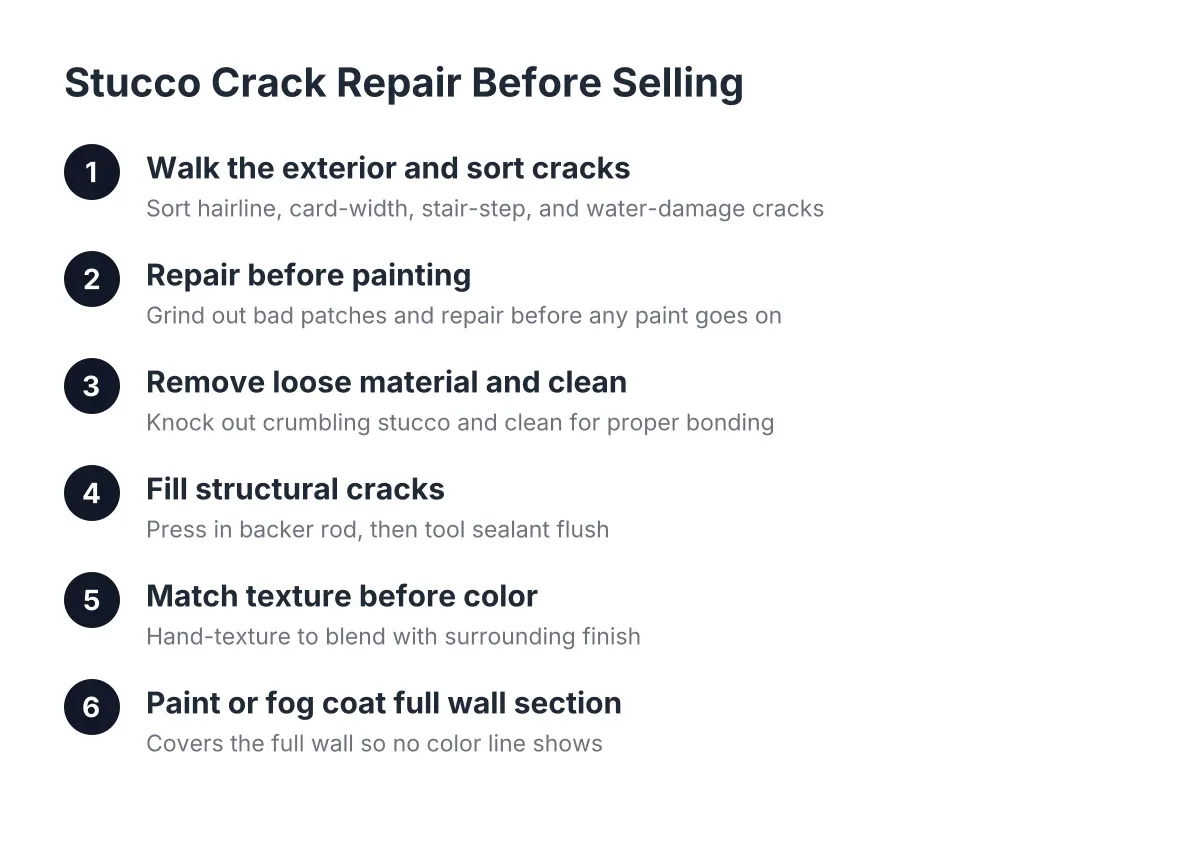
Step 4: Fix Cosmetic Cracks Before the Clock Starts
For true hairline cracks, the fix is simple, and this is one place a landlord watching the budget can keep costs down. Clean the crack, let it dry, and seal it with quality exterior paint or an elastomeric coating that floods the hairline. No caulk cavity is needed for a surface crack.
However, do not pressure wash the wall first at high pressure. Stucco is layered, and high-pressure water driven behind the surface can start the exact moisture problem you are trying to prevent. A garden hose and a soft brush are enough.
The point of this step is timing. A hairline sealed this season never enters the timeline from Step 2. The same crack ignored for three winters might.
Step 5: Repair Structural Cracks with Backer Rod and Caulk, Not Paint
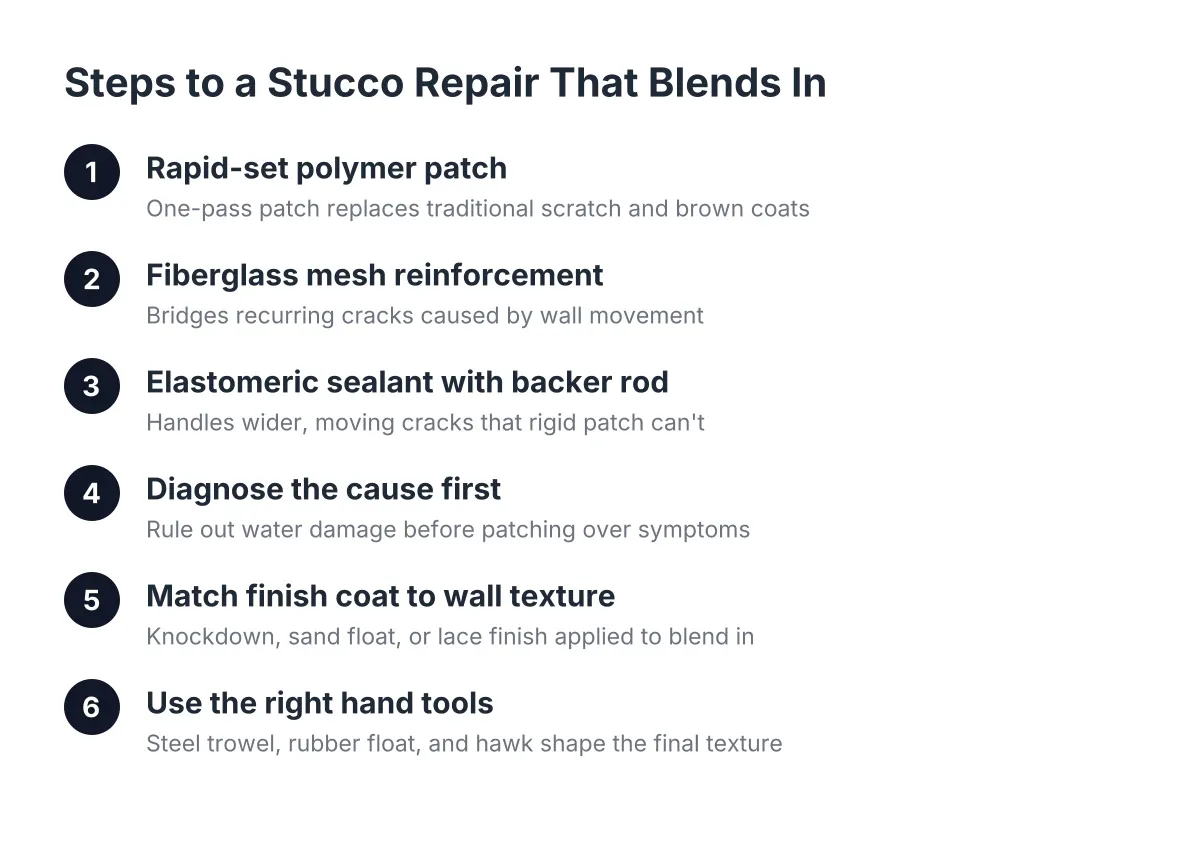
Wider cracks need a real stucco crack repair, and this is where bids start to differ. The method that lasts looks like this:
- Remove any loose or buckling stucco first. Leaving loose material in place lets rain keep expanding the wood behind it, so the damage grows under your fresh patch.
- Open and clean the crack so the sealant has sound edges to grip.
- Insert backer rod. Backer rod is a closed-cell foam cord placed inside the crack to create a backing for the sealant, according to Sika. It controls sealant depth so the caulk flexes instead of tearing.
- Apply a flexible exterior sealant over the rod.
- Patch and texture match so the repair blends with the rest of the stucco siding instead of reading as a scar.
Timing matters on application. Crews doing larger caulk repairs work in the early morning rather than hot afternoon sun, because heat makes the caulk cure badly. If a bidder plans to caulk a west-facing wall at 2 p.m. in July, that tells you something.
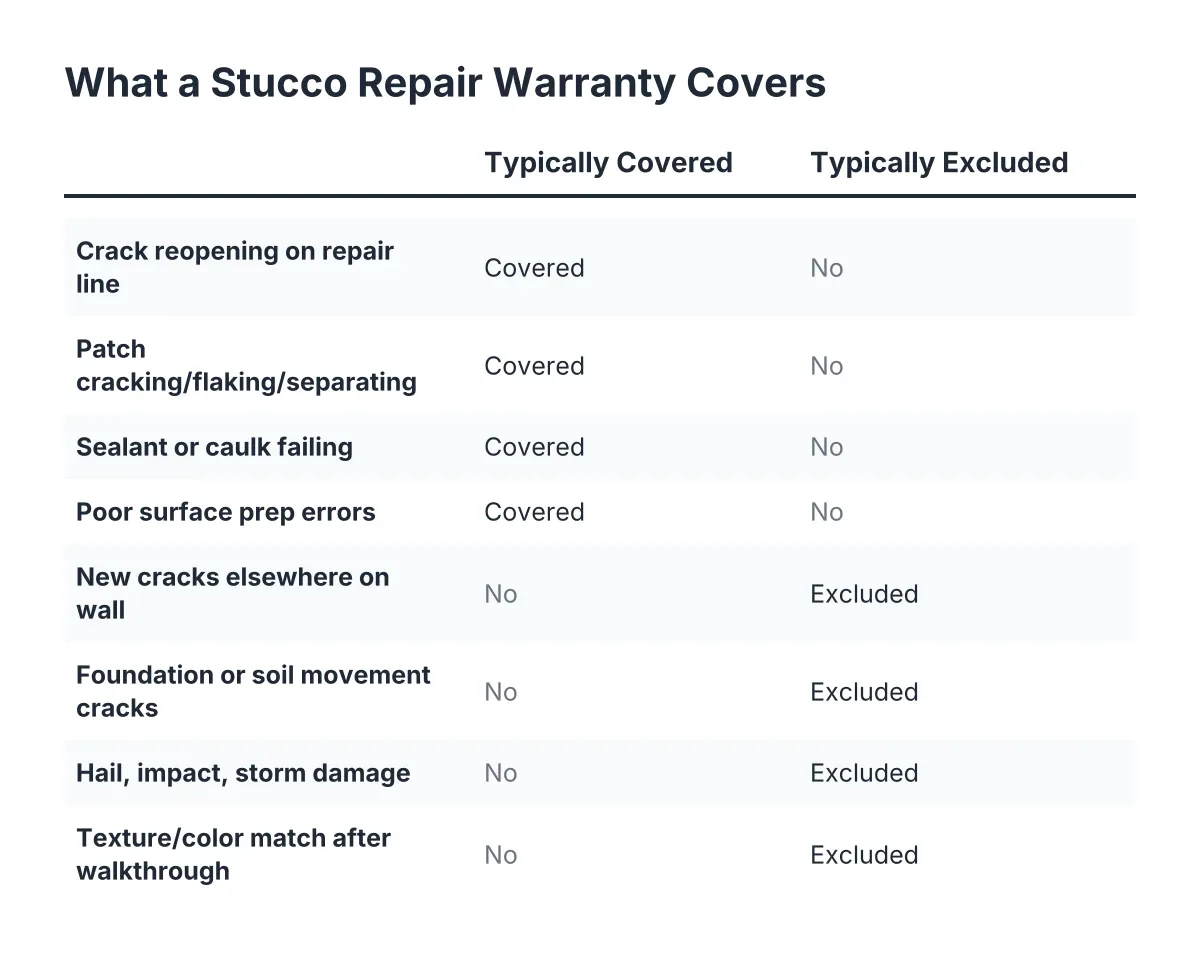
Also be realistic about what caulk can do. Caulking seals the gap; it does not stop the structural movement that opened it. Some cracking can return even after a correct repair if the underlying cause, like settling or vibration, continues. A straight answer about that is a mark of an honest contractor, not a weak one.
Step 6: Use the Timeline to Read Your Quotes
Now apply all of this to the bids on your kitchen table. Two quotes for the same wall can differ because one contractor is pricing a cosmetic seal and the other is pricing removal of loose material, backer rod, patching, and texture matching. Neither is automatically wrong. Ask each one which stage of the timeline they think your wall is in, and why. The stucco water damage timeline helps you evaluate whether an estimate covers only surface repair or also accounts for moisture already behind the wall.
For example, suppose a landlord in Castle Rock finds cracks on a rental's south wall during a tenant turnover. One bid comes in around $400 to seal and paint; another comes in at $2,500 to cut out a bulging section near the foundation. In that scenario, the question is not "who is cheaper." The question is whether the stucco is still sound or whether water already got behind it. A crew that opens up a small test area and shows you can justify its number. A crew that quotes the big job sight unseen cannot.
Questions That Separate Stucco Crews from Generalists
- Will you use backer rod on the wider cracks, or just caulk?
- How do you match the existing texture and color?
- What would make this price go up once you open the wall, and by how much?
- Do you remove loose stucco before patching, or patch over it?
A company that repairs stucco daily answers these without pausing. A general handyman outfit that "also does stucco" usually cannot, and that difference shows up two winters later.
The Short Version
Small stucco cracks become big repairs when water gets time to work. Hairlines sealed early stay cheap. Structural cracks need backer rod, sealant, and texture matching done right the first time. And by 2026 pricing realities in Castle Rock, the gap between fixing a crack now and replacing water-damaged siding later is measured in thousands, not hundreds. The wall will not warn you when the paper behind it tears. The crack you can see today is the only notice you get.
If you need stucco repair, Castle Rock Stucco Pros can help.
Prefer to talk it through? Call (720) 797-8506 — a quick call is usually the fastest way to get a straight answer for your situation.