Stucco Siding Replacement in Castle Rock: When Patching Stops Making Sense
We fix stucco for a living, so you might expect us to push repairs over replacement every time. The truth is more useful than that. Some stucco walls need a patch, some need a full section replaced, and a few need stucco siding replacement across the whole wall. This guide explains the decision of whether to patch versus replace stucco in Castle Rock, and gives you a repair-first point of view so you can avoid paying for a bigger job than you need, and avoid patching a wall that will just crack again next spring.
If you are staring at a crack right now and wondering whether it is normal, you are in the right place. If you are getting a house ready to list and an inspector or realtor flagged the stucco, you are also in the right place. The decision comes down to the same question either way: is this a surface problem, or has the wall system underneath started to fail?
Why Patching Is Usually the Right First Answer
Most stucco problems in Castle Rock do not need replacement. Hairline cracks, small spider cracks near windows, chips from a ladder or a lawn mower, and isolated holes are all repair work. A good stucco crack repair or stucco patching job handles them in a day or two, and a proper texture match makes the patch hard to spot once the wall weathers in.
Here is the part most websites skip: a patch only holds if the cause of the crack gets addressed too. A crack that came from normal settling or thermal movement is a one-time event. A crack that came from poor drainage, a leaking gutter, or vibration will come back through the new patch within a season or two. Any honest repair estimate should name the suspected cause, not just the fix.
Patching has limits, though. Stucco is a layered system: lath, a scratch coat, a brown coat, and a finish coat, or a synthetic version of the same idea. When the damage runs through those layers, or when water has been getting behind them for years, patching the surface is like painting over rot. That is where replacement enters the conversation.
When a Crack Is Just a Crack, and When It Is Not
Here is the plain read most "cracks can mean different things" articles will not give you. Look at three things: width, pattern, and what is behind the wall.
Width first. Hairline cracks, thinner than a credit card edge, are normal in cement stucco. The material shrinks as it cures and moves with temperature swings, and Castle Rock gives it plenty of those. These are cosmetic until water starts getting in, so sealing them is maintenance, not an emergency.
Pattern matters more. A single diagonal crack running from a window corner is common stress cracking. A map of cracks spreading across a large area, cracks wider than about an eighth of an inch, or cracks paired with bulging or soft spots point to movement or moisture behind the stucco. Horizontal cracks along the base of a wall deserve a closer look too, since water tends to collect there.
Then check for water damage signs:
- Staining or dark streaks below windows, at wall bases, or under rooflines
- Stucco that sounds hollow when you tap it with a knuckle
- Soft, crumbly, or flaking areas, especially near the ground
- Rust bleeding through the surface from the lath underneath
- Interior signs like peeling paint or musty smells on the same wall
One or two hairline cracks with none of those signs is almost always a patch. Wide or spreading cracks plus any of those signs means someone should open up a small test area before anyone quotes you a full wall.
Patch or Replace Stucco: How to Know Which You Need
You likely need to replace stucco rather than patch when the damage goes past the finish coat into the base coats or lath, when water has been trapped behind the wall long enough to rot the sheathing, or when the same areas keep cracking after repeated repairs. Surface problems get patched. System failures get replaced.
The clearest tell is history. Suppose a Castle Rock homeowner has patched the same south-facing wall three times in six years, and each spring new cracks show up a foot from the last repair. In that scenario, the finish coat is not the problem. The base coats have lost their bond, or the wall is moving, and more patching is money spent on a wall that has already decided to fail.
The second tell is what a contractor finds when they remove a small section. If the lath is rusted through, the paper behind it is shredded, or the sheathing is dark and soft, the water damage is systemic. Replacing that section down to the framing and rebuilding the layers correctly is the only repair that lasts. Patching over it hides the problem for a year or two, which matters if you plan to live there, and matters even more if you plan to sell.
The third tell is scale. There is a rough tipping point in this trade: once failing areas cover a large share of a wall, sectional replacement from corner to corner costs less over time than chasing patches. The technically right way to fix a badly deteriorated corner or wall section is to replace the stucco across that full section rather than dropping a small patch in the middle. A patch in the middle of a large failing field just moves the next crack over by a few feet.
A Repair-First Rule of Thumb
Use this three-tier framework:
- Patch it if cracks are hairline to moderate, the wall sounds solid when tapped, and there is no staining or softness. This covers most Castle Rock homes.
- Replace the section if one wall or area shows wide cracks, hollow spots, rusted lath, or rotted sheathing, but the rest of the exterior is sound. Replace corner to corner, fix the water source, and texture match to the rest of the house.
- Replace the exterior only if failure shows on multiple walls, the stucco is at the end of its life, or an improperly installed synthetic system has trapped moisture across the home. This is the rare case, not the default.
Be suspicious of anyone who jumps straight to tier three without opening up the wall first. Be equally suspicious of anyone who quotes a surface patch without asking where the water is coming from.
Traditional Stucco vs. Synthetic: Why the Material Changes the Answer
The repair-versus-replace math depends on what is on your walls. Traditional three-coat cement stucco is a hard, breathable shell over metal lath. It cracks more readily, but it also dries out, and individual cracks are straightforward to repair. A well-maintained cement stucco exterior can last for decades, which is why repair is usually the right call for it.
Synthetic stucco, often called EIFS, is a different system: foam insulation board with a thin acrylic finish. It resists hairline cracking better than cement stucco and insulates well. The catch is moisture. If water gets behind an EIFS wall through a bad window seal or a missing flashing detail, it has nowhere to go. Older barrier-type EIFS installations without drainage are the most common reason a home needs large-scale stucco siding replacement rather than repair, because the damage spreads invisibly behind an intact-looking surface.
So before deciding anything, find out which system you have. Tap the wall; cement stucco sounds and feels like masonry, while EIFS feels slightly hollow and gives a duller sound. A local contractor who works with both can confirm it in minutes. The answer changes the inspection, the repair method, and the cost.
What Replacing Stucco Siding in Castle Rock Involves
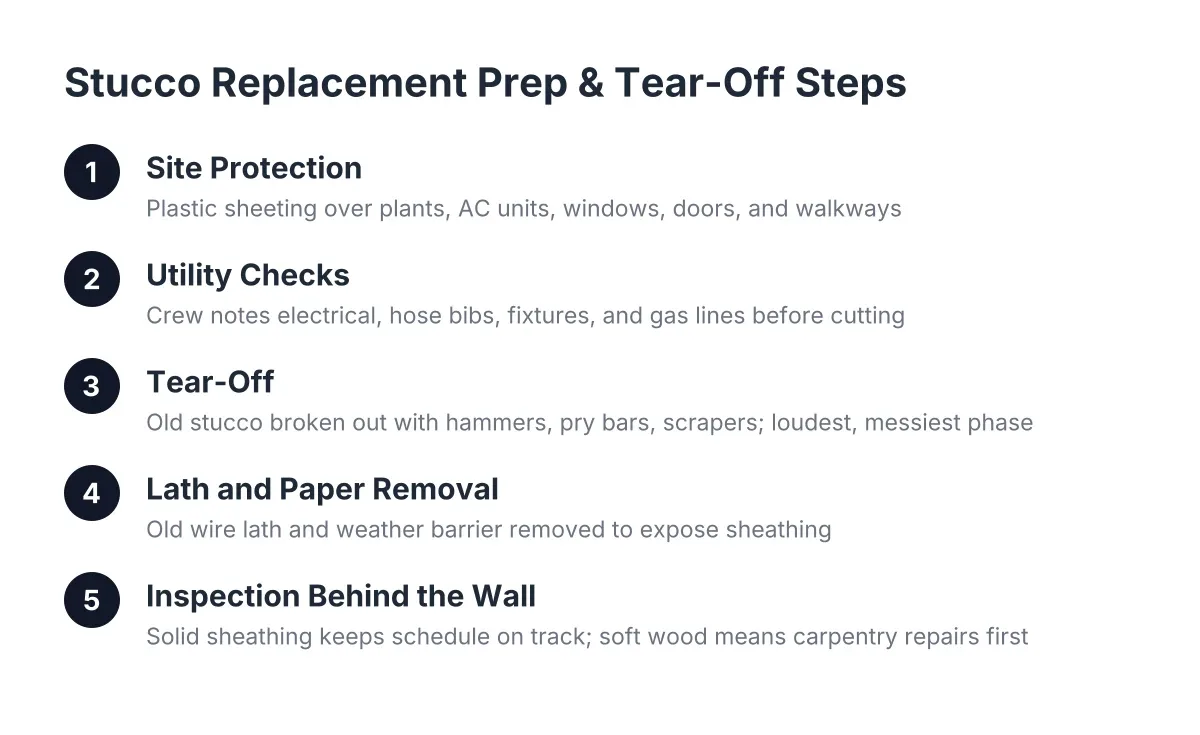
A proper sectional replacement follows a consistent scope, whether it covers one wall or four. Knowing the steps helps you judge whether a quote covers the whole job or just the visible part.
- Removal of the failed stucco down to the lath or sheathing across the full affected section
- Inspection and repair of the sheathing, framing, and any rotted material behind the wall
- New weather barrier and lath, installed with correct overlaps and flashing at windows, doors, and transitions
- New base and finish coats, either the traditional scratch and brown coats or a modern polymer-modified base, then the finish
- Texture matching and color blending so the new section reads as part of the original wall
Two scope details matter more than homeowners expect. First, the edges. When stucco gets cut back for a replacement section, the lath along the cut should stay exposed and rough rather than ground off clean, so the new work ties into the old and weatherproofs correctly. A clean grinder cut through everything forces the crew to open up more wall later, which adds cost. Second, texture matching is a skill, not an afterthought. A structurally perfect replacement with the wrong texture looks like a repair from the street, and if you are listing the house, buyers will see it from the curb.
Fixing the cause is usually extra, and it should be. If a downspout, grade slope, or window seal caused the water damage, replacing the stucco without correcting it means paying for the same wall twice.
Stucco Replacement Cost and Timeline in Castle Rock
Stucco replacement cost in Castle Rock depends on square footage, how deep the damage goes, access, and the finish you are matching, so treat any number here as a rough illustration. As an estimate only, small sectional replacements often land in the four-figure range, while a full exterior is a five-figure project. The honest answer is that nobody can price it accurately without seeing the wall and, often, opening a small section of it.
Timelines are more predictable. A patch is typically a one-day or two-day job. A sectional replacement usually runs several days to about a week, because cement coats need cure time between layers. Modern polymer-modified, rapid-setting patch materials can combine the base coats into a single application for repair work, which shortens smaller jobs considerably. A full exterior replacement is a multi-week project, weather permitting.
For pre-listing sellers, that difference drives the decision. If you are 45 days from listing, a corner-to-corner section replacement with good texture matching is realistic. A full exterior replacement probably is not, and in most cases it is not necessary either. Targeted repair of the visible defects an inspector will flag is the right scope for that timeline.
Why Castle Rock Weather Makes This Decision Local
Colorado's Front Range is hard on exterior walls. Freeze-thaw cycles work water into hairline cracks and wedge them wider every winter. Intense sun on south and west walls bakes the finish coat. Then there is hail. Colorado logged 182,591 hail insurance claims from 2013 to 2015, the second most in the nation, according to the Rocky Mountain Insurance Information Association. Hail that dents cars also chips and bruises stucco finish coats, and those impact points become entry paths for water.
That weather shows up in insurance bills too. Colorado home insurance premiums rose 65% over the last five years, with hail cited as a major driver, according to the National Association of Insurance Commissioners. The practical takeaway for a stucco owner: small exterior damage in this climate does not stay small. A chipped finish coat that would be cosmetic in Phoenix becomes a freeze-thaw crack here by March, so timely stucco crack repair is cheap insurance against a replacement-scale problem later.
Season matters for the work itself. Cement stucco coats cure best in moderate temperatures, so spring through fall is the working window for most replacement jobs in Castle Rock. If a wall fails in December, a contractor may do temporary weatherproofing and schedule the full replacement for warmer weather. That is normal practice, not a dodge.
DIY, or Call Someone Local
Homeowners can handle the small stuff. Sealing a stable hairline crack with an elastomeric sealant is a reasonable weekend task, and the materials for a small patch, including patch compound and mesh, are stocked at general hardware stores. For narrow but deeper cracks, a foam backer rod gives the sealant a proper backing inside the crack before you apply it, a technique noted by Sika.
The base coats are where DIY goes wrong. Applying scratch and brown coats looks simple and is not; getting the thickness, cure timing, and bond right takes practice, and a failed base coat means redoing the whole patch. Texture matching is harder still. Anything involving lath, the weather barrier, flashing, or suspected water damage behind the wall belongs with a pro, because the cost of getting the weatherproofing wrong is the whole wall. If you see bulging, soft areas, rust stains, or interior moisture signs, stop watching the crack and make the call.
How to Get a Fair Quote for Stucco Siding Replacement Around Castle Rock
When you are comparing contractors for repair or replacement, three questions separate the ones who know stucco from the ones who do it occasionally between siding jobs:
- What caused this damage, and does your quote address the cause? A quote that only covers the surface is an invitation to pay again in two years.
- Will you open up a test area before quoting replacement? Nobody can honestly scope water damage from the surface. A contractor willing to inspect behind the stucco before pricing a big job is protecting you from both under- and over-scoping.
- How will you match the existing texture and color, and where will the new work tie into the old? Section-to-corner transitions hide the seam. A patch floated in the middle of a wall announces itself.
A fair quote names the sections being replaced, describes what happens if hidden damage turns up behind the wall, and separates the stucco work from any drainage or flashing fixes. Be wary of a same-day replacement quote for a problem nobody opened up, and be equally wary of the cheapest patch bid on a wall showing water damage signs. Both cost you more in the end, one in overpayment and one in rework.
This is also where local matters in a practical way. A crew based near Castle Rock has seen what freeze-thaw and hail do to these specific walls, can come back to look at a test cut without routing you through a call center, and has a reputation in town to protect. For a decision this dependent on judgment, who shows up matters as much as what the quote says.
If you have a crack you have been watching, or an inspection report flagging stucco before a listing, have a local stucco crew look at it in person. A short walk around the wall settles the patch-versus-replace question faster than another week of staring at the crack, and you will know what the fix actually requires before you spend a dollar. Reach out, describe what you are seeing, and get an estimate based on your wall, not a template.
If you need stucco repair, Castle Rock Stucco Pros can help.
Prefer to talk it through? Call (720) 797-8506 — a quick call is usually the fastest way to get a straight answer for your situation.