Identifying Stucco Damage Types: 8 Cracks, Holes, and Water Signs to Know
If you own stucco property in Castle Rock, identifying the different types of stucco damage early is the difference between a small patch and a torn-open wall. A hairline crack, a corner chip, and a soft spot near a downspout are three different problems with three different fixes. This list walks through eight damage types you can spot from the ground, what each one usually means, and which ones need a pro before they get worse.
That matters whether you are a homeowner staring at a patch that never blended in, or a landlord walking a rental between tenants. Knowing what you are looking at helps you get honest bids, compare options, and avoid paying twice for the same repair.
1. Hairline Cracks: The Ones You Can Usually Live With
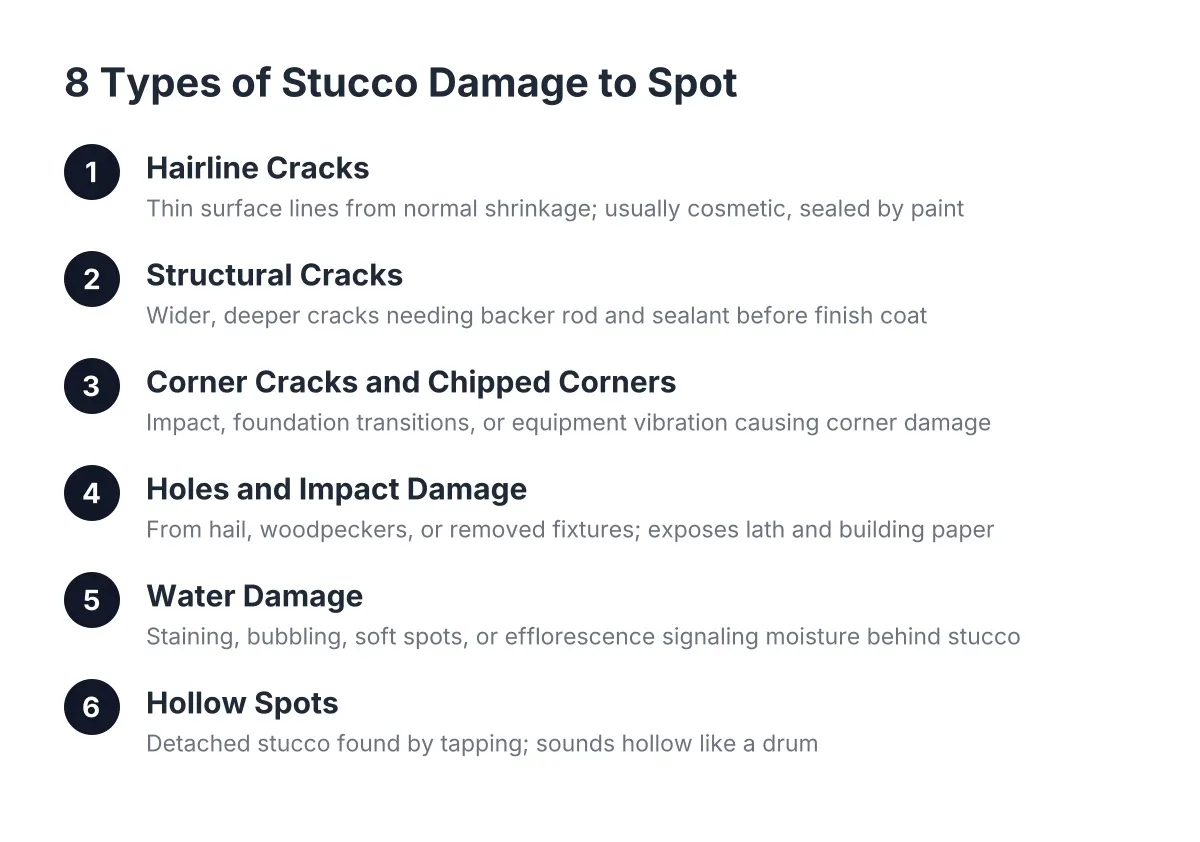
Hairline cracks are thin surface lines, about the width of a credit card edge or less, that follow the finish coat without going deep into the wall. They come from normal shrinkage as stucco cures and from Castle Rock's freeze-thaw swings, and most of them are cosmetic.
The fix is simple. Because these cracks are shallow, they do not need caulk forced into a cavity; a good quality exterior paint will flood and seal the hairline. However, keep an eye on them. If a hairline crack widens season over season, it has graduated into the next category on this list.
2. Structural Cracks: Wider, Deeper, and Worth Taking Seriously
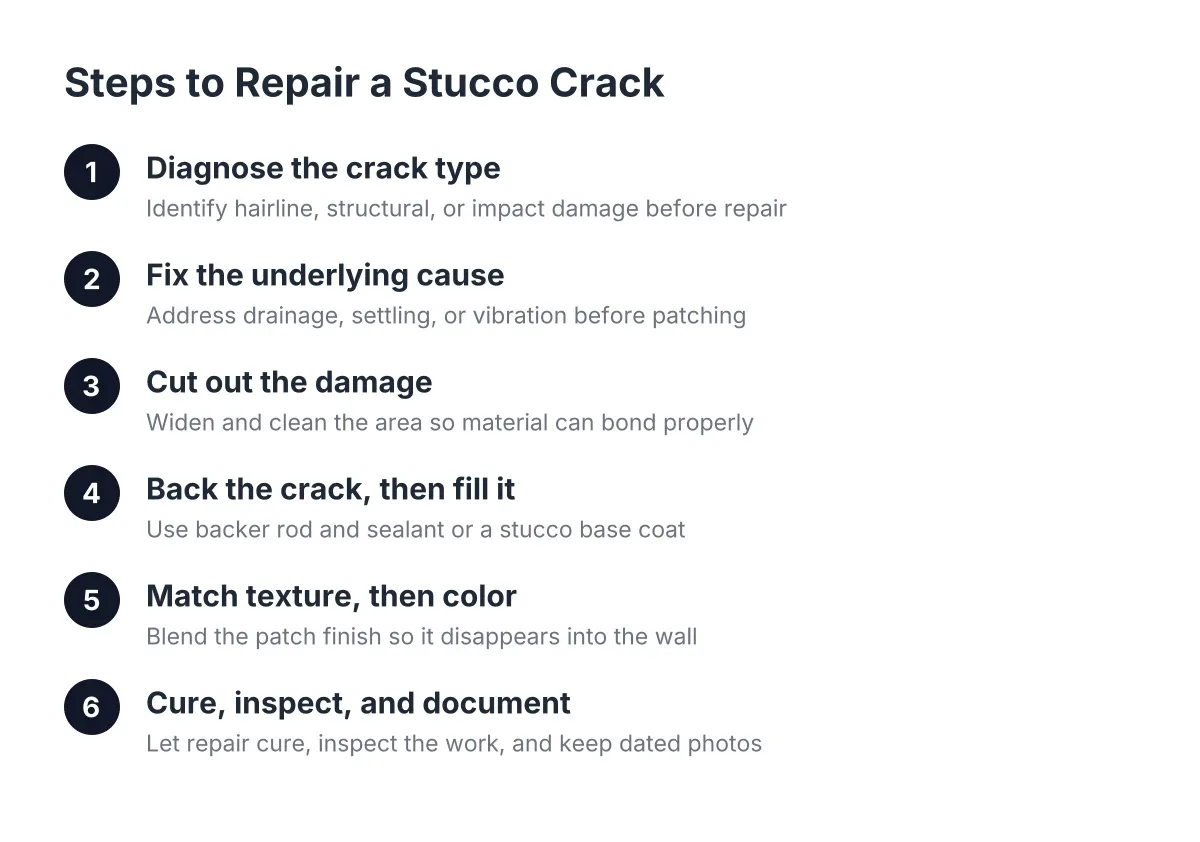
Structural cracks are wider than a hairline, deep enough to catch a fingernail, and they often run diagonally from window corners, doors, or along the foundation line. These cracks move with the wall, so paint alone will not hold them. They need to be opened up, fitted with backer rod, and sealed before the finish coat goes on. Backer rod is a closed-cell foam cord that creates a backing inside the crack so the sealant has something to grip, according to Sika.
Do not let these sit. Behind the stucco is a layer of building paper that keeps water off the wood framing. Left alone for years, that paper turns brittle, and normal wall flexing can tear it. At that point a crack repair becomes a water intrusion repair, and the cost jumps.
3. Corner Cracks and Chipped Corners: Common Types of Stucco Damage
Corners take the most abuse on any stucco home. Ladders, trash cans, hail, and mowers all find corners first. Beyond impact, two other causes show up again and again in Castle Rock:
- Foundation transition cracks. Where stucco sits on top of a hard concrete foundation, the two materials expand and contract at different rates. A crack along that line is usually minor, not a structural warning.
- Vibration from equipment. An air conditioning condenser mounted near a corner can transmit vibration into the wall. Combine that with poor drainage pooling water at the foundation, and the corner cracks and keeps cracking.
A partial corner patch is quicker and cheaper than re-stuccoing the whole elevation, and for most rentals it is the right call. The catch: if the cause is vibration or drainage, fix that too, or the crack comes back and you pay for the same repair twice.
4. Holes and Impact Damage
Holes come from hail, woodpeckers, removed fixtures, satellite dish mounts, and the occasional errant baseball. A hole smaller than a quarter is a straightforward stucco patching job. Larger holes matter more because they expose the lath and building paper underneath to rain and snow.
Hail is not a small risk here. Colorado's May 8, 2017 Front Range hailstorm caused $2.3 billion in insured damage and remains the state's costliest catastrophe, according to the National Insurance Crime Bureau. After a big storm, walk every side of the building. Hail hits on stucco often look like small circular divots or crushed spots in the finish, and they are easy to miss from the driveway.
5. Water Damage: Staining, Bubbling, and Soft Spots
Water damage is the type that costs the most when ignored. Look for these signs:
- Dark or rust-colored streaks below windows, at roof lines, or under scuppers
- Bubbling or peeling paint on the stucco surface
- Soft or crumbly texture when you press on the wall
- White chalky deposits, called efflorescence, which mean water is moving through the wall and leaving salts behind
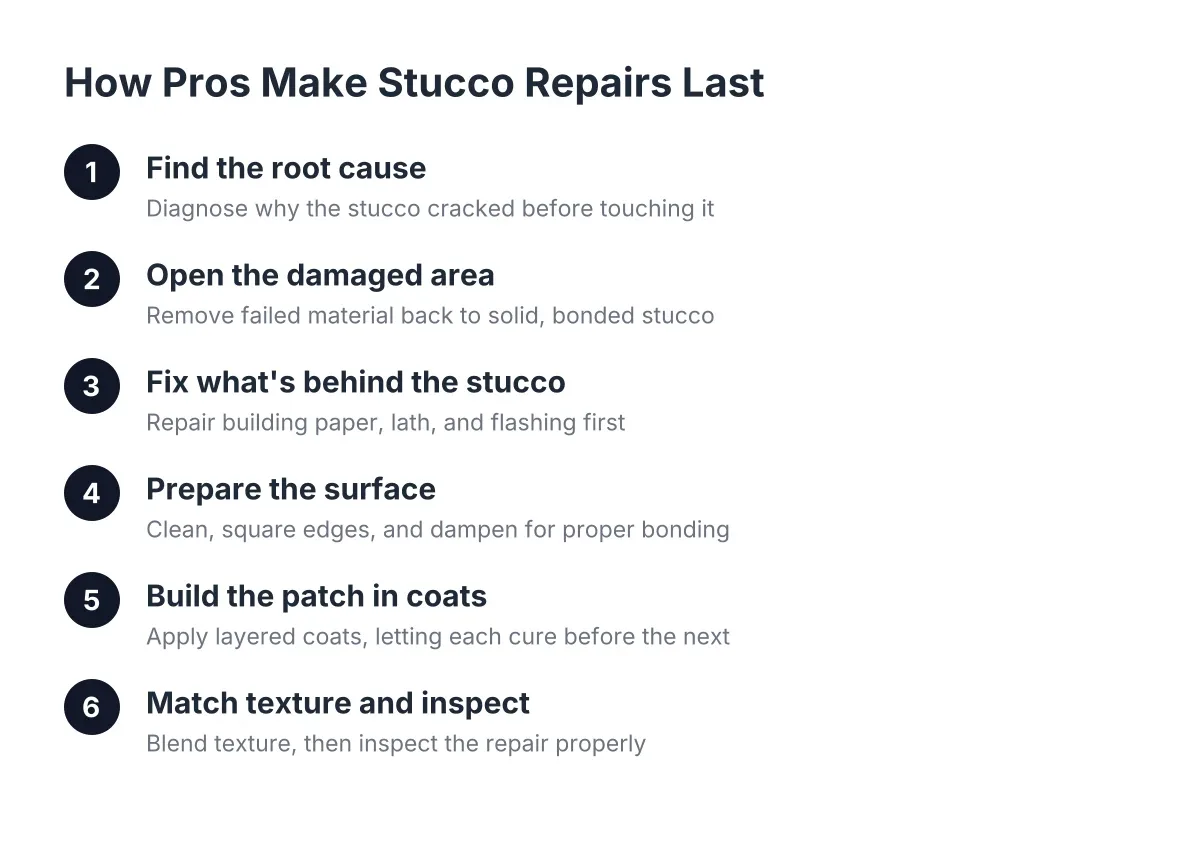
Any of these means water is getting behind the stucco siding, and the repair involves more than the surface. All loose or buckling material has to come off first; leaving it in place lets every rain keep swelling the wood underneath. For a landlord, this is the damage type that turns a tenant complaint into a re-listing delay, so it belongs at the top of the turnover punch list. Exterior stucco repair for water damage should also trace the source, whether that is a failed window seal, a missing kickout flashing, or a downspout dumping against the wall.
6. Hollow Spots: Damage You Hear, Not See
Not every damage type is visible. Take a screwdriver handle and tap the wall in a grid pattern. Solid stucco sounds dense and flat. Detached stucco sounds hollow, like knocking on a drum. Hollow spots mean the stucco has separated from the substrate, often because a bonding agent was skipped during the original application or a previous repair.
This tap test is worth learning because it separates a cosmetic fix from a structural one. A hollow section will eventually crack and shed, no matter how good the surface looks. Any competent local crew doing stucco siding repair should tap out the area around visible damage before quoting, because a patch bonded to hollow stucco fails along with it.
7. The Failed Patch: When the Last Repair Is the Damage
For plenty of Castle Rock homeowners, the damage they see every day is not a crack; it is the patch someone already made. Say a homeowner had a handyman fill a hole two summers ago. The patch is flat and smooth where the wall has a heavy lace texture, the color is half a shade off, and it jumps out every time they pull into the driveway. That is a real damage type, and it has two versions:
- Cosmetically failed. The patch is solid but the texture and color do not match. This usually means the repair was done by someone who did not identify the original finish type or technique. The fix is a skilled retexture and color blend over the patch, feathered past its edges so there is no hard line.
- Physically failed. Press on the patch with a finger. If it feels weak, sounds hollow, or dents under light pressure, the patch material or application failed. Surface work will not save it; it needs to be broken out and redone from the lath up.
Honest trade-off: a true invisible blend is harder on an older, weathered wall, because the surrounding stucco has faded and worn unevenly. A skilled texture matching crew can get the repair to disappear at normal viewing distance, but anyone promising perfection under a flashlight at six inches is overselling. Ask to see how they replicate your specific finish before they touch the wall.
8. Aging and General Wear Across the Whole Wall
Sometimes the wall is not damaged in one spot; it is tired everywhere. Widespread fading, chalking when you rub the surface, a network of fine cracks across a full elevation, and crumbling around every penetration all point to aging stucco rather than a single injury. This is where the repair-versus-replace decision gets real.
Spot stucco repair makes sense when damage is isolated and the rest of the wall is sound. When most of an elevation is failing, patch after patch becomes the expensive route, and stucco siding material replacement on that section is often the better spend. As an illustrative example, a landlord with a duplex might budget a few hundred dollars for a corner patch but several thousand to redo a full weather-beaten south wall. Getting a local crew to tap out and assess the whole elevation first tells you which side of that line you are on.
A Quick Framework for Identifying Different Types of Stucco Damage on Your Own Walk-Around
Before you call anyone, do a ten-minute walk-around and sort what you find into three buckets:
- Watch it. Hairline cracks and minor foundation-line cracks. Photograph them with a coin for scale and check them each spring.
- Fix it soon. Structural cracks, holes bigger than a quarter, chipped corners, and bad patches. These are stable today but get more expensive with each freeze-thaw cycle.
- Fix it now. Soft spots, bubbling, staining, and large hollow areas. Water is already inside the wall, and the damage is growing whether you look at it or not.
Identifying stucco damage types this way turns a vague worry into a specific scope of work, which is exactly what you need to compare bids fairly. It also protects you from two bad outcomes: paying for a full rework when a crack repair would do, or paying for a cheap patch on a wall that needed the water problem solved first.
One caution to close on. If you see cracks paired with sticking doors, sloping floors, or foundation movement, the stucco is the symptom, not the problem, and a structural professional should look before any cosmetic work starts. For everything else on this list, a focused local stucco crew that knows Castle Rock textures and freeze-thaw patterns can identify the damage type, explain the fix in plain terms, and match the repair to the wall around it.
If you need stucco repair, Castle Rock Stucco Pros can help.
Prefer to talk it through? Call (720) 797-8506 — a quick call is usually the fastest way to get a straight answer for your situation.