New Stucco Installation vs. Repair: When to Replace Entire Walls
If your stucco is cracking, staining, or going soft in spots, you have two paths: patch what's damaged or tear out and redo the whole wall section. Knowing when a new stucco installation, repair, or a full wall replacement is the right call saves you from paying twice for the same problem. Understanding the choice between stucco repair and replacement the way a stucco crew would on your porch means checking what's damaged, figuring out why, then matching the fix to the cause. It applies whether you own a 40-year-old home or a five-year-old build in Stonegate, Meridian, or Carriage Club where cracks showed up after the builder warranty went quiet.
Here is the short version. Patch when the damage is small, isolated, and the wall behind it is dry and solid. Replace the full wall section when the damage runs corner to corner, the base coats have let go of the lath, or water has been getting behind the stucco long enough to rot the paper and sheathing. The steps below show you how to tell the difference.
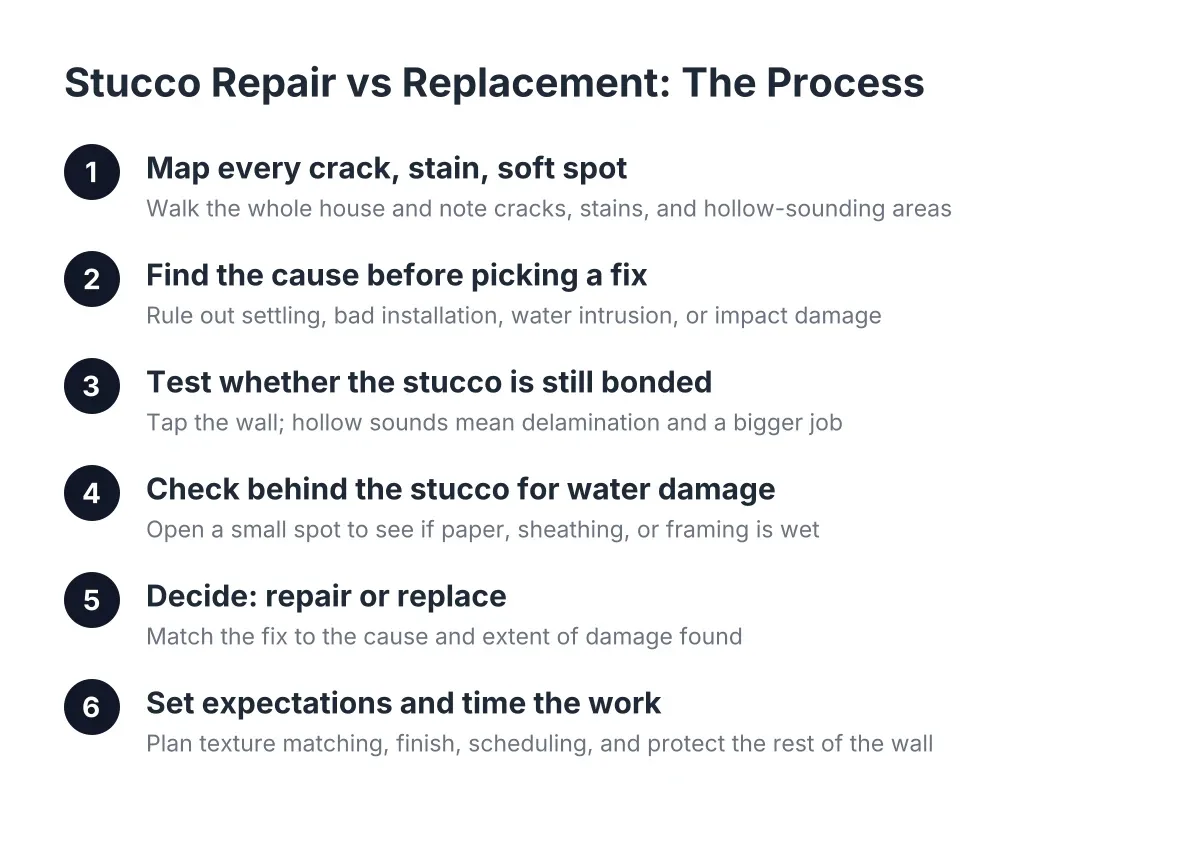
Step 1: Map Every Crack, Stain, and Soft Spot
Walk the whole house before you decide anything. Homeowners tend to fixate on the one crack they can see from the driveway and miss the pattern that tells the real story.
Bring a notepad and mark down:
- Hairline cracks (thinner than a credit card edge) and where they run
- Wider cracks, especially diagonal ones off window and door corners
- Dark stains that don't wash off, particularly below windows and around downspouts
- Bubbling, flaking, or spots where the finish coat is popping loose
- Any place the wall sounds hollow when you knock on it
Press gently on suspect areas. Solid stucco feels like concrete. If it flexes, crumbles, or feels spongy near a window sill, water has been at work behind it, and you're past the point of a cosmetic patch in that spot.
One isolated hairline crack points toward simple stucco crack repair. Cracks and stains spread across a whole elevation point toward a bigger conversation.
Step 2: Find the Cause Before You Pick the Fix
A patch over an unsolved problem is a patch you'll do again. Before deciding between repair and replacement, figure out why the stucco failed.
Common causes look different on the wall:
- Normal settling: Fine hairline cracks scattered across a wall, common on stucco on frame construction as the wood framing shrinks and moves in its first few years. This is the classic newer-build complaint in Castle Rock subdivisions.
- Improper installation or curing: Cracking, delamination, or chalky, weak stucco showing up within one to five years of construction. If the base coats never bonded right, patching the surface won't hold.
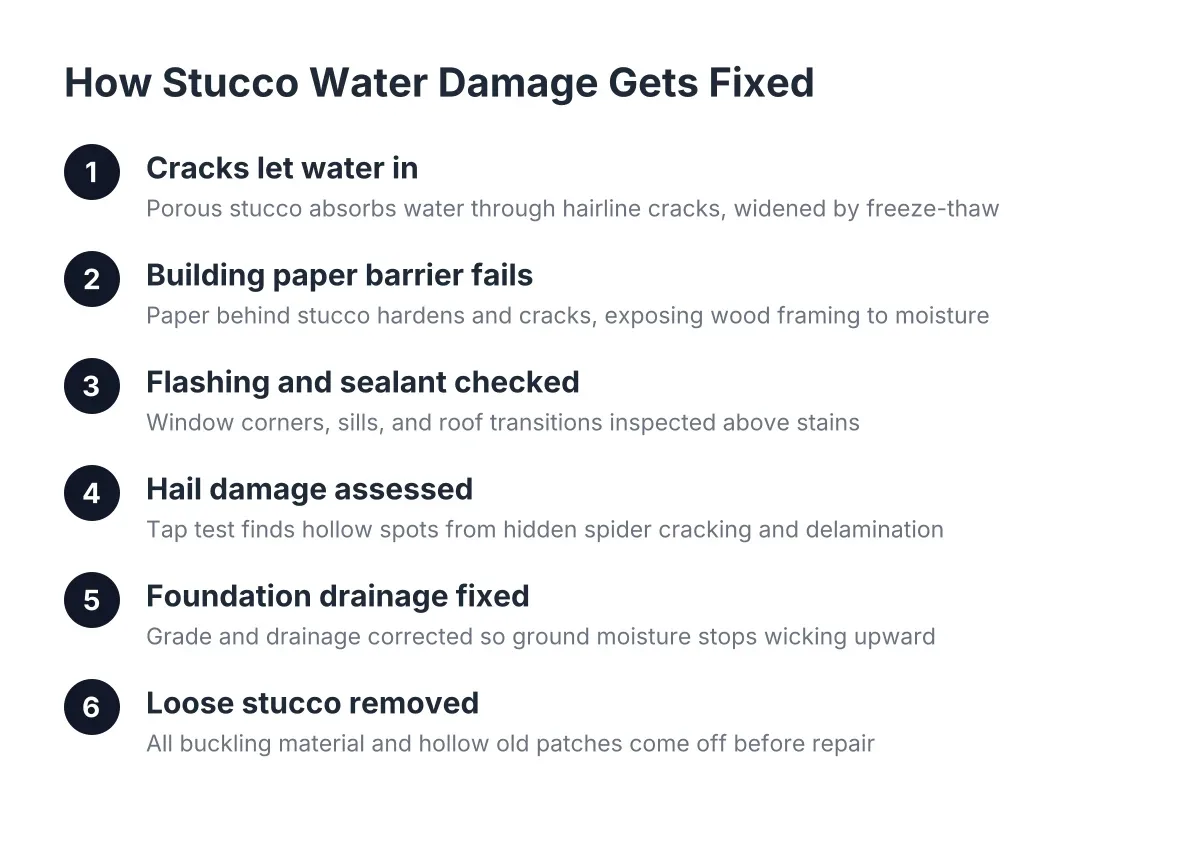
- Water intrusion: Stains below windows, soft spots near sills and downspouts, or a musty smell inside along an exterior wall. The stucco itself may be a symptom; the leak path is the disease.
- Impact or vibration: Localized damage at corners, near the garage, or where something hit the wall.
Therefore, be skeptical of anyone who wants to start demo before explaining what's wrong. A good crew can tell you the likely cause and how they'd confirm it before a grinder ever touches your wall. If the cause is a leaking window flashing or a downspout dumping water against the wall, fix that first or the crack and the stain both come back.
Step 3: Test Whether the Stucco Is Still Bonded
This is the single biggest factor in the repair-versus-replace decision. Stucco fails in layers. The finish coat can look rough while the base coats underneath are still locked onto the lath. Or the surface can look fine while the whole assembly has let go of the wall.
Tap across the wall with your knuckles or a screwdriver handle. Well-bonded stucco sounds dense and dead. Delaminated stucco sounds hollow, like knocking on a drum. Mark the hollow zones with painter's tape as you go.
However, don't stop at sound. Any loose or buckling material has to come off before repair anyway; leaving it in place lets rain keep swelling the wood behind it and the damage keeps growing. So the tap test also previews the real size of the job. A hollow patch the size of a dinner plate is a stucco patching job. Hollow zones covering a third of the wall mean that wall is coming off.
Step 4: Check Behind the Stucco for Water Damage
If you found stains or soft spots in Step 1, someone needs to see what's behind the wall before quoting a fix. Behind the stucco sits a layer of building paper that acts as the real water barrier. When that paper fails, water reaches the sheathing and framing.
There is a hard truth here for anyone who has watched a stain spread for a few years. A structural crack left open long enough lets the building paper behind it dry out and turn brittle. Then normal wall flexing tears the paper, and what started as a cosmetic crack becomes a real water intrusion problem. That is why addressing stucco repair versus replacement issues before problems escalate is the right instinct.
A small exploratory opening at the worst spot tells you what you're dealing with:
- Paper intact, sheathing dry: Good news. Stucco water damage repair stays a stucco job. Patch and move on.
- Paper torn, sheathing stained but solid: The opening gets bigger so the crew can lap new paper correctly, but it's still a repair.
- Sheathing soft or framing wet: The affected wall section needs to come off so the wood can be dried, repaired, or replaced before any new stucco goes on.
Yes, opening the wall can reveal a bigger job than you hoped. That fear keeps a lot of homeowners staring at a stain for another year. But rot doesn't pause while you wait, and a small opening now is cheaper than a framing repair later. If you smell mustiness inside near an exterior wall, treat that as a now problem, not a someday problem.
Step 5: Deciding Between Stucco Repair and Replacement
Now you have what you need to choose. Use these rules of thumb.
Repair or patch when:
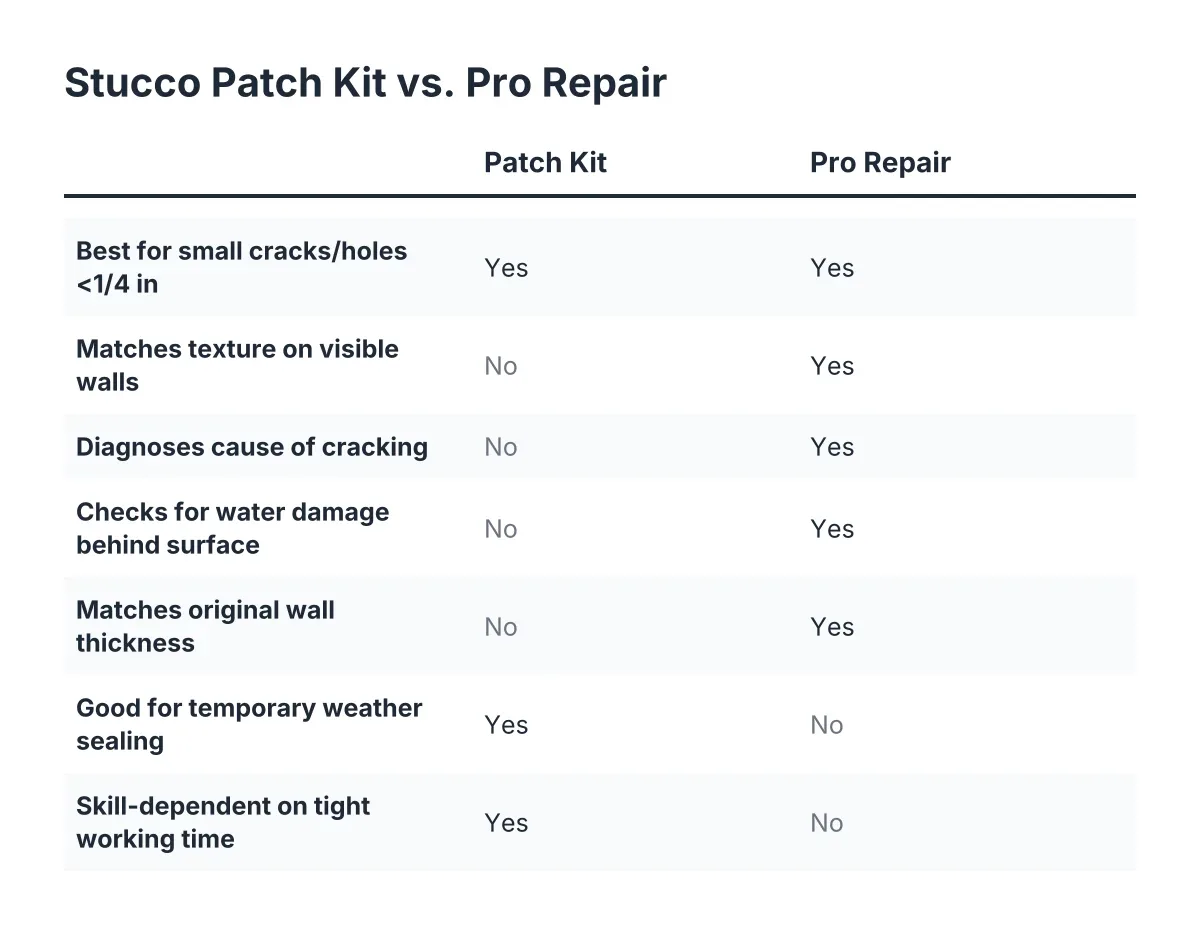
- Damage is isolated: a few cracks, one hole, one soft spot with dry wood behind it
- The tap test shows the surrounding stucco is still bonded tight
- The cause is fixed or fixable: settling has slowed, the downspout is rerouted, the flashing is corrected
Replace the full wall section when:
- Delamination or hollow zones cover a large share of the wall
- Water damage extends into sheathing or framing across a wide area
- The original installation was defective, common on newer builds where the mix or curing was rushed
- The wall has been patched repeatedly and keeps failing
Corners deserve a special note. The technically correct fix for a deteriorated corner is to remove the stucco and redo the full wall section from corner to corner, not to dab mortar on the bad spot. A partial corner patch is faster and cheaper, and it can be a fair choice, but only if the underlying cause, like vibration or poor drainage, gets addressed. Otherwise the crack returns and you've bought yourself a repeat visit.
For a newer home, weigh warranty first. Say a homeowner in Meridian finds diagonal cracks off two window corners at year four, after the builder has stopped returning calls. In that scenario, an independent evaluation of new stucco installation repair options usually lands on cutting back to sound material around each window, correcting the flashing, and patching, at an illustrative cost in the low thousands per elevation rather than a full re-stucco. If the same inspection found the base coat delaminating across the whole front elevation, replacement of that elevation would be the honest recommendation, even though it costs more.
This is also the stage to consider stucco siding material replacement more broadly. Some owners planning new construction stucco and siding work, or a major remodel, use a failed wall as the moment to switch materials on one elevation. That's a legitimate option, though mixing materials changes the look of the house and doesn't fix a water problem by itself.
Step 6: Set Expectations for Texture Matching and Finish
Even a structurally perfect patch fails the eye test if the texture is wrong. A patch that stands out usually means someone repaired the wall without matching the original technique or finish type.
Ask any crew, before work starts, how they plan to match your texture. On repairs, modern polymer-modified patch materials can replace the traditional three-coat system in a single application, so the structural side of a patch goes faster than it used to. The finish is where skill shows.
In addition, know the fallback. When color or texture can't be matched closely enough, the honest fix is painting the entire wall or section so it reads uniform, instead of living with a visible blotch. On a full wall replacement, matching matters less on the new wall itself and more where new stucco meets old at the corners and edges. A crew that talks you through this before starting is a crew thinking about how the wall looks in five years, not five days.
Step 7: Time the Work and Protect What's Left
Colorado's weather is not gentle on exterior walls, and it shouldn't dictate a rushed job. Stucco needs reasonable temperatures to cure, so spring through fall is the workable window for most exterior stucco repair in Castle Rock. Hail is the other local reality; according to the National Association of Insurance Commissioners, Colorado home insurance premiums rose 65% over the last five years, with hail cited as a major driver. If a storm caused your damage, document it before repairs begin in case an insurance claim applies.
A few practical points for the work itself, as of 2026 still the standard approach:
- All loose material comes off first, every time
- Repair coats go on from the bottom of the wall working upward
- If a section is being cut out, the wire lath at the edges should be left torn and exposed, not ground off clean, so the crew can tie the new lath in and weatherproof the joint properly
One limitation worth stating plainly: this guide helps you read your own wall, but confirming rot, mold behind stucco, or structural damage is a job for a professional who can open the wall safely and knows what correct flashing looks like. New stucco installation repair decisions made on guesswork tend to get made twice.
The Bottom Line
Patch small, bonded, dry damage. Replace wall sections where the stucco has let go or water has reached the wood. Fix the cause either way, or plan on doing this again. A local crew that explains what's wrong before opening your wall, and can match your texture when it closes it back up, is worth more than the cheapest bid on either path.
If you need stucco repair, Castle Rock Stucco Pros can help.
Prefer to talk it through? Call (720) 797-8506 — a quick call is usually the fastest way to get a straight answer for your situation.