Stucco Repair Terms Explained: A Plain-English Glossary
If you're a Castle Rock homeowner staring at a quote full of words like "elastomeric" and "scratch coat," this stucco repair glossary is for you. It explains the terms you'll hear from contractors, read in estimates, and see in online searches, all in plain English. Use it to read a quote line by line, ask better questions, and spot problems on your own walls before they grow. No sales pitch, just the words and what they mean.
- Stucco: the cement-based coating on your walls
- Hairline Crack: a thin surface crack, usually cosmetic
- Structural Crack: a wider crack that signals movement
- Spalling: stucco flaking or popping off in chunks
- Delamination: a coat separating from the layer beneath it
- Efflorescence: white, chalky mineral stains from moisture
- Scratch Coat: the first rough layer of a stucco job
- Brown Coat: the middle layer that levels the wall
- Finish Coat: the top layer that carries color and texture
- Lath: the mesh or wire base stucco grips onto
- Weep Screed: the metal strip at the wall's base that drains water
- Stucco Patching: filling holes and damaged spots with new stucco
- Texture Matching: making a repair blend into the existing wall
- Elastomeric Coating: a flexible paint-like coating that bridges small cracks
- Water Damage: moisture harm behind or inside the stucco
- Moisture Barrier: the water-resistant layer behind the stucco
- Remediation: fixing the cause of damage, not just the surface
- Scope of Work: the written list of what a repair includes
The Damage: What You're Looking At
Most calls for stucco repair start with something a homeowner spotted from the driveway. These terms describe what you might be seeing.
Hairline Crack
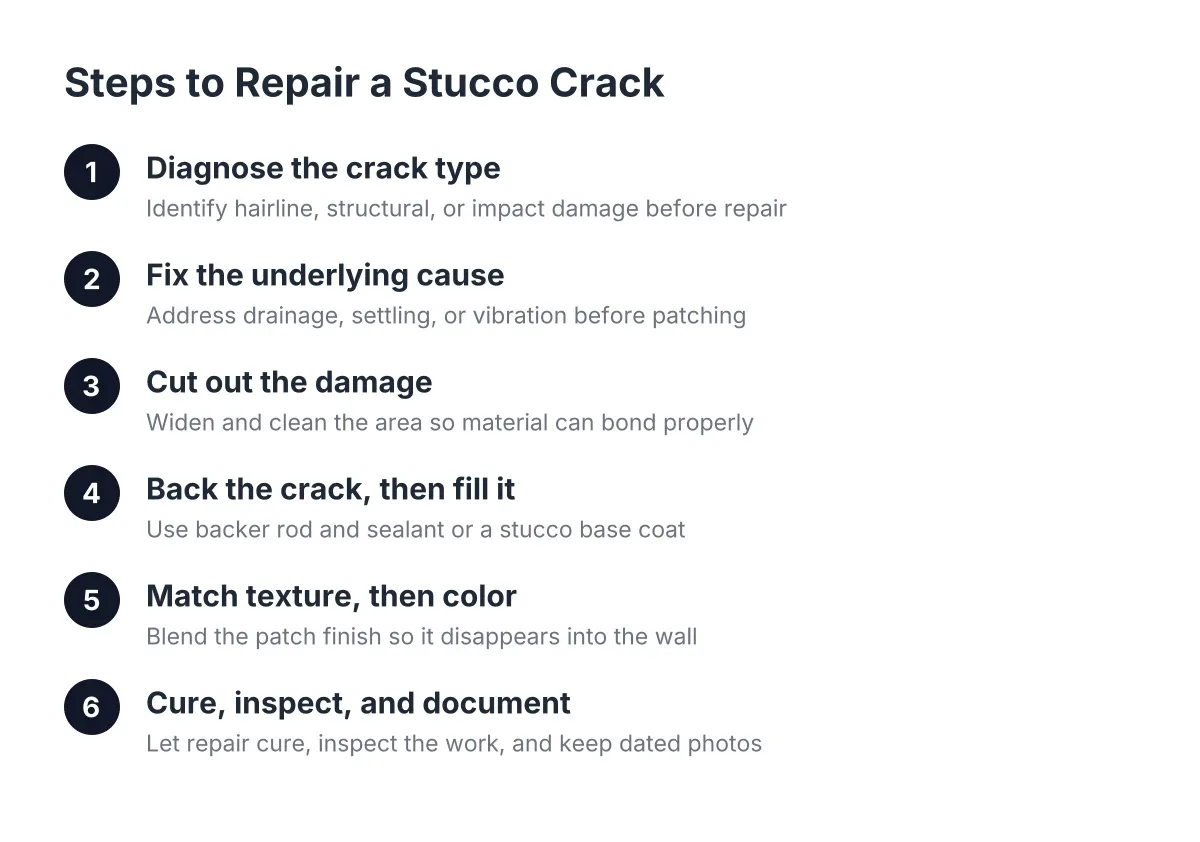
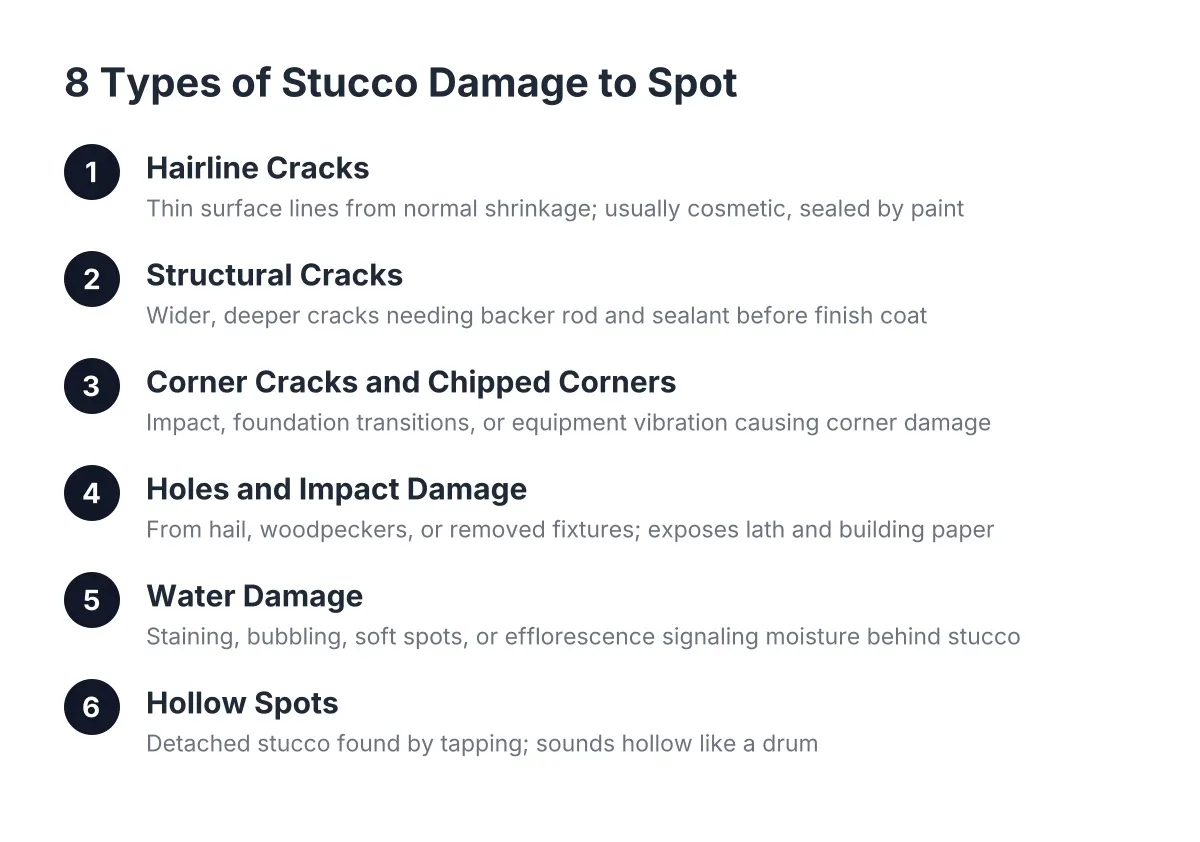
A hairline crack is a thin surface crack in stucco, usually narrower than a credit card edge. Most homes get a few as the stucco cures and the house settles, and they are often cosmetic. They still matter in Castle Rock's freeze and thaw cycles, because water can enter, freeze, and widen the crack over time. If a quote lists stucco crack repair for hairline cracks, expect a fill and finish blend rather than a tear-out.
Structural Crack
A structural crack is a wider crack, often stair-stepped or diagonal, that points to movement in the wall or foundation behind the stucco. Unlike hairline cracks, these tend to grow and reopen if you only patch the surface. A careful contractor will look at the pattern and location before quoting, and may recommend addressing the cause first. If a provider mentions this term, expect a bigger conversation than a simple crack fill.
Spalling
Spalling means stucco flaking, crumbling, or popping off the wall in chips or chunks. It usually signals trapped moisture or a failing bond between layers, not just surface wear. Spalling rarely stops on its own, so the damaged area typically gets removed back to solid material and rebuilt. Seeing this word on a quote usually means more labor than a crack fill.
Delamination
Delamination is when one coat of stucco separates from the layer underneath it, leaving a hollow spot even if the surface looks fine. Contractors often find it by tapping the wall and listening for a drum-like sound. Delaminated areas need to come off and be reapplied, because paint or sealant over a hollow spot fails fast. It is a common hidden add-on when a small repair opens up a bigger problem.
Efflorescence
Efflorescence is the white, chalky residue that shows up on stucco when water moves through it and leaves minerals behind on the surface. The stain itself wipes or washes off, but it is a symptom, not the disease. It tells you moisture is getting into the wall somewhere. A good contractor will ask where the water is coming from before quoting a cosmetic cleanup.
Water Damage
Water damage in stucco means moisture has gotten behind or inside the wall coating and harmed the stucco, the barrier behind it, or the framing. Signs include soft spots, staining, bubbling, and musty smells near windows or the base of walls. Stucco water damage repair usually costs more than surface work because the wet layers have to come out and dry out. Catching it early is the single best way to keep the job small.
The Wall Itself: Layers and Parts in Stucco Repair Glossary
Stucco is a system, not a single coat. Knowing the layers helps you follow what a contractor means when they say how deep the damage goes.
Stucco
Stucco is a cement-based coating applied in layers over a mesh base to form a hard, weather-resistant shell on exterior walls. Traditional stucco uses cement, sand, lime, and water; some newer systems use synthetic materials over foam. Which type your home has changes how a repair is done and matched. If you are not sure, a local contractor can usually tell from a close look at the damaged spot.
Scratch Coat
A scratch coat is the first layer of stucco, raked with grooves so the next layer can grip it. It sits directly on the lath and gives the whole system its bite. In a deep repair, the crew rebuilds this layer first before anything else goes on. If your quote mentions a scratch coat, the damage went past the surface.
Brown Coat
A brown coat is the second layer of stucco, applied over the scratch coat to level and strengthen the wall. It does most of the work of making the surface flat and true. A repair that includes a brown coat means the contractor is rebuilding the wall's body, not just its face. That takes more material and more cure time.
Finish Coat
A finish coat is the top layer of stucco, the part that carries the color and texture you see from the street. It can be traditional cement-based or a flexible synthetic finish. This is the layer where texture matching happens, so the repair blends instead of standing out as a patch. Ask any provider how they plan to match your finish coat before work starts.
Lath
Lath is the wire mesh or similar base attached to the wall that stucco grips as it hardens. Think of it as the skeleton under the skin. If lath has rusted or torn, it must be replaced before new stucco goes on, or the repair will fail. Lath replacement is a normal line item on water damage and impact repairs.
Weep Screed
A weep screed is the perforated metal strip at the bottom edge of a stucco wall that lets trapped water drain out. When it is buried by soil, concrete, or landscaping, water backs up into the wall instead of escaping. Many water damage jobs trace back to a blocked or missing weep screed. It is worth walking your foundation line and checking that this strip is visible and clear.
Moisture Barrier
A moisture barrier is the water-resistant paper or wrap installed behind the lath to keep water that gets through the stucco away from the wood framing. When it tears or fails, water reaches the structure, and that is where the expensive damage starts. Repairs that open the wall should include checking and replacing this layer. If a quote skips it on a water damage job, ask why.
The Fix: Repair Work and Paperwork
These are the terms you will meet once you start collecting quotes for exterior stucco repair.
Stucco Patching and Repair Glossary
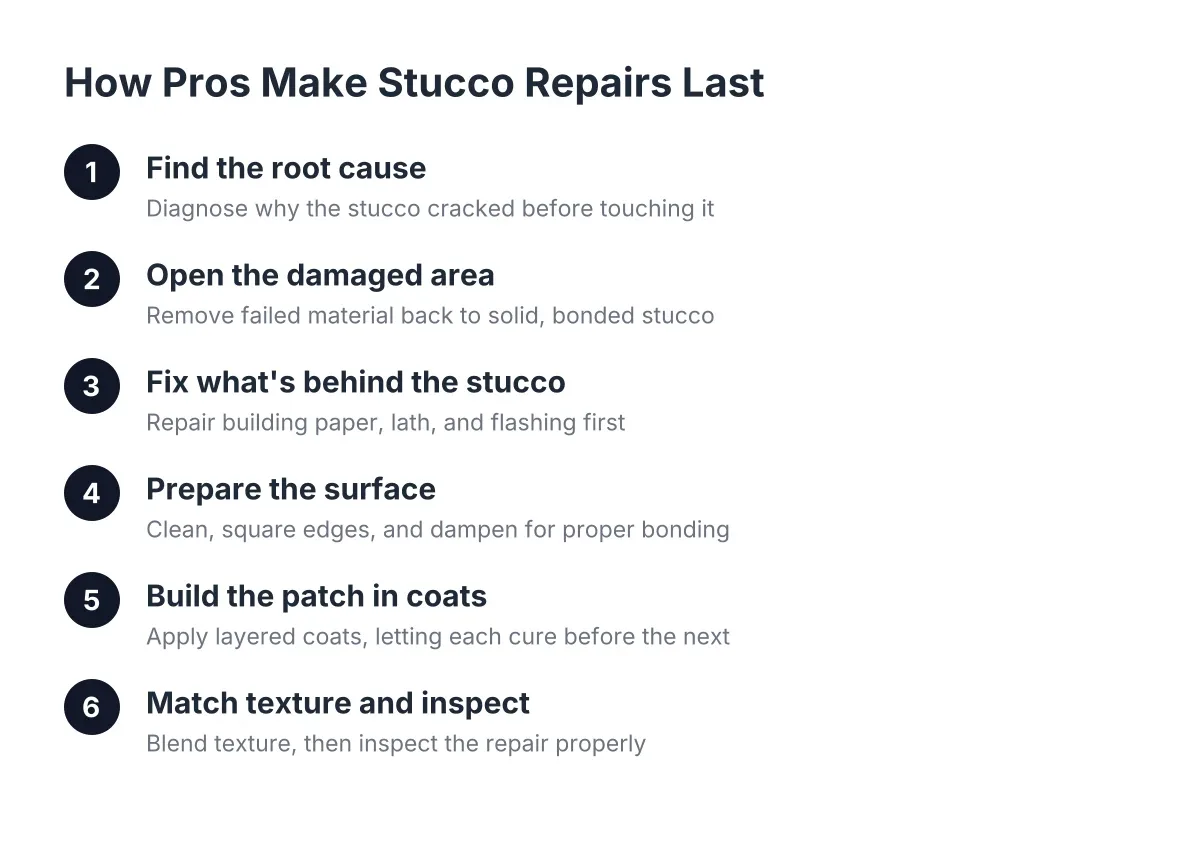
Stucco patching is the process of filling holes, gouges, or damaged sections with new stucco material, layer by layer, to match the surrounding wall. A good patch rebuilds whatever layers were damaged, then finishes with a matched texture. A bad patch is a smear of caulk or premixed filler that shows forever and often cracks again. When comparing quotes, ask what layers the patch includes.
Texture Matching
Texture matching means finishing a repair so its surface pattern blends with the existing wall, whether that is a smooth, sand, lace, or swirl finish. It is the difference between a repair you forget about and a patch you notice every time you pull into the driveway. Color and texture matching takes practice and the right tools, which is why it separates crews that do stucco every day from ones that do it now and then. It is fair to ask a provider how they handle matching before you sign.
Elastomeric Coating
An elastomeric coating is a thick, flexible, paint-like layer applied over stucco that stretches to bridge hairline cracks and shed water. It works well over sound stucco with minor cracking. It does not fix structural cracks, spalling, or wet walls, and coating over trapped moisture can make things worse. If a provider suggests it, ask them to confirm the wall underneath is dry and solid first.
Remediation
Remediation means fixing the cause of stucco damage, not just the visible surface. That can include replacing wet moisture barrier, rusted lath, or rotted wood before any new stucco goes on. It costs more than a cosmetic patch because it involves opening the wall, but it stops the same damage from returning. When water damage is involved, ask whether a quote covers remediation or only the surface.
Scope of Work
A scope of work is the written section of a quote that lists exactly what the contractor will do, layer by layer and area by area. It is the most useful page in any estimate, because it lets you compare two quotes on substance instead of price alone. A vague scope, like "repair stucco as needed," leaves room for surprises. A clear one names the layers, the prep, the matching, and the cleanup.
Using These Terms
That is what this stucco repair glossary gives you: the vocabulary to read an estimate line by line and know whether it covers a surface fix or the full problem. When a contractor mentions delamination, weep screeds, or texture matching, you now know what they mean and what to ask next. That makes every conversation with a local Castle Rock crew shorter, clearer, and more useful.
If you need stucco repair, Castle Rock Stucco Pros can help.
Prefer to talk it through? Call (720) 797-8506 — a quick call is usually the fastest way to get a straight answer for your situation.