How to Prevent Water Damage in Stucco: A Step-by-Step Maintenance Guide for Castle Rock, CO
If you own a stucco home in Castle Rock, CO, the cheapest repair is the one you never need. The way to prevent water damage in stucco is not one magic sealer; it is a short list of maintenance habits done on a schedule—a stucco maintenance schedule that protects your investment by preventing water intrusion. Stucco is porous. It absorbs moisture rather than shedding it the way vinyl siding does, so small gaps and hairline cracks matter more than most homeowners think. This guide walks through the steps, in order, that keep water out of the wall; it also flags the point where maintenance ends and a repair crew should take over.
This matters double if you are getting ready to list. A buyer's inspector will note stains, soft spots, and open cracks, and vague stucco findings on a report can cost you more in negotiation than the fix itself. The steps below are what a careful owner, or a crew hired before listing, works through.
How to Develop a Stucco Maintenance Schedule
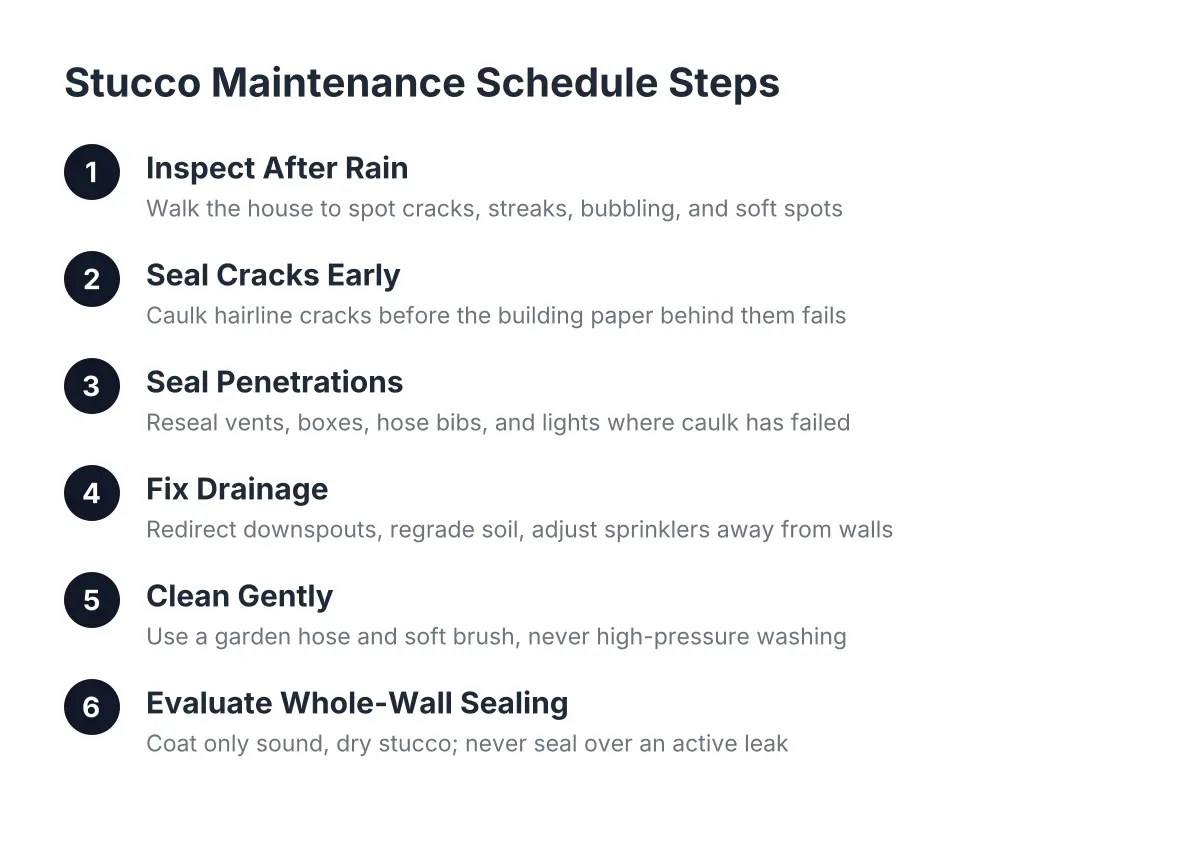
Start with a slow lap around the house after a rain, because wet stucco shows you problems that dry stucco hides. You are looking for the entry points, not just the symptoms.
Check these spots first:
- Hairline and wider cracks, especially at window and door corners
- Gaps where stucco meets trim, flashing, vents, hose bibs, and light fixtures
- Dark streaks or tiger-striping below windows and under rooflines
- Bubbling, flaking, or loose patches of finish coat
- The bottom edge of the wall near the foundation, where splashback hits
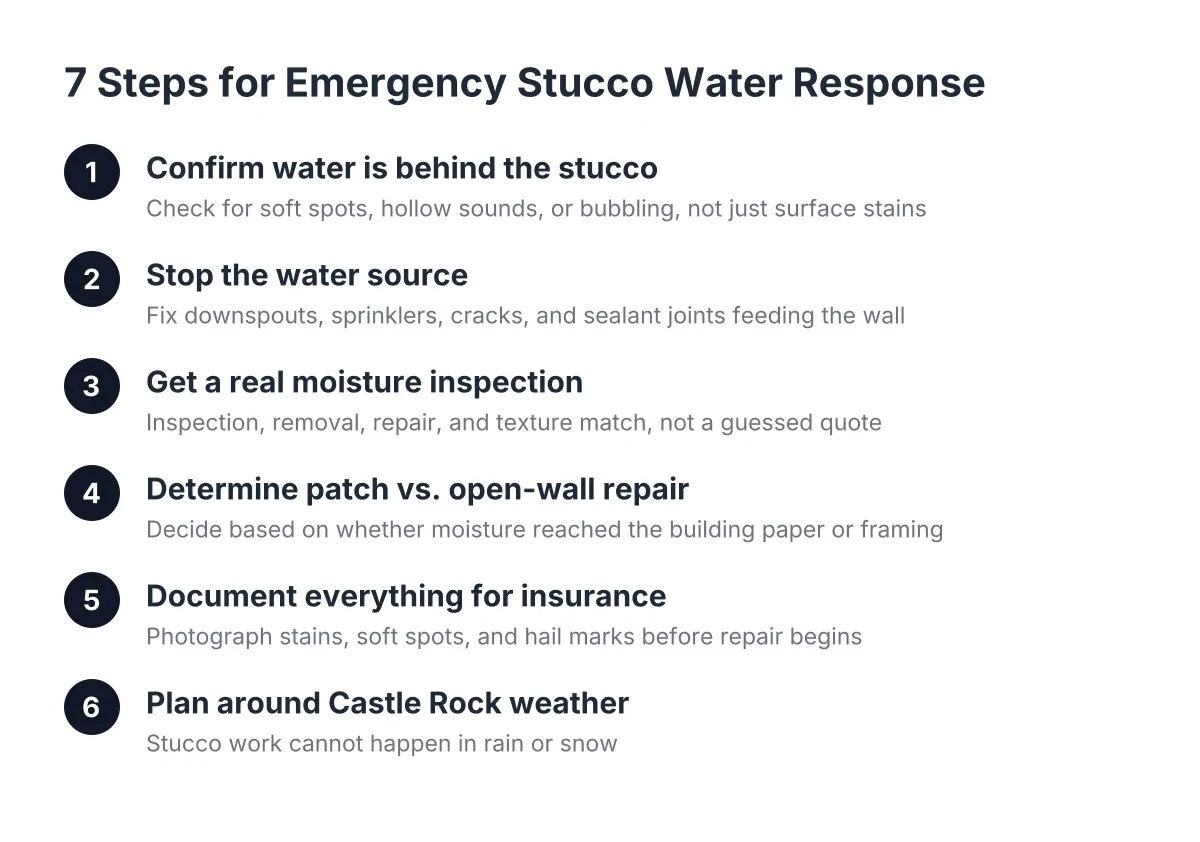
Press gently on anything that looks discolored or bubbled. A soft spot means moisture has already gotten behind the finish, and that area belongs on the repair list, not the maintenance list. Catching it now, while it is one soft patch instead of a rotted section of sheathing, is the whole point of this walkthrough.
Step 2: Seal Cracks Before the Paper Behind Them Fails
Cracks are the main highway for water into a stucco wall. Behind the stucco sits a layer of building paper that acts as the real waterproofing. When a crack sits open for years, that paper dries out and gets brittle; eventually normal wall flexing can tear it, and then water goes straight into the framing. That is how a cosmetic crack turns into stucco rot behind the wall.
For hairline cracks, a quality exterior masonry caulk or elastomeric sealant works. For cracks wide enough to accept it, insert backer rod first, a closed-cell foam cord that gives the sealant a proper foundation inside the crack, according to Sika. Clean out loose debris, dust, and any oils before sealing anything, since contaminants keep new material from bonding to the old stucco.
However, be honest about what you are looking at. A hairline surface crack is a caulk job. A crack that is wide, growing, stair-stepping, or paired with a soft spot usually means movement or water behind the wall, and sealing over it just hides the evidence. That is when stucco crack repair by someone who works with the material full time beats another tube of caulk.
Step 3: Seal Every Penetration Through the Wall
Vents, electrical boxes, cable lines, hose bibs, and exterior lights all punch holes through your stucco. Keeping water out at these penetrations is the single most important goal when maintaining them, because each one is a direct path past the finish coat.
Run a bead of exterior sealant around every penetration where the old caulk has cracked, pulled away, or gone missing. Cut out failed caulk rather than layering new over old; new sealant bonds poorly to a failed bead. While you are at it, check that flashing above windows and doors still directs water out and away rather than behind the stucco siding.
In addition, the same logic applies anywhere stucco exists on your home. Parapet walls, chimney chases, and pony walls take the same sealing approach as the main walls, because the material behaves the same no matter where it sits.
Step 4: Fix Drainage So Water Never Pools Against the Wall
Water does not only attack stucco from above. Poor drainage lets water gather against the foundation, and repeated heavy rain plus pooled water can cause slight settling that cracks stucco corners and finishes from below.
Therefore, handle the ground before the wall:
- Clean gutters and make sure downspouts discharge at least a few feet from the foundation.
- Regrade soil or mulch so it slopes away from the house.
- Adjust sprinkler heads that spray the stucco directly; constant wetting soaks a porous wall.
- Check corners near AC units and other equipment. Vibration from mechanical equipment, combined with pooled water, is a common cause of corner damage.
Corner cracks near an AC pad plus a downspout that dumps right there is a pattern crews in Castle Rock see on walkthrough after walkthrough. Fix the drainage first or the repair will not hold.
Step 5: Clean Stucco Gently, Never With High Pressure
Pressure washing is one of the fastest ways to cause the damage you are trying to prevent. Stucco is layered, and high-pressure water driven past the finish coat gets trapped behind it, where it can create larger structural problems over time.
Instead, use a garden hose with moderate pressure and a soft brush for stains and dirt. Work top to bottom, rinse well, and let the wall dry fully. If a stain will not rinse off, treat it as information rather than a cleaning failure; recurring stains often mark a spot where water exits the wall, which points you back to Step 1.
Step 6: Decide Whether Sealing the Whole Wall Helps or Hurts
A lot of the advice online pushes whole-wall waterproof coatings as the answer. Sometimes they help; sometimes they trap moisture that is already inside the wall and make stucco damage worse. A breathable elastomeric coating on sound, dry stucco can bridge hairline cracking and shed rain. The same coating over a wall with an active leak seals water in against the framing.
As a result, the decision rule is simple: never coat a wall you have not confirmed is dry and sound. If there are soft spots, active staining, or suspect areas, get stucco moisture testing or at least a hands-on inspection first. This is one place where paying for an evaluation before paying for a product saves real money.
Step 7: Repair Damaged Sections Before They Spread
Maintenance only works on intact stucco. Any loose or buckling material has to come off before repair, because leaving it in place lets every rain keep expanding the wet wood underneath. This is the line between prevention and repair, and crossing it quickly is how you keep a $500 patch from becoming a $4,000 remediation.
A proper patch follows a known sequence: remove the failed material, inspect and replace any damaged paper or sheathing, then rebuild the stucco in layers. One detail separates patches that last from patches that fail: the crew should wet down the existing stucco before applying new material, so the dry old substrate does not pull moisture out of the fresh patch too fast and weaken the bond. Texture matching comes last, and it is the part buyers and inspectors actually see.
Say a homeowner in Castle Rock is listing in 45 days and the pre-listing inspection flags a bubbled patch under a bedroom window. In that scenario, a focused local crew opens the suspect area, finds the paper torn behind a years-old crack, replaces a section of damaged sheathing, patches, and matches the texture, typically in days rather than weeks. As an illustrative range, targeted repairs like that commonly land somewhere between a few hundred dollars and the low thousands depending on how far the moisture traveled; no honest contractor can give a firm number without opening the wall.
Step 8: Put Your Stucco Maintenance Schedule to Work
The habits that prevent water damage in stucco only work if they repeat. Twice a year, spring and fall, walk the house, reseal what has failed, and clear the drainage. After any major hailstorm, add an extra check; hail is a serious driver of exterior damage along the Front Range, and the National Association of Insurance Commissioners reports Colorado home insurance premiums rose 65% over the last five years with hail cited as a major factor. Catching stucco water damage early also keeps insurance and inspection conversations simpler when you sell.
One honest limitation: maintenance cannot tell you what is behind a wall. If you find soft spots, spreading stains, or cracks that return after sealing, the next step is an inspection, not another product. A crew that looks before it quotes can tell you whether you are dealing with a cosmetic fix or a section that needs opening, and that distinction is the difference between the quotes on your desk that do not match.
If you need stucco repair, Castle Rock Stucco Pros can help.
Prefer to talk it through? Call (720) 797-8506 — a quick call is usually the fastest way to get a straight answer for your situation.