New Construction Stucco and Siding Terms Explained: A Plain-English Glossary
If you are getting quotes for stucco or siding work and half the words sound made up, this page is for you. This new construction stucco and siding glossary explains the terms contractors, inspectors, and estimators use, in plain English, so you can read a quote line by line and know what you are paying for. It helps you talk to providers without guessing, spot problems on your own walls, and ask the questions that separate a careful crew from a rushed one. No sales talk, just the words and what they mean.
- Stucco: the cement-based wall coating itself
- Three-Coat Stucco: the traditional layered system
- One-Coat Stucco: the faster, thinner modern version
- EIFS: foam-backed synthetic stucco
- Lath: the mesh stucco grips onto
- Scratch Coat: the first rough layer
- Brown Coat: the middle leveling layer
- Finish Coat: the top layer you see
- Weep Screed: the drainage strip at the wall's base
- Control Joint: a planned line that manages cracking
- Hairline Crack: a thin surface crack
- Texture Matching: making a patch blend in
- Efflorescence: white mineral staining from moisture
- Delamination: layers separating from the wall
- Substrate: the wall surface under everything
- Flashing: metal that steers water away
- Scope of Work: the written list of what gets done
- Mobilization: setup costs before work starts
The Stucco System Itself
These are the words for the material and the systems it comes in. Most confusion in a new construction stucco and siding glossary starts here, because "stucco" can mean three different wall systems that look alike from the street.
Stucco
Stucco is a cement-based coating, mixed from cement, sand, lime, and water, that gets applied wet over a wall and hardens into a tough outer shell. It handles Colorado sun and dry air well, which is why you see it all over Castle Rock. Stucco is rigid, though, so when a house settles or the wall behind it moves, cracks show up. That is where stucco repair comes in, and why the rest of this page matters.
Three-Coat Stucco
Three-coat stucco is the traditional system built up in three layers: a scratch coat, a brown coat, and a finish coat, over paper and wire. The full system runs about seven-eighths of an inch thick, which makes it durable and forgiving. If your home has three-coat stucco, repairs need to rebuild the same layers, not just smear material over the crack. A provider who asks which system your home has is asking the right question.
One-Coat Stucco
One-coat stucco is a thinner system that combines the base layers into a single coat of modified stucco over foam board or paper and mesh. It goes on faster and costs less to install, which is why many newer builds use it. It is thinner than three-coat, so damage can reach the layers underneath sooner. Knowing which system you have changes how a patch gets built and priced. Both systems show up in the cost breakdowns in our guide to new construction stucco and siding costs.
EIFS
EIFS stands for Exterior Insulation and Finish System, a synthetic stucco made of foam insulation board with a thin acrylic coating on top. It looks like stucco but behaves differently: press on it and it feels softer, and it hides water damage well because the foam does not show stains. Repairs on EIFS use different materials than cement stucco. If a provider treats EIFS and traditional stucco as the same thing, keep looking.
Lath
Lath is the wire mesh or metal grid fastened to the wall that wet stucco grabs onto as it hardens. Think of it as the skeleton under the skin. When water gets behind stucco and sits, lath can rust and fail, and the stucco above it loosens. A repair quote that includes replacing lath means the damage went past the surface, and the price will reflect that extra work.
Layers and Parts of the Wall
Every stucco wall is a stack of parts working together. When a contractor names one of these on a quote, this is what they mean.
Scratch Coat
A scratch coat is the first layer of stucco troweled over the lath, then scored with horizontal grooves so the next layer can grip it. The grooves are the "scratch." It does the structural work of locking the whole system to the wall. If a patch skips a proper scratch coat, the repair can pop loose within a season or two.
Brown Coat
The brown coat is the second stucco layer, applied over the scratch coat to level the wall and build thickness. It is the flattening layer that makes the finish coat look even. Deep cracks or holes usually mean the brown coat is damaged too, so a good patch rebuilds it rather than bridging over the gap. Skipping it is how you end up with a repair that reads as a lump on the wall.
Finish Coat
The finish coat is the final, visible layer of stucco that carries the color and texture of your home. It is thin, usually about an eighth of an inch, and it is the layer everyone judges the repair by. Hairline cracks often live only in the finish coat, which makes them cheaper to fix. Matching a finish coat is a skill, which brings us to the next term.
Weep Screed
A weep screed is a metal strip installed at the bottom edge of a stucco wall that lets trapped water drain out. Water that gets behind stucco needs an exit; the weep screed is that exit. If yours is buried under soil, concrete, or landscaping, water backs up into the wall and causes damage from the inside. It is one of the first things worth checking on your own house, no ladder required.
Control Joint
A control joint is a planned groove or metal strip in a stucco wall that gives the material a place to crack on purpose. Stucco shrinks as it cures and moves with temperature swings, so builders give it relief lines. Cracks that follow control joints are usually normal. Cracks that ignore them and run diagonally from window corners deserve a closer look from a stucco repair pro.
Flashing
Flashing is thin metal installed around windows, doors, and rooflines to steer water away from the wall instead of into it. Bad or missing flashing is a common root cause of stucco water damage. A provider who talks about flashing during an estimate is looking for the source of the problem, not just the symptom. That is the difference between fixing a stain and fixing a leak.
Substrate
The substrate is the surface under the whole stucco system, usually plywood or OSB sheathing attached to the house framing. When water damage reaches the substrate, the wood can soften or rot, and the repair grows from a patch job into partial rebuilding. Any quote that mentions "substrate repair" is telling you the damage went deep. It is worth asking how they found that out and what they expect once the wall is open.
Damage, Repairs, and What Quotes Mean
These terms show up when something has gone wrong, and on the paperwork that follows.
Hairline Crack
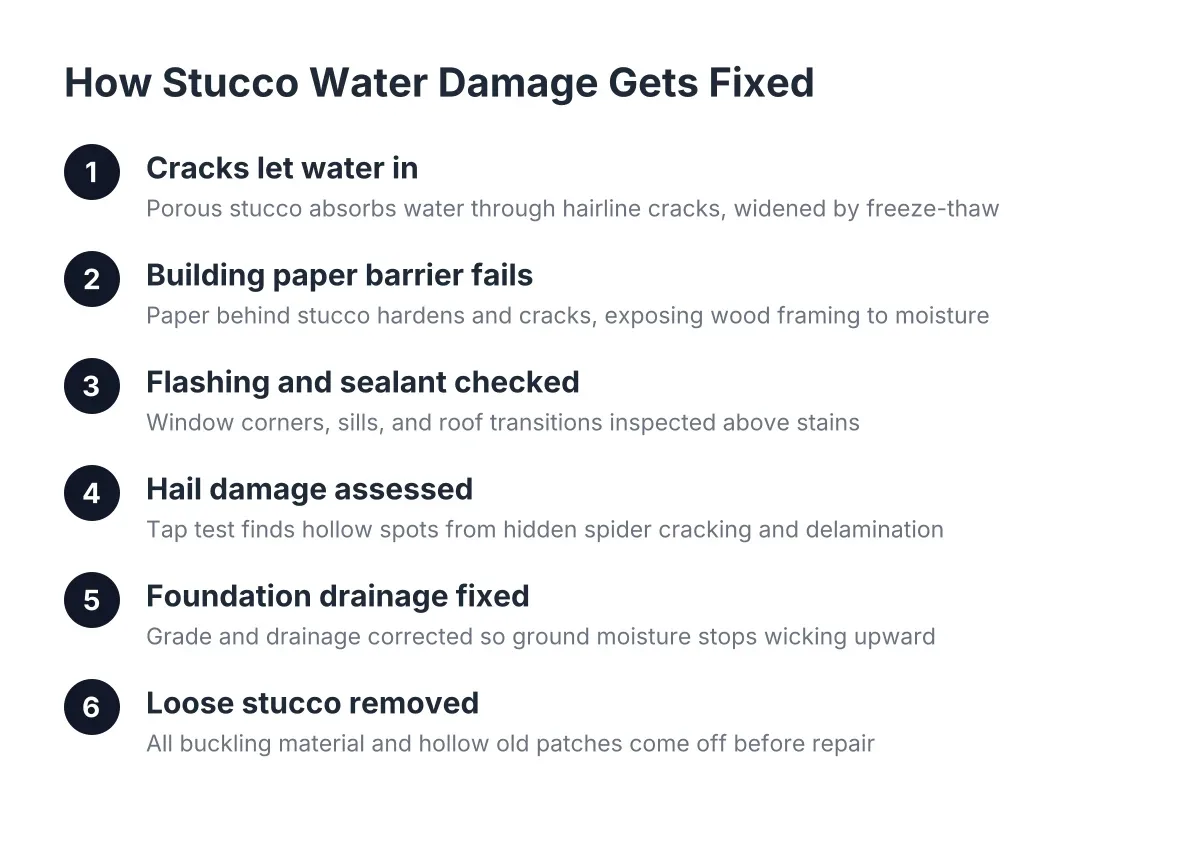
A hairline crack is a thin surface crack in stucco, about the width of a credit card edge or less, usually caused by normal settling and curing. Most hairline cracks are cosmetic and simple to fix with stucco crack repair. Wider cracks, cracks you can fit a coin into, or cracks that keep growing point to movement or moisture behind the wall. Width and direction tell a stucco crew most of the story before they ever touch the wall.
Texture Matching
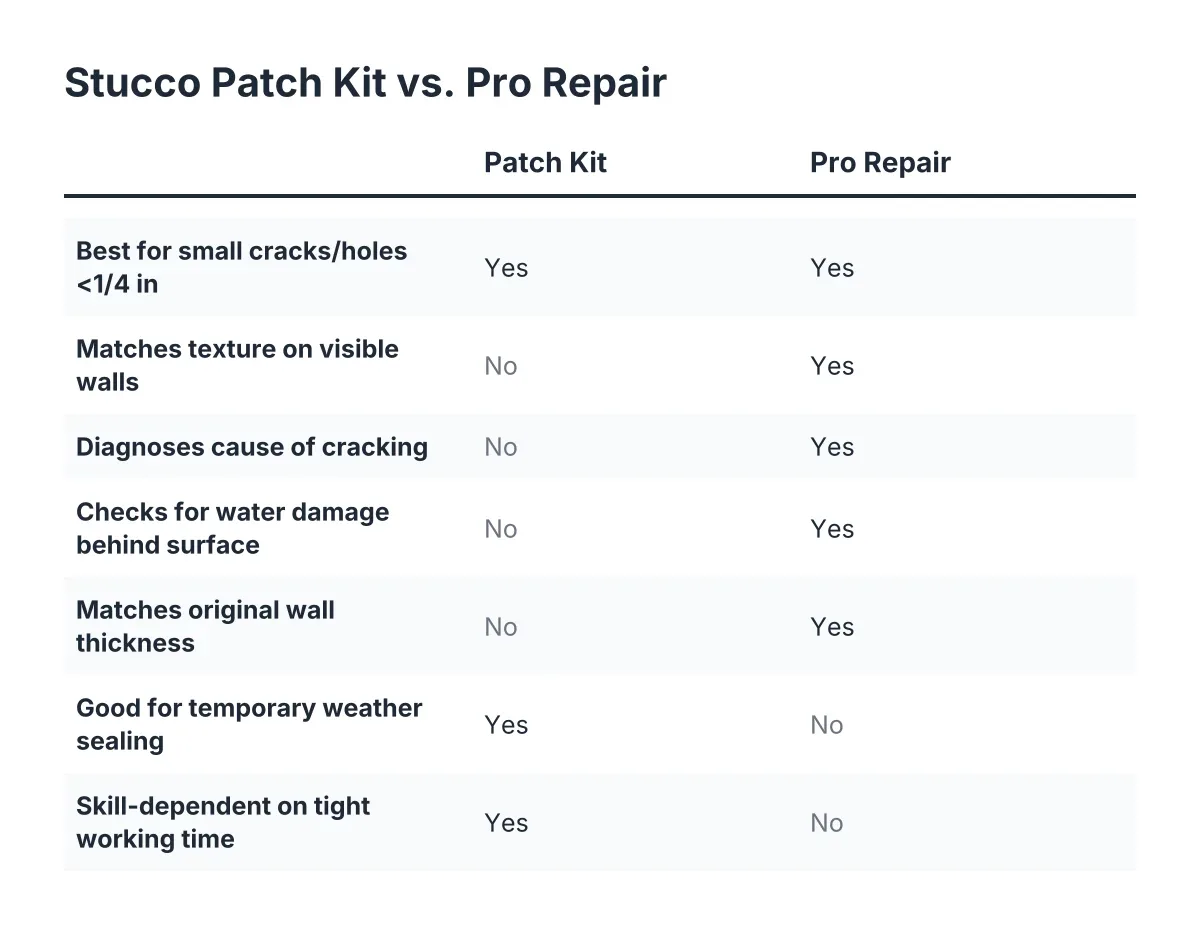
Texture matching is the craft of finishing a stucco patch so its pattern and color blend with the surrounding wall. Stucco textures have names like sand, lace, and dash, and every applicator's hand is a little different. A patch with the wrong texture is visible from the curb forever. Ask any provider how they handle texture matching; a confident, specific answer is a good sign, and it is a core part of what a focused local stucco repair service does every week in Castle Rock.
Efflorescence
Efflorescence is a white, chalky, or crystal-like deposit on stucco left behind when water moves through the wall and evaporates, carrying minerals with it. The white stuff itself wipes off. The message it sends does not: water is getting into the wall somewhere. Treat efflorescence as a warning light, and have someone find the moisture source before it becomes water damage repair.
Delamination
Delamination means a layer of stucco has separated from the layer beneath it or from the wall itself. Tap the wall and a delaminated area sounds hollow compared to solid stucco around it. It usually traces back to water, rusted lath, or a bad original application. Delaminated sections have to come off and be rebuilt; you cannot patch over a layer that is no longer attached.
Scope of Work
A scope of work is the written section of a quote that lists exactly what the contractor will do, layer by layer and area by area. It is the most useful page in any estimate. Two quotes with different prices often describe different jobs: one rebuilds the scratch and brown coats, the other skins over the crack. Compare scopes before you compare prices, and ask about anything vague like "repair as needed."
Mobilization
Mobilization is the setup work a crew does before repairs start: hauling equipment, staging scaffolding, masking windows, and protecting landscaping. Some quotes list it as its own line; others fold it into the total. It is one reason small repairs cost more per square foot than large ones, since the setup happens either way. Seeing it on a quote is normal, not padding.
Using These Terms
You now have the working vocabulary for stucco walls, from lath to finish coat, and for the paperwork that comes with fixing them. What this new construction stucco and siding glossary gives you is the ability to read a quote line by line, ask why a scope includes or skips a layer, and notice warning signs like efflorescence or hollow-sounding walls before they grow. If you are in Castle Rock and something on your stucco does not look right, a local stucco repair crew can tell you which of these terms applies to your wall and what fixing it actually takes.
If you need stucco repair, Castle Rock Stucco Pros can help.
Related guide: new construction stucco and siding — Complete Guide
Prefer to talk it through? Call (720) 797-8506 — a quick call is usually the fastest way to get a straight answer for your situation.