Best Stucco Repair Products: Rapid-Set Patch, Mesh, and Texture Picks
If you had a stucco patch done and it still catches your eye every time you pull into the driveway, the product choice was part of the problem. The best stucco repair products do two jobs at once: they bond to the old wall so the crack stays closed, and they take texture so the repair disappears. Most bad patches around Castle Rock fail on one or both counts. The last contractor caulked over the crack, skimmed on the wrong compound, and the patch telegraphs through every time the afternoon sun hits the wall.
This list covers what a crew that repairs stucco daily actually reaches for, and why. It is written for homeowners who already decided to get a repair done right, especially if the first attempt did not blend in. A crack in stucco is also a message about what is happening behind the wall, so a few items on this list are about reading the crack before you ever open a bucket.
1. Rapid-Set Polymer-Modified Stucco Patch
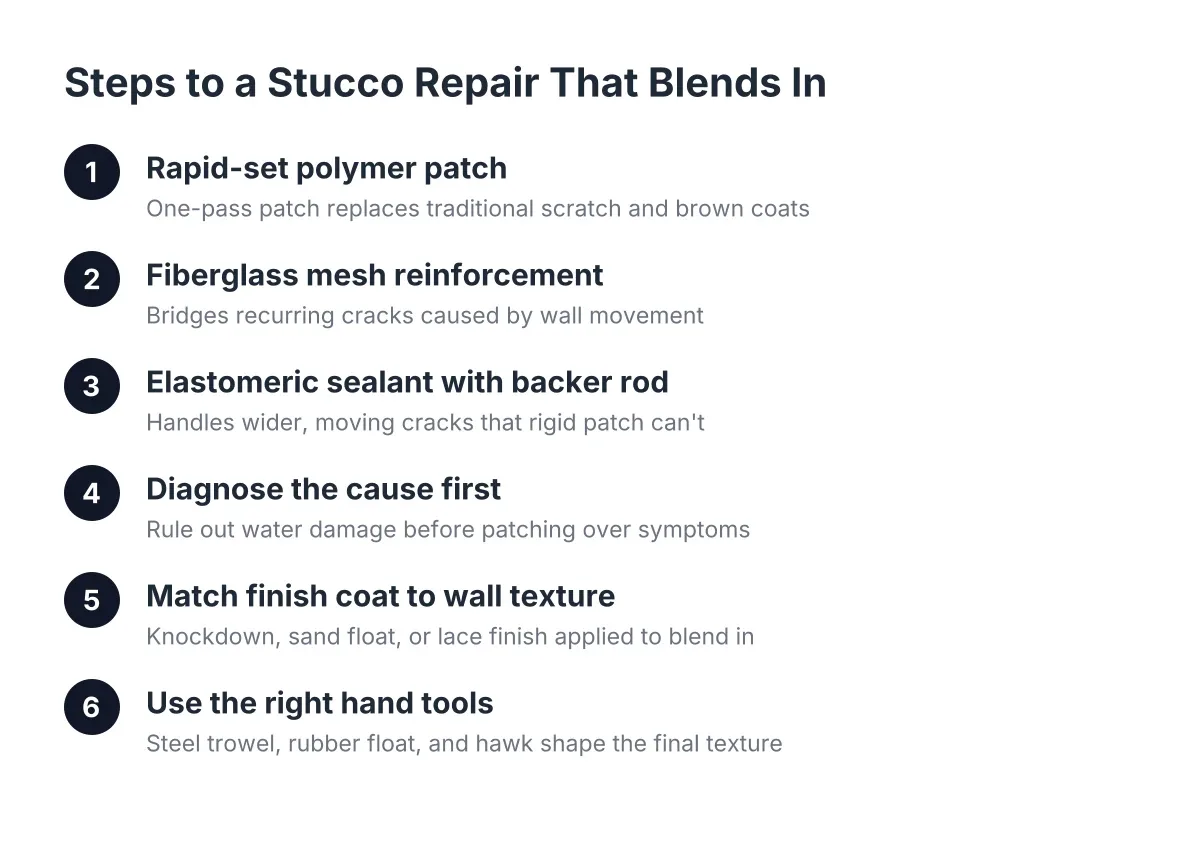
A polymer-modified, rapid-setting stucco patch is the workhorse for most repairs under a few square feet. It replaces the traditional three-coat system with a single application, so you skip separate scratch and brown coats on repair work. The polymers also help it grip existing stucco; many rapid-set products bond without a separate primer, which removes one more failure point from the job.
For a homeowner redoing a bad patch, this matters because the old handyman fix often sits proud of the wall or crumbles at the edges. A rapid-set patch lets the crew cut out the failed material, rebuild the depth in one pass, and move to texture the same visit. Patch compound, latex additive, and mesh are all stocked at general hardware stores, so sourcing is not the hard part. Applying it before it sets is.
2. Fiberglass Mesh for Cracks That Keep Coming Back
Fiberglass mesh embedded in the patch bridges the crack so movement in the wall does not reopen it. Stucco cracks because the home moves: foundation settling, framing shrinkage in newer builds, and Colorado's freeze-thaw swings all pull at a rigid cement skin. A patch without reinforcement is just new material waiting to crack along the same line.
Mesh earns its place on newer Castle Rock homes in particular. Suppose a homeowner in Stonegate with a four-year-old build watches a diagonal crack come back through a builder touch-up for the second time. In that scenario, the fix is not thicker patch material; it is cutting the repair area back, embedding mesh across the crack, and then rebuilding the coats over it. Corner mesh does the same job on chipped or cracked corners, which take the most abuse.
3. Elastomeric Sealant With Backer Rod for Moving Cracks
For cracks wider than a hairline that open and close with the seasons, a flexible elastomeric sealant handles movement that rigid patch material cannot. The supporting player here is backer rod, a closed-cell foam cord pressed into the crack before sealing. According to Sika, backer rod creates a backing or foundation inside the crack so the sealant forms the right shape and depth instead of sinking into the void.
Timing matters more than most homeowners expect. Large crack repairs with sealant go better in the early morning; hot afternoon sun makes caulk cure poorly and skin over before it is tooled. One honest trade-off: sealant alone leaves a smooth bead on a textured wall, so it should be sanded into the joint and textured over, not left bare. A shiny caulk line down a stucco wall is exactly the kind of visible repair this article is trying to help you avoid.
4. What the Best Stucco Repair Products Cannot Fix
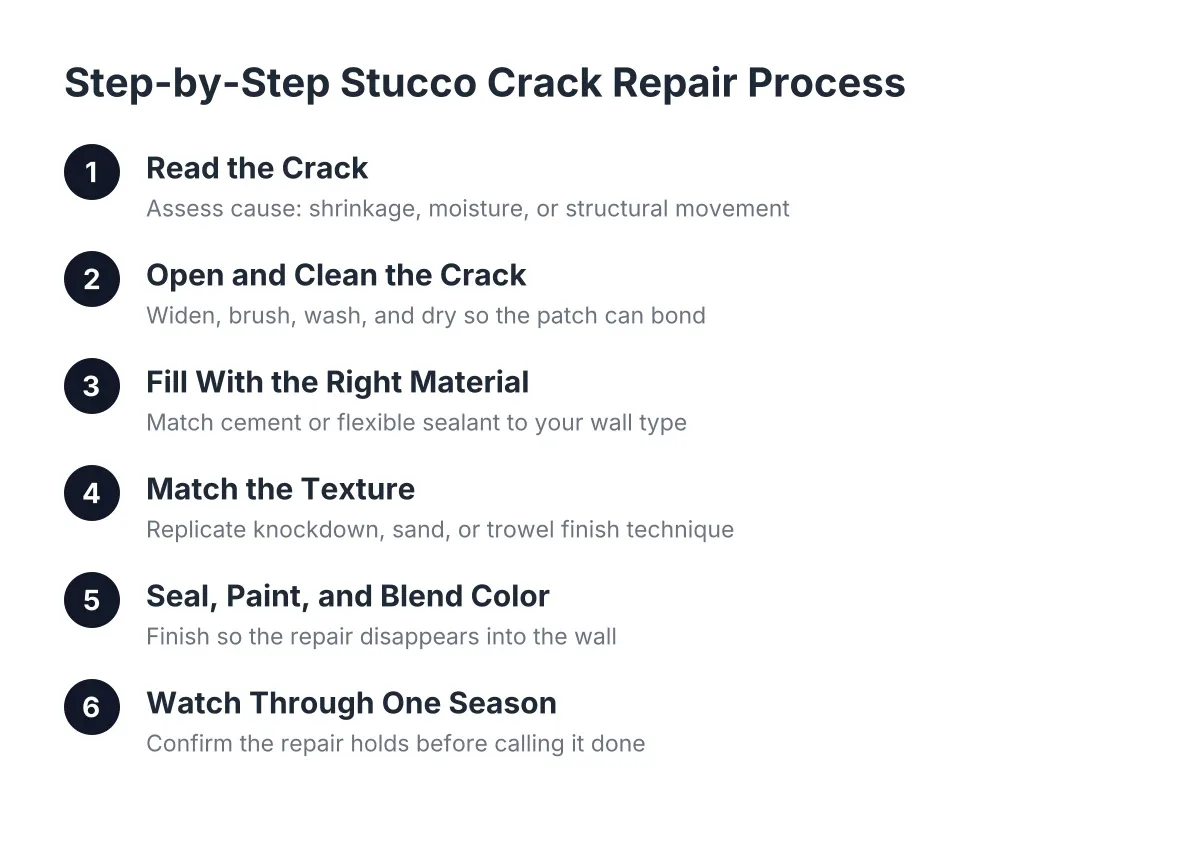
No product fixes a crack whose cause is still active. Before any patching, a crew should read the crack: hairline spider cracks in the finish coat are cosmetic, while wide, stair-stepping, or recurring cracks point to movement, vibration, or water getting behind the stucco. Patching over an active problem buys you a repeat of the same repair in a year or two.
Water damage is the big one. Soft spots, staining below windows, or stucco that sounds hollow when tapped mean moisture is working behind the wall, and the repair starts with finding the entry point, not with a bucket of patch. The decision rule is simple: fix the cause, then fix the crack. If a crack is wider than a credit card, growing, or paired with interior drywall cracks, bring in a professional before anyone opens a product. This is also where DIY stucco crack repair kits fall short; they treat the symptom and skip the diagnosis.
5. Finish Coat Material Matched to Your Wall's Texture
The finish coat is where a repair either disappears or becomes the patch you stare at for years. The best stucco repair products for the base coat mean nothing if the finish coat is the wrong type for your wall. Castle Rock neighborhoods carry a handful of common finishes, including knockdown dash, sand float, and heavier lace textures, and each one calls for different material and a different hand.
A knockdown dash repair, for example, is done by spraying finish coat onto the patched area and then lightly troweling it down to blend into the surrounding wall. A sand finish gets worked with a rubber float instead. Here is the honest part: a poor texture match usually means the last worker did not identify the original technique, not that matching is impossible. Textured, flattened finishes patch nearly invisibly; smooth finishes are less forgiving, and on a smooth or heavily weathered wall even a careful crew may recommend refinishing a larger section to a natural break line.
6. The Right Hand Tools: Steel Trowel, Rubber Float, and Hawk
Hand tools shape the texture, so they belong on any list of what to use for stucco repair. Three tools do most of the work:
- A steel trowel applies and compresses the patch; some patch products troweled with steel naturally produce a stucco-like texture on their own.
- A rubber float works sand and float finishes and softens trowel marks at the edges of the repair.
- A hawk holds material at the wall, which makes it the most useful tool for spot repairs and patch work where you are loading small amounts repeatedly.
Technique around the edges separates an invisible repair from an obvious one. Feathering the new texture past the patch boundary, instead of stopping at a hard line, is what lets the repair read as one continuous wall. That skill does not come in the bucket.
7. Fog Coat or Color-Matched Finish for the Color Problem
Color is the second half of blending, and it is where "close but not right" patches come from. New patch material cures lighter or darker than stucco that has weathered Colorado sun for years, so even a perfect texture match can show as a ghost rectangle. The fix is either an integrally colored finish coat matched to a sample from your wall, or a fog coat, which is a thin cement-based color wash applied over the repair and feathered outward.
On older walls, matching to a natural break such as a corner, a control joint, or a trim line hides any slight color shift, because the eye does not compare color across an edge. This is standard practice for stucco color and texture matching, and it is the question to ask anyone quoting a stucco patch in Castle Rock, CO: how will you handle the color, not just the crack.
8. Skip the Catalyzed Body-Filler Shortcuts
Auto-body-style catalyzed fillers show up in quick patch jobs because they harden fast and sand smooth. They are the wrong product for exterior stucco repair. According to 3M, catalyzed body-filler-type products begin setting up within about 2 minutes of mixing, which leaves no working time to build texture, and the cured surface is slick plastic that takes neither finish coat nor paint the way cement does.
If your existing bad patch is hard, smooth, and slightly shiny, there is a fair chance this is what you are looking at. The repair is removal, not another layer on top. A second patch over the wrong material fails at the bond line, and then you have two generations of bad repair to cut out instead of one.
9. For Impact Damage, Think Beyond the Patch Bucket
Hail and debris strikes call for a different product decision: cut back to sound material and rebuild in layers, sometimes including new lath, rather than smearing filler into each divot. This comes up often along the Front Range. Colorado logged 182,591 hail insurance claims from 2013 to 2015, second only to Texas, according to the Rocky Mountain Insurance Information Association. A wall peppered with impact spots usually blends better with one larger refinished section than with dozens of individual dabs.
In addition, widespread hail damage is worth documenting before repair in case an insurance claim applies. The repair products are the same rapid-set patch, mesh, and matched finish coat covered above; the difference is scope and sequencing.
Putting the Best Stucco Repair Products to Work on a Bad Patch
For the homeowner whose current patch does not match, the product list for 2026 comes down to a short stack: rapid-set polymer patch for the body of the repair, fiberglass mesh across any crack that has reopened, elastomeric sealant over backer rod for moving joints, and a finish coat and fog coat matched to your specific texture and color. Every item is buyable at a hardware store. The blend is not.
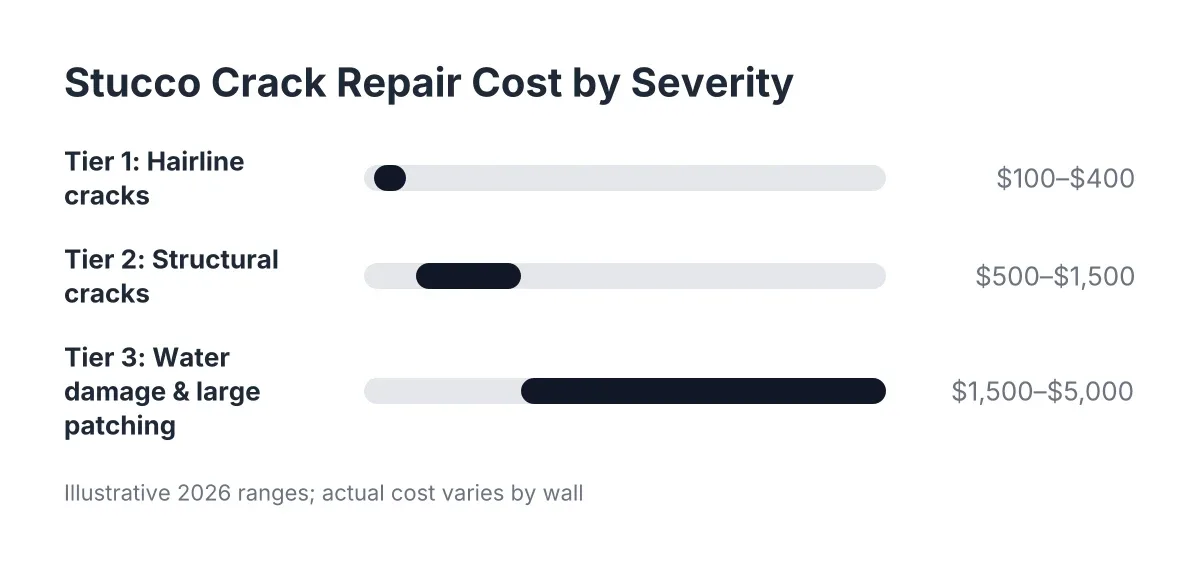
Materials are maybe a tenth of what makes a repair invisible; the rest is reading why the crack formed, cutting back the failed patch cleanly, and reproducing the original finish technique by hand. As a rough illustrative range, a small professional patch-and-blend repair often lands in the hundreds, while larger sections with water damage or lath work can run into the low thousands. When you talk to stucco repair companies, ask less about which bucket they use and more about how they will match your wall. The answer tells you whether you are hiring someone who patches stucco, or someone who makes repairs disappear.
If you need stucco repair, Castle Rock Stucco Pros can help.
Prefer to talk it through? Call (720) 797-8506 — a quick call is usually the fastest way to get a straight answer for your situation.