Stucco Contractor vs. General Handyman in Castle Rock, CO: How to Hire Right
After a Colorado hailstorm chews up your stucco, the first call you make matters. Many Castle Rock homeowners end up weighing a stucco contractor against a general handyman, and the difference between the two shows up on your wall within a year. Stucco is cement-based material with its own rules for mixing, curing, and texture matching. A handyman can patch drywall and fix a gate. Stucco punishes people who treat it like just another wall surface.
This guide walks you through the steps to vet and hire the right person for the job, with the specifics that matter if you are coordinating repairs with an insurance claim before winter.
Step 1: Figure Out What Kind of Damage You Have
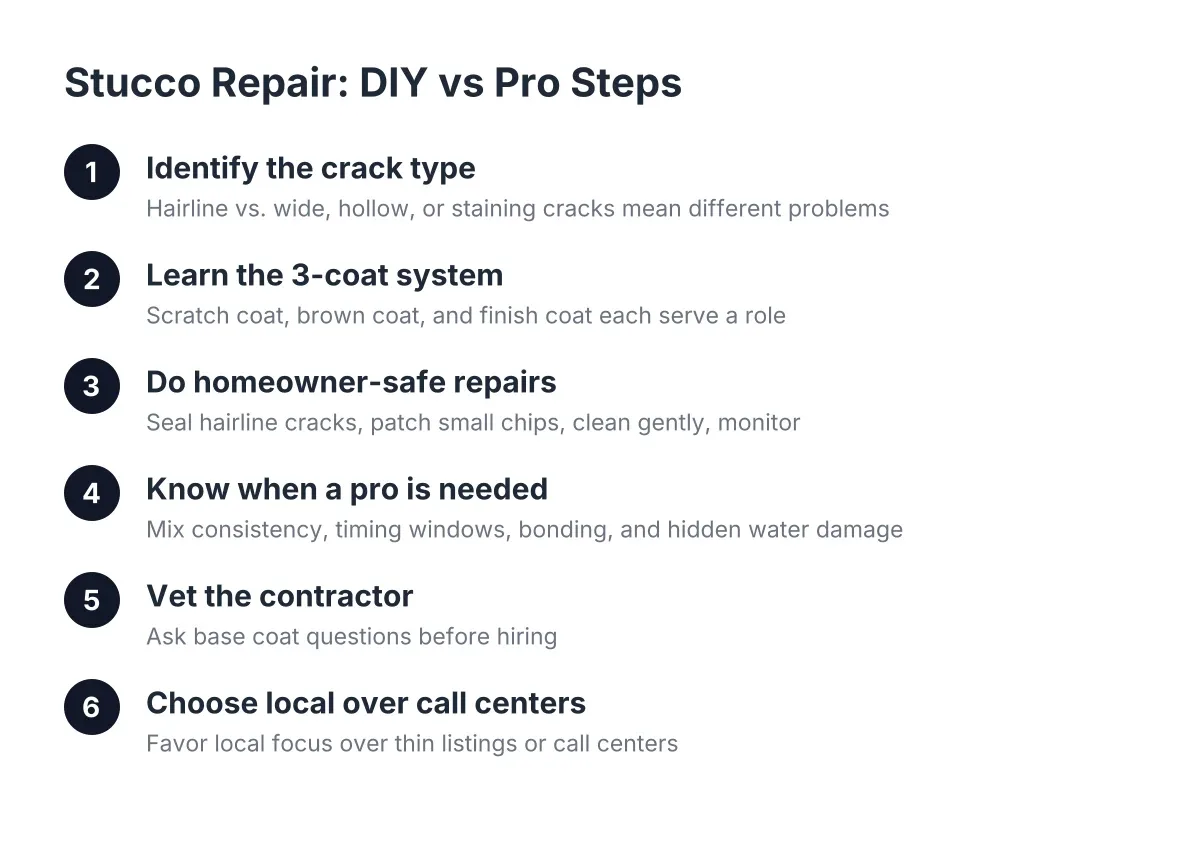
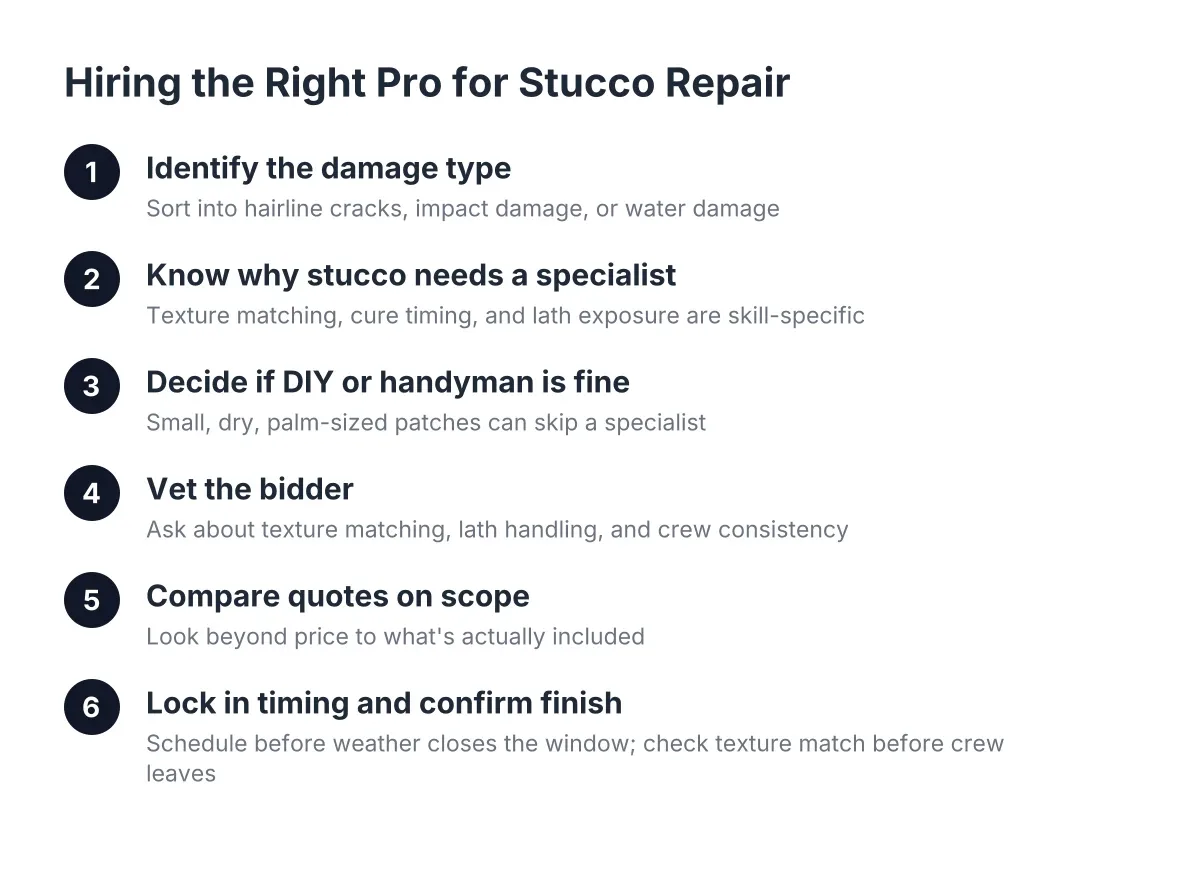
Start by walking the exterior and sorting what you see into three buckets: hairline cracks, impact damage, and water damage. Hairline cracks under about 1/16 inch are common and often cosmetic. Hail impact leaves circular chips, crushed texture, or spots where the finish coat popped off. Water damage shows up as staining, bubbling, soft spots, or stucco pulling away from the wall.
This matters because the type of damage decides who you can safely hire. A single hairline crack on a garage wall is low stakes. Water damage or delamination is not. If stucco sounds hollow when you tap it, or if a newer home in Stonegate or Meridian is cracking within five years of construction, the problem is usually behind the finish coat. That calls for someone who repairs stucco every week, not occasionally.
Take photos of everything now, before weather changes the picture. If hail caused the damage, your insurance adjuster will want dated photos, and so will any contractor bidding the work.
Step 2: Understand Why a Stucco Contractor Beats a General Handyman on This Material
A stucco contractor beats a general handyman on stucco repair because the material demands skills a generalist rarely practices: matching sand fineness to the existing finish, timing cement cure between coats, and reproducing the original texture by hand. A handyman who patches stucco twice a year cannot match a crew that does it daily.
Here is what that looks like in practice. The sand in a stucco mix has to match the fineness of your existing finish, or the patch reads as a different texture even under fresh paint. Scratch and brown coats, the structural layers under the finish, are harder to apply than they look; this is work the trades generally recommend hiring out rather than attempting casually. Professional plasterers can apply multiple coats in a single day because they know how to dose accelerators; too much and the mix hardens in minutes before it can be worked.
Texture matching is where generalist repairs fail most visibly. When you see a patch on a house that looks like a gray square under the paint, that is usually the signature of a worker who did not match the original technique or finish type. One advantage of stucco is that its texture hides small surface flaws well, but only when the repair texture matches. A mismatched patch does the opposite; it draws the eye straight to the repair.
There is also a weatherproofing issue most homeowners never hear about. When stucco is cut open for a repair, the metal lath behind it should be left torn and exposed at the edges, not cut clean with a grinder. A stucco crew needs that exposed lath to tie the new material in and weatherproof the patch. A clean cut forces the next worker to open up more wall, which adds cost. Generalists make clean cuts because clean cuts look careful. On stucco, they are the opposite.
Step 3: Know When a Handyman or DIY Patch Is Actually Fine
To be fair, not every stucco repair needs a specialist. A homeowner or handyman can reasonably handle a single hairline crack or a palm-sized chip in a low-visibility spot. Pre-mixed patch compound, latex additive, and corner mesh are all sold at general hardware stores, and a pre-mixed bag is more practical for small jobs than mixing raw ingredients the way a mason would for a full wall.
Keep DIY inside these limits:
- Cracks narrower than a credit card edge, with no staining around them
- Patches smaller than your palm, on a wall you do not look at daily
- No soft, hollow, or bulging areas anywhere nearby
- No sign of water getting behind the stucco
Cross any of those lines and the math changes. A failed patch over water damage does not just look bad; it traps moisture against the sheathing and turns a $1,500 repair into a much larger one. If you are unsure which side of the line you are on, a local stucco crew can usually tell you from a short look at the wall. The honest answer is sometimes that a pro visit is not needed, and a contractor focused on stucco has no reason to invent work a hardware store patch can handle.
Step 4: Vet the Stucco Contractor, the General Handyman, or Whoever Bids the Job
Vet any bidder, stucco contractor or general handyman, by asking three material-specific questions: how they will match your existing texture, how they handle the lath and weatherproofing layer, and how many stucco repairs they completed in the last month. Vague answers to any of these predict a patch you will stare at for years.
Ask these on the phone or during the estimate:
- How will you match my texture and color? A real answer names your finish type and explains the sample or test-patch process. "We'll blend it in" is not an answer.
- What happens behind the finish coat? Listen for talk about lath, weather barrier, and tying the patch into the surrounding wall. Silence here is a red flag.
- Who actually shows up? Franchise operations route calls through national call centers and rotate crews, so the person who quoted the job may never see it. Ask whether the estimator and the crew lead are the same local people.
- How do you document for insurance? If a hailstorm caused the damage, you need photos, a written scope, and line-item pricing your adjuster can read. A contractor who repairs storm damage regularly will have this ready without being asked.
Watch for the common red flags too: a bid with one lump-sum number and no scope, pressure to sign the day of the storm, a quote that undercuts everyone else by half, or a website that ranks on Google but says nothing specific about how they work. Thin lead-gen sites sell your phone number; they do not repair stucco.
Step 5: Compare Quotes on Scope, Not Just Price
A fair stucco repair quote in 2026 spells out the damaged areas by location and size, the layers being repaired, the texture and color matching process, and cleanup. Repairs on newer Castle Rock homes commonly land in the $1,000 to $8,000 range depending on how much wall is opened up, though that is an illustrative range, not a promise; your written estimate is the number that counts.
For example, suppose a homeowner in Carriage Club gets two bids after a June hailstorm. Bid one says "repair stucco, $2,200." Bid two lists four impact areas on the south and west walls, notes one section with suspected water intrusion behind the finish, includes a texture test patch, and prices the water-damage contingency separately. Even if bid two costs more, it is the one you can hold someone to, and it is the one your insurance adjuster can actually work with.
Insurance pressure is real here. Colorado home insurance premiums rose 65% over the last five years, with hail cited as a major driver, according to the National Association of Insurance Commissioners. The state also logged 182,591 hail claims from 2013 to 2015, second only to Texas, according to the Rocky Mountain Insurance Information Association. Adjusters in this market scrutinize repair scopes closely; a detailed, itemized quote from a contractor who knows stucco moves a claim along faster than a handyman's one-line invoice.
When you are hiring a stucco contractor rather than a generalist, the quote itself is often the first proof of expertise. Specialists describe the work in layers because they think in layers.
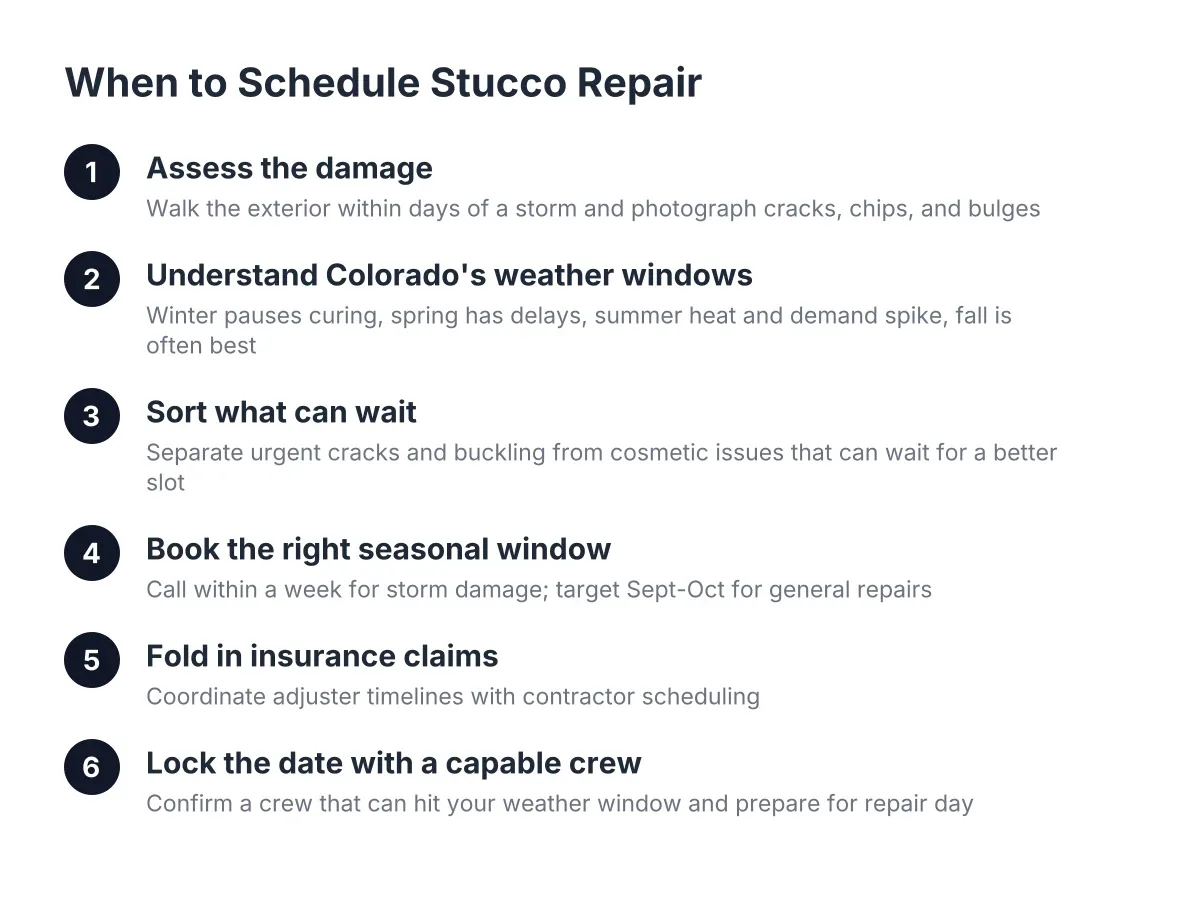
Step 6: Lock In Timing Before Castle Rock Weather Closes the Window
Schedule the repair with Colorado's climate in mind. Stucco is cement, and cement cures on its own schedule; cold snaps and freeze-thaw cycles along the Front Range shorten the working season. Water sitting in an open crack through a winter of freeze-thaw cycles will widen it, so a crack flagged in September should not wait until April.
Ask your contractor two scheduling questions. First, how does cold weather change the repair plan; a crew that works locally will have a direct answer about temperature limits and cure times. Second, what happens if the opened wall reveals more damage; you want the change-order process stated up front, not improvised mid-job.
One limitation worth naming: no contractor can tell you from the sidewalk exactly what is behind a bulging or stained section of stucco. If hidden water damage turns up once the wall is open, the scope and price will change, and an honest contractor will say so before signing rather than after.
Step 7: Confirm the Finish Before the Crew Leaves
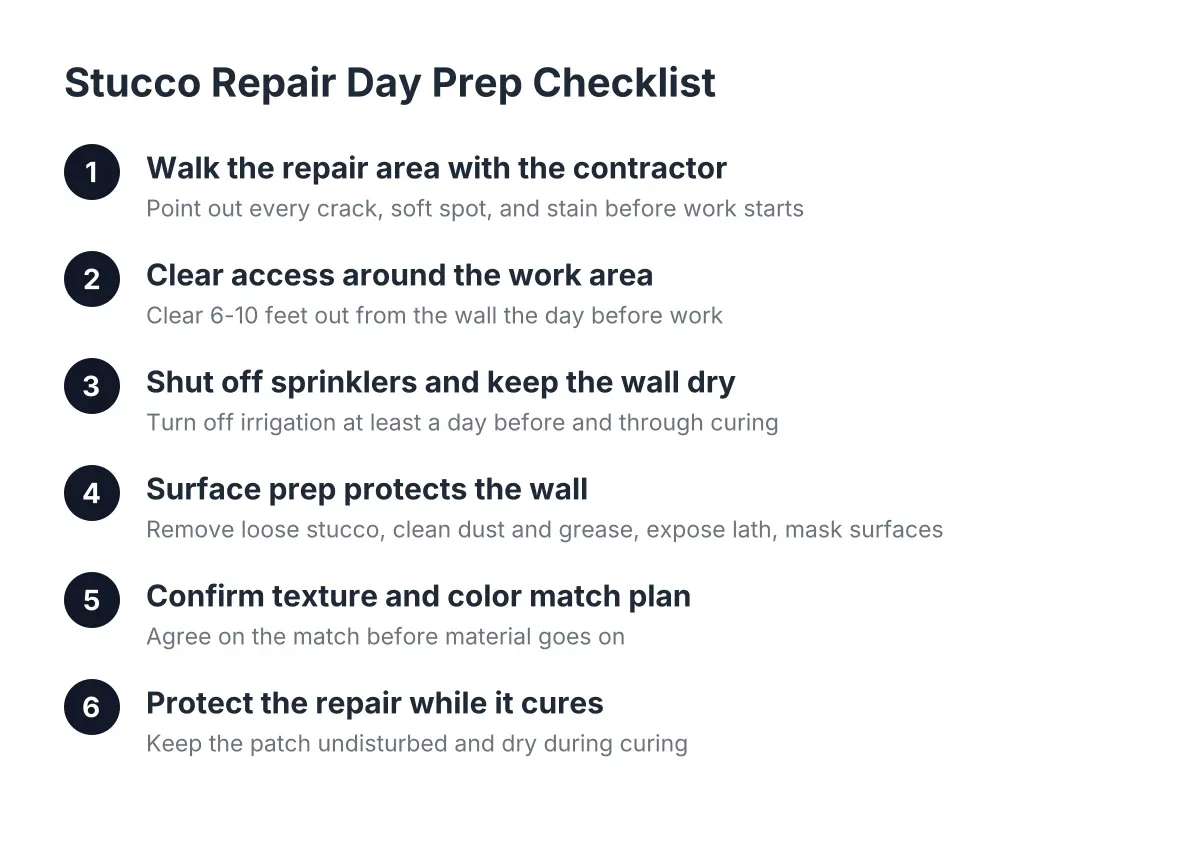
Before final payment, walk the repair in daylight from ten feet away and from across the yard. A good stucco patch should be hard to find once paint cures; the texture should carry across the repair line without a visible frame. Check that the crew removed debris, protected your landscaping, and left you photos of the wall before it was closed up, which matters if an insurance question comes later.
Ask how the repair should look as it cures over the next few weeks, and who to call if a hairline crack telegraphs through. The difference between a stucco contractor and a general handyman shows up one more time right here. A specialist local to Castle Rock answers that call, because the same crew that did the work is still ten minutes away. A rotating franchise crew or a one-off handyman usually is not.
The Bottom Line for Castle Rock Homeowners
Match the hire to the damage. Small cosmetic cracks are fine for a careful DIY patch or a handyman. Impact damage, texture-critical walls, water intrusion, and early cracking on newer builds belong with a crew that works in this material every day and can match your home's existing finish.
If your Castle Rock home has cracked, chipped, or water-damaged stucco, get a local stucco repair crew out to look at it and put a written, itemized estimate in your hands. A short walk around the house now tells you what the wall needs, what it should cost, and whether the work can be done before the weather turns.
If you need stucco repair, Castle Rock Stucco Pros can help.
Prefer to talk it through? Call (720) 797-8506 — a quick call is usually the fastest way to get a straight answer for your situation.