When to Schedule Stucco Contractor Repair in Castle Rock: A Colorado Timing Guide
Hail hits in June, cracks show up in July, and by October you are wondering if the repair can even happen before winter. If you are trying to schedule stucco contractor repair in Castle Rock after storm damage, timing matters more than most homeowners realize. When planning stucco repair timing in Colorado, understand that stucco is a cement product that cures based on temperature and moisture, which means the Colorado calendar has a real say in when your repair gets done and how well it holds.
This guide walks through the timing decision step by step, from checking the damage to picking the right week for the work. It is written for homeowners dealing with hail or wind damage, and for small landlords in the Castle Rock, Parker, and Lone Tree area who need a repair finished before a tenant moves in. The steps apply either way.
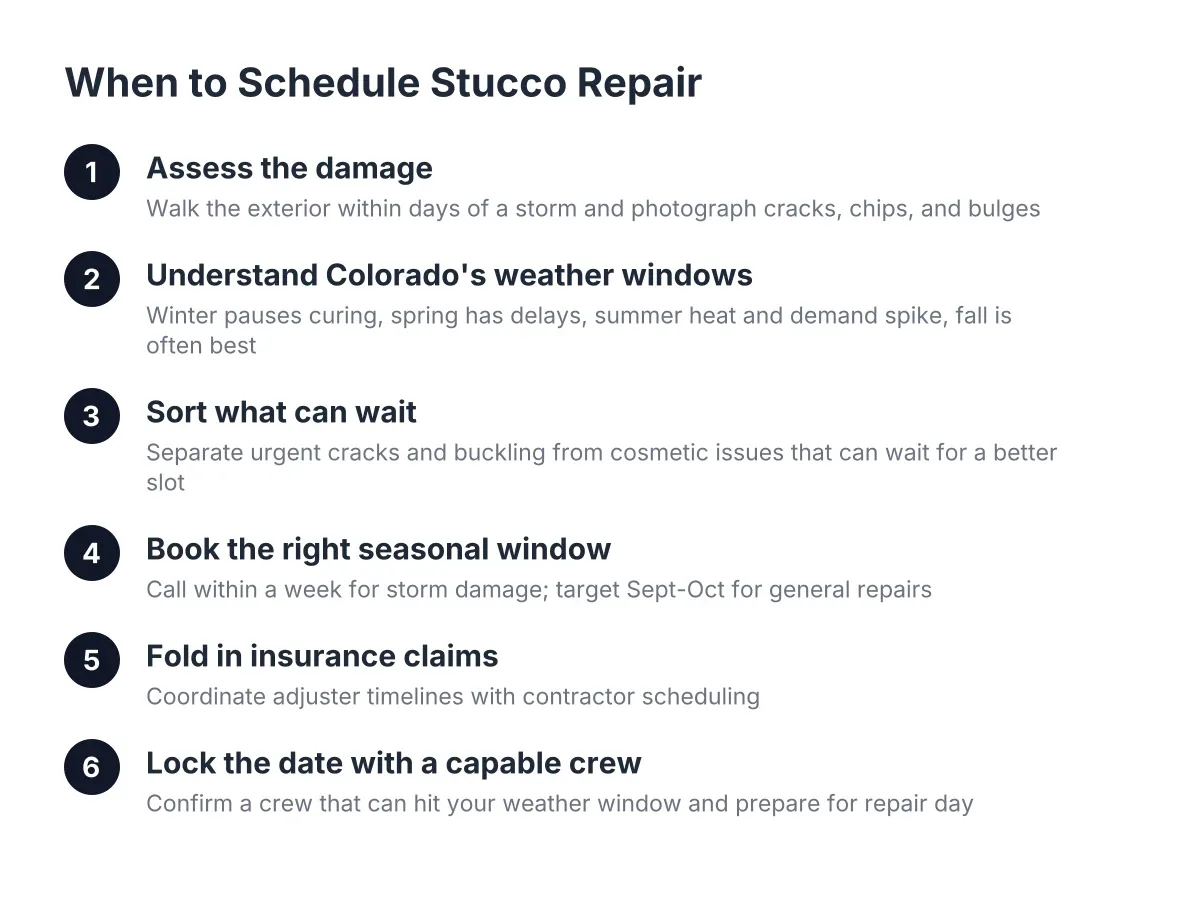
Step 1: Assess the Damage Before the Weather Changes It
Walk the exterior within a few days of a storm, not a few months. Look for cracks wider than a credit card edge, chips where hail knocked off the finish coat, soft or bulging spots, and staining below windows. Take photos of everything with something for scale, like a coin or a tape measure.
Here is why speed matters. Behind your stucco siding sits a layer of building paper that keeps water off the wood framing. A crack that sits open through several freeze and thaw cycles lets water reach that paper. Over time the paper gets brittle, the wall flexes, the paper tears, and now you have water damage inside the wall instead of a surface crack. A repair that would have been simple patching becomes a tear-out.
Loose or buckling stucco is the most urgent sign. Material that has separated from the wall lets rain in behind it, and every storm after that expands the damage to the wood underneath. If you see buckling, move to Step 4 now and skip the seasonal planning. That one does not wait for spring.
Step 2: Why Stucco Repair Timing in Colorado Depends on Weather
Stucco and the caulks and sealants that go with it cure within a temperature window. Outside that window, the work either cannot happen or happens poorly.
- Deep winter (roughly December through February): Fresh stucco cannot cure properly in freezing temperatures. Most patching work pauses or requires tenting and heat, which adds cost.
- Spring (March through May): Temperatures work, but spring storms interrupt schedules. Expect some weather delays.
- Summer (June through August): Hot afternoons cause their own problems. Caulk and sealant used in crack repair behave poorly in direct heat, so crews that know the material do that work in the early morning. Summer is also peak hail season, so demand spikes right after storms.
- Fall (September through November): Often the best window. Mild days, cool nights that are still above freezing, and the last stretch before winter locks in open cracks for months.
Those spikes in summer demand are not small. Colorado had 182,591 hail insurance claims from 2013 to 2015, the second-highest total in the country, according to Rocky Mountain Insurance Information Association. After a big Front Range storm, every stucco crew along the I-25 corridor books up fast. The homeowners who called the week after the storm get the fall slots. The ones who waited until October compete for whatever is left.
Step 3: Decide What Can Wait and What Cannot
Not every crack needs a crew this month. Sort your damage into three buckets.
Fix before the first hard freeze: open cracks wider than a hairline, missing chunks of finish coat, any spot where you can see the lath or paper behind the stucco, and staining that suggests water is already getting in. Freeze and thaw cycles widen these all winter.
Fix within the year: hairline cracks with no staining, cosmetic chips, and fading or chalking on older stucco. These are candidates for a spring or fall appointment when scheduling is easier.
Fix now regardless of season: buckling or loose material, soft spots, and interior signs like damp drywall near an exterior wall. Water damage compounds. A contractor can do limited work in winter, such as removing loose material and sealing the opening temporarily, even if the full patch waits for warmer days.
For a small landlord, the vacancy calendar adds a fourth consideration. Say you own a duplex in Castle Rock with a tenant moving out August 31 and a new lease starting October 1. That 30-day window lands in prime repair season, but it also lands in peak demand. In that scenario, calling in July to hold a September slot is the difference between re-listing on time and showing the unit with a cracked wall.
Step 4: Schedule Stucco Contractor Repair Around the Right Window
Once you know what needs fixing, book the work for the window that fits the repair type. A local stucco specialist can tell you which window applies, but here is the general logic.
Crack repair with sealant goes best on mild days, worked in the morning before afternoon heat. Larger patches need several days above freezing so the material can cure, since repair work builds from the bottom up and each stage needs time. Modern polymer-modified patch products can replace the old three-coat process in a single application for repairs, which shortens the job, but they still need workable temperatures for stucco repair timing in Colorado.
Therefore, the practical booking advice looks like this:
- Storm damage in summer: call within the first week. You are competing with every other damaged house in Douglas County for fall slots.
- General repairs: target September or October, and call four to six weeks ahead.
- Landlord turnovers: book against the lease date, not the damage date, and build in a weather buffer of at least a week.
- Anything buckling or leaking: call immediately, any season, and ask what temporary protection makes sense if full repair has to wait.
A typical crack and patch repair on one or two walls takes a few days once the crew starts, though texture matching and cure time can stretch that. Treat any firm one-day promise on a multi-stage repair with suspicion.
Step 5: Fold Your Insurance Claim Into the Schedule
If hail caused the damage, the insurance timeline and the repair timeline have to line up. Document everything before any work starts: dated photos, the storm date, and a written scope from the contractor that the adjuster can compare against.
Hail is a serious line item for Colorado insurers. Home insurance premiums in the state rose 65% over the last five years, with hail cited as a major driver, according to the National Association of Insurance Commissioners. The May 2017 Front Range hailstorm alone caused $2.3 billion in insured damage, according to the National Insurance Crime Bureau. Adjusters in this market see a lot of stucco claims, and a clear, itemized repair scope from a contractor who actually knows stucco makes the conversation shorter.
One scheduling trap to avoid: do not let the claim stall the protective steps. If loose material needs to come off the wall to stop water intrusion, photograph it thoroughly first, then let the work proceed. Waiting months for a claim decision while water runs behind brittle paper trades a covered patch for an uncovered tear-out. When the claim involves possible structural damage or disputes over scope, bring in a professional assessment rather than guessing; that is not a judgment call to make from the ground with binoculars.
Step 6: Pick a Crew That Can Actually Hit the Window
Timing advice is useless if the contractor cannot hold a date. This is where the type of operation you hire matters as much as when you call. When hiring a stucco contractor in Castle Rock, you will run into three kinds of listings, and they behave differently on the calendar.
Franchise operations route your call through a national center. The person booking your repair has never seen Colorado weather and may schedule a caulk job for a July afternoon or a patch for a week of hard freezes. Rotating crews also mean the person who assessed your wall may not be the person who patches it. Thin local websites that rank well but say little often exist to sell your contact information to whoever pays for the lead, which adds days of phone tag to a schedule that was already tight.
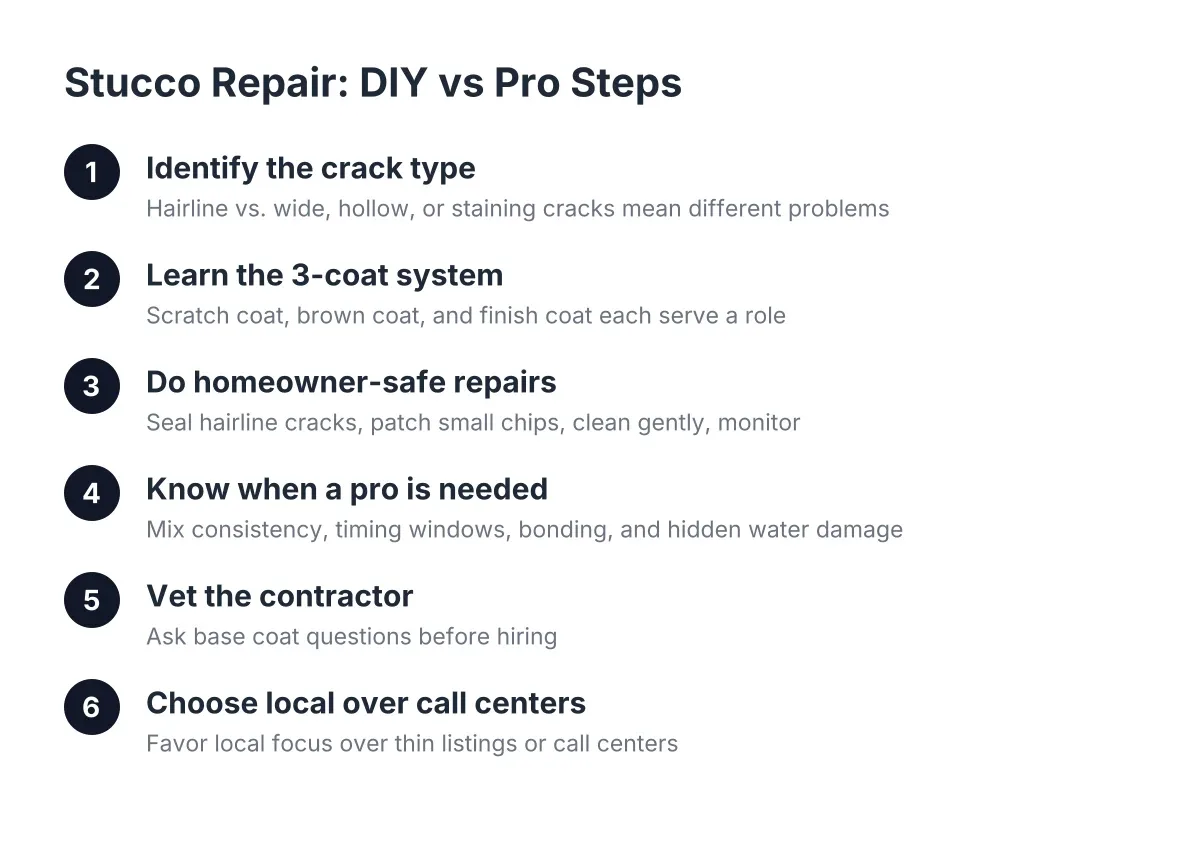
A local specialist who answers their own phone can tell you in one call whether your repair fits the current window, what the backlog looks like after the last storm, and how your texture will be matched. Ask these three questions before you commit:
- Who exactly shows up on repair day, and is it the same person who looked at the wall?
- How do you handle the schedule if a cold snap or storm hits mid-job?
- How will you match the existing texture and color, and will there be a test patch?
A fair quote itemizes removal of damaged material, the patch itself, texture matching, and any sealant or paint work, with a stated weather contingency. A single lump number with no breakdown makes it impossible to compare bids or to see what the adjuster is being asked to cover.
Step 7: Lock the Date and Prepare for Repair Day
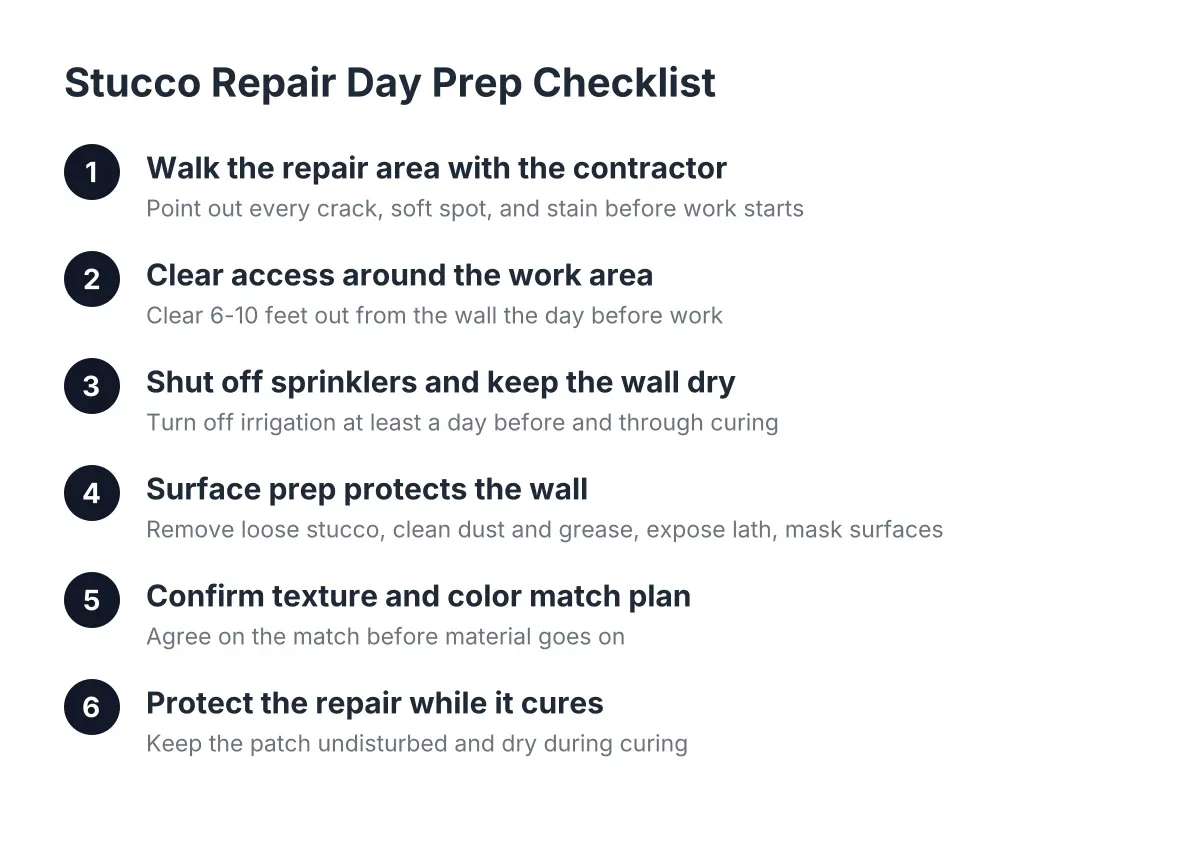
Once you schedule stucco contractor repair, confirm the details in writing: the start date, the expected duration, what happens if weather pushes the date, and the payment terms. Clear the work area along the affected walls, move vehicles away from overspray range, and if you are a landlord, give tenants proper notice of exterior work.
Then leave the staging decisions to the crew. The order of operations on a stucco repair, removing loose material first, working from the bottom up, and timing each coat to the temperature, is exactly the knowledge you hired for. Trying to compress those stages to save a day is how patches fail the following winter.
The Short Version
Colorado's weather both causes stucco damage and limits when you can fix it. Assess damage within days of a storm, triage what can wait, and aim for the fall window for non-urgent work. Call early after hailstorms because the whole Front Range is calling too, and loop your insurance documentation in before work starts. A local Castle Rock stucco repair crew that knows the material can read the forecast against your wall and tell you honestly whether this is a this-week job or a September job.
If your stucco is cracked, chipped, or showing water damage, get a local assessment on the calendar before the next freeze does the scheduling for you. Reach out for an estimate, describe what you are seeing, and ask which repair window fits your wall.
If you need stucco repair, Castle Rock Stucco Pros can help.
Prefer to talk it through? Call (720) 797-8506 — a quick call is usually the fastest way to get a straight answer for your situation.