Rush Stucco Repair Fees in Castle Rock, CO: What Fast Turnaround Really Costs
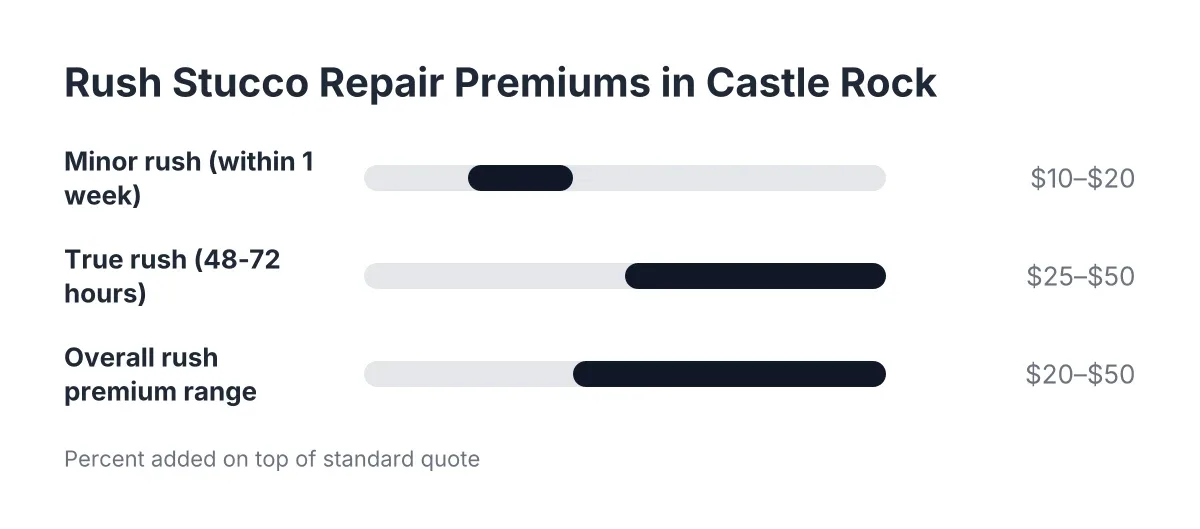
If you need stucco fixed fast, expect to pay for it. Rush stucco repair fees in Castle Rock, CO typically add 20 to 50 percent on top of a standard quote, depending on the season, the size of the job, and how far a crew has to shuffle its schedule to fit you in. This guide breaks down where that extra money actually goes, when paying it makes sense, and when you are better off waiting two weeks and keeping the cash.
You are probably here because you got two quotes that do not match, and one of them had a line item or a vague markup you could not explain. That happens a lot with rush work. Franchise estimators tend to bury the premium inside a big round number. Thin local operations sometimes quote low to win the job, then discover the "fast" part once they show up. A straight answer looks different: a base repair price, a clearly stated rush premium, and a reason for each.
What Counts as a Rush Stucco Repair
A rush repair is any job where the timeline, not the damage, drives the schedule. Most stucco repair in Castle Rock books out one to three weeks in a normal season. If you need a crew on your wall in two or three days, someone else's job moves, and that reshuffling costs the contractor real money.
Common rush situations look like this:
- A home sale is closing and the inspector flagged stucco cracks that must be repaired before the walk-through
- Water is actively getting behind the stucco after a storm and every day of delay widens the damage
- A builder warranty claim was denied and the homeowner wants the defect corrected before winter freeze-thaw cycles make it worse
- An insurance adjuster gave a repair deadline tied to a claim
- Hail damage opened the finish coat and the forecast shows more storms coming
That last one matters more here than in most markets. Colorado is hail country. Three Colorado cities, Colorado Springs, Denver, and Greeley, were among the top 10 U.S. cities representing 10 percent of total hail loss claims between 2018 and 2020, according to Rocky Mountain Insurance Information Association. When a big storm rolls through Douglas County, every exterior contractor's phone rings at once, and the price of jumping the line goes up with demand.
Why Rush Stucco Repair Fees Exist in the First Place
A rush fee covers real costs, not just opportunism. When a contractor quotes you a premium for fast turnaround, here is what that money usually pays for.
Schedule disruption
A stucco crew working efficiently stacks jobs by neighborhood and by cure time. Stucco is not a one-visit material. Even with modern polymer-modified patch products that set fast, a proper repair needs prep, application, and a return trip to check the texture match and color blend. Pulling a crew off a planned job to start yours means someone else's project stalls, and the contractor often eats goodwill or offers that customer a discount to smooth it over.
Material sourcing on short notice
Standard patch material, mesh, and sealant are easy to get. However, matching your home's specific finish color and texture sometimes requires a custom-tinted finish coat or a specialty product that a supplier has to order. On a normal timeline, that wait costs nothing. On a rush, the contractor may drive to Denver for materials the same day or pay expedited freight. That cost lands in your quote.
Weather windows
Stucco work in Castle Rock fights the calendar. Finish coats and caulking behave badly in afternoon heat, so careful crews schedule crack sealing for early morning hours when the material cures properly. In cold months, temperatures have to stay above a workable threshold long enough for the material to set. A rush job may force a crew to work a narrow weather window, which can mean overtime hours, tenting, or heating, all of which cost money.
Risk on the repair itself
Speed pressure is where repairs go wrong. Skipping prep, applying finish over a patch that has not set, or eyeballing the texture match instead of testing it on a sample board are the shortcuts that show up a year later as a visible patch outline or a returning crack. A contractor who charges a rush fee and still does the job right is pricing in the extra care it takes to go fast without cutting those corners.
What Rush Fees Typically Add to the Bill
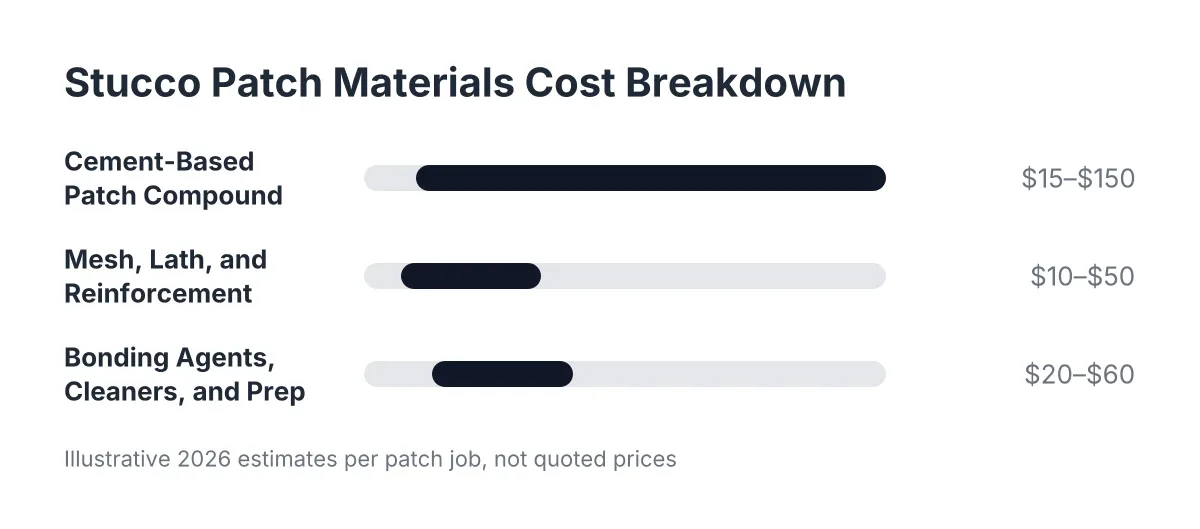
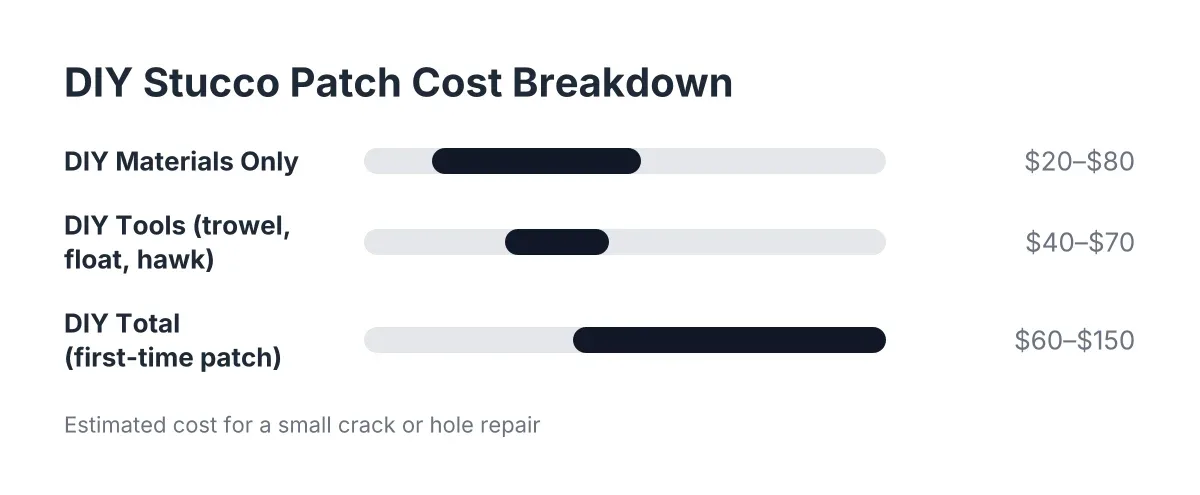
There is no fixed industry rate for rush work, so treat these as illustrative estimates, not quotes. In a market like Castle Rock in 2026, standard small stucco crack repair often runs a few hundred dollars, patching a damaged section commonly lands between $500 and $2,000, and larger wall sections with water damage can run $3,000 to $8,000 or more. Rush premiums on top of those base numbers tend to fall into patterns:
- Minor rush (inside one week instead of two to three): roughly 10 to 20 percent added, or a flat scheduling fee in the $150 to $400 range on smaller jobs
- True rush (within 48 to 72 hours): 25 to 50 percent added, since this almost always means displacing other work
- Emergency stabilization (same day or next day): often billed as a separate trip charge plus hourly labor, with the permanent repair quoted on a normal timeline afterward
That last structure deserves attention because it is often the smartest option. If water is getting in, you do not need the full cosmetic repair today. You need the wall dried in and protected. A crew can seal the opening, cover exposed lath, and stop active water intrusion in a short visit, then return on a standard schedule for the permanent patch and texture matching. You pay a modest emergency fee instead of a large rush premium on the whole job.
When Paying the Premium Makes Sense
Paying rush stucco repair fees is rational in three situations: active water intrusion, a hard legal or contractual deadline, or a closing weather window before winter. Outside of those, the damage is usually stable enough to wait for a normal slot, and the premium buys you convenience rather than protection.
Active water intrusion is the clearest case. The stucco itself is the armor; the building paper behind it is the actual water barrier. Once a crack or hole lets water reach that paper repeatedly, the paper degrades. Left long enough, it becomes brittle, and normal wall flexing can tear it. At that point you are no longer pricing a stucco patch. You are pricing water damage repair, possible sheathing replacement, and a far bigger bill. Paying 30 percent extra this week to avoid a repair that costs three times as much next spring is easy math.
Hard deadlines are the second case. Suppose a homeowner in Stonegate is closing on a sale in nine days, and the inspection report lists stucco cracking at two window corners as a required repair. In that scenario, a standard three-week scheduling window does not work. A rush fee of a few hundred dollars protects a transaction worth hundreds of thousands. The premium is cheap insurance against a delayed closing.
The third case is seasonal. Say it is late October and you have an open patch area on a north-facing wall. Freeze-thaw cycles will pump water into that opening all winter, and repair conditions get worse by the week. Paying to get on the schedule before the first hard freeze often costs less than the spring repair after a winter of expansion damage.
When You Should Not Pay Rush Stucco Repair Fees
Most stucco damage is not urgent, and skipping the rush premium on stable damage is the easiest money a quote-comparing homeowner will save. Hairline cracks, cosmetic chips, and old patches that never matched are problems measured in years, not days. A contractor who pushes urgency on that kind of damage is selling you a fee, not a fix.
Here is a simple test. Ask the estimator one question: what happens if this waits six weeks? An honest answer sorts the job immediately. "Nothing changes, it is cosmetic" means book the standard slot. "Water is reaching the paper and every storm makes it worse" means the premium has a reason behind it. Vague urgency with no mechanism behind it is a sales tactic.
Also watch the post-storm market. Colorado's May 2017 Front Range hailstorm caused $2.3 billion in insured damage across roughly 100,600 homeowners claims, according to National Insurance Crime Bureau, and it remains the state's costliest catastrophe. After events like that, out-of-town storm chasers flood neighborhoods quoting inflated "emergency" rates for work that could wait a month. If your damage is cosmetic hail pitting rather than open penetration, a local crew on a normal schedule will do it right for less.
One honest limitation: no contractor can tell you from the driveway whether a crack is cosmetic or structural, or whether the paper behind it has failed. If a crack is wider than a credit card, runs diagonally from a window or door corner, or shows staining below it, get a professional to open a small test area before anyone quotes you a final number, rushed or not.
How to Read a Rush Quote Line by Line
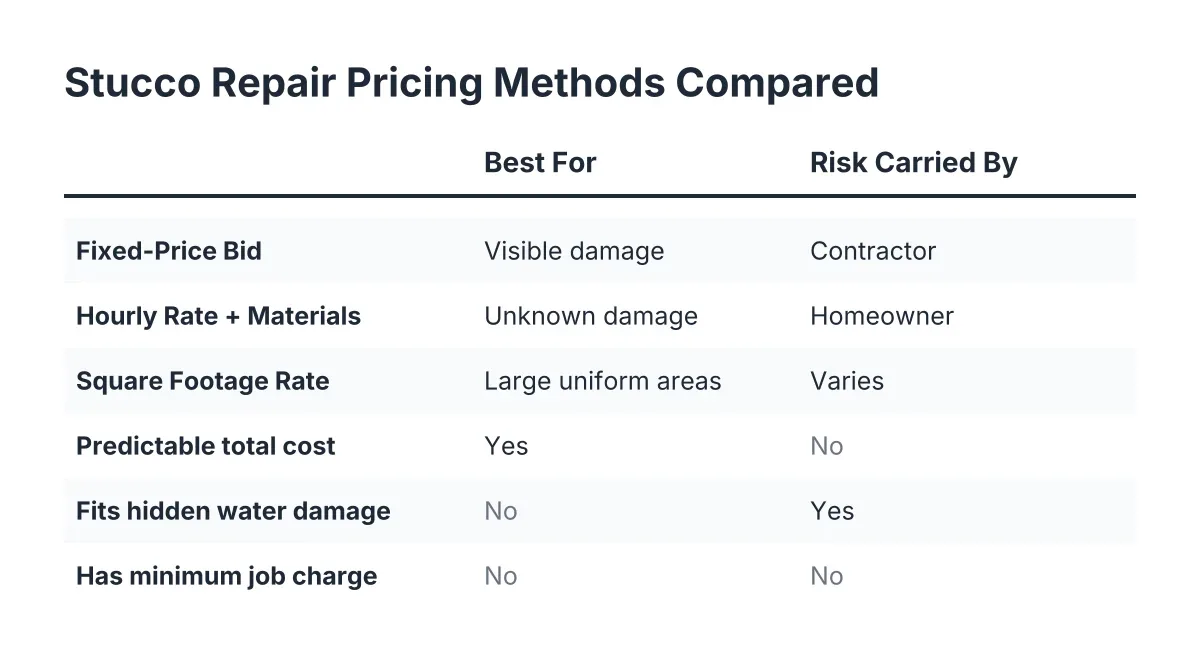
A trustworthy rush quote in Castle Rock, CO separates the repair from the rush. If you cannot see where the premium lives, you cannot compare quotes, and you cannot tell whether a second bid is cheaper or just vaguer. Ask every estimator to break the number into these parts:
- Base repair cost. The price for the same work on a normal two to three week timeline. This is your comparison anchor across bids.
- Rush premium or scheduling fee. A stated percentage or flat amount tied to the timeline, not folded into the base.
- Expedited materials. Any custom-tinted finish coat, specialty mesh, or sealant that costs more to get fast, listed separately.
- Return visit for texture matching. Texture and color matching usually needs a follow-up trip once the patch cures. Confirm it is included, because a rushed job that skips this step leaves a visible patch outline.
- Scope of the permanent fix. Confirm whether the rush price covers the full repair or only stabilization, with the permanent patch billed later.
A franchise estimate that reads "exterior repair, expedited: $4,800" fails this test. So does a thin-site lowball of $900 for the same wall with no mention of texture matching or a return visit. The middle number with five visible parts is usually the real one. This is also where understanding overall stucco repair cost helps; if you know what the base repair should run, the rush premium stands out on its own and you can judge it fairly.
Rush Work and the Newer-Home Problem
Owners of newer homes in neighborhoods like Stonegate, Meridian, and Carriage Club face a specific version of this decision. Stucco defects on new builds, cracking from poor curing, delamination, or bad flashing details, tend to show up in the first one to five years. By then the builder warranty has often expired, or the builder has stopped returning calls.
The trap is the gap. Homeowners spend months pursuing the builder, and the defect keeps weathering the whole time. By the time the warranty route dies, a crack that was cosmetic in April is letting water in by October, and now the repair is both bigger and urgent. The rush premium at that point is partly the cost of the delay itself.
Therefore, if you are still working a warranty claim, get the damage documented and stabilized now even while you fight the paperwork battle. A small sealing visit does not undermine your claim, and it caps the damage. One boundary worth stating plainly: a repair contractor fixes the stucco; pursuing the builder for reimbursement is between you, the builder, and possibly an attorney. Expecting the repair crew to fight that claim for you sets everyone up for frustration.
Why Fast Does Not Have to Mean Sloppy
Speed and quality can coexist on stucco, but only because modern materials allow it, not because a crew hustles harder. Polymer-modified, rapid-setting patch products can replace the old three-coat system with a single application for repair work, cutting days off the timeline without skipping steps. Some of these products bond to existing stucco without a separate bonding primer, which removes another wait.
The steps that cannot be rushed are prep and matching. The damaged area still has to be cut back properly; a careful opening leaves the lath exposed in a way that lets the crew tie the new patch into the existing weatherproofing, and a sloppy clean cut forces them to open more wall, which adds cost. Cracks still need proper backing before sealant goes in; backer rod, a closed-cell foam cord, creates the foundation inside a crack before sealant is applied, according to Sika. And the finish still has to blend. A knockdown texture, for example, gets sprayed onto the patch and then lightly troweled to match the surrounding wall, and that blending is judgment work no accelerator speeds up.
So when you compare rush quotes, the question is not just who can start soonest. It is who can go fast on the schedule while staying slow on the steps that determine whether the patch disappears into the wall or announces itself every time you pull into the driveway.
The Bottom Line for Castle Rock Homeowners
Rush fees on stucco work are legitimate when they are visible, explained, and tied to a real deadline or active damage. In 2026, expect a fast-turnaround premium of roughly 10 to 50 percent over a standard timeline in the Castle Rock area, with true emergencies better handled as a cheap stabilization visit followed by a normal-schedule permanent repair.
Three rules will keep your money where it belongs. First, make every bidder separate the base repair from the rush premium so you can compare like with like. Next, ask what happens if the work waits six weeks, and let the answer tell you whether urgency is real. Finally, if water is getting in, stabilize now and schedule the full repair normally; that single move usually beats paying the full premium. A local crew that works stucco every day can walk you through each of those numbers without flinching, and that willingness to explain is itself the strongest trust signal you will find in a quote.
If you need stucco repair, Castle Rock Stucco Pros can help.
Prefer to talk it through? Call (720) 797-8506 — a quick call is usually the fastest way to get a straight answer for your situation.