Fiber Cement Siding vs. Vinyl: Which Is Right for You?
If you are choosing between fiber cement siding and vinyl for your home, the decision usually comes down to budget now versus durability later. In the fiber cement siding vs vinyl question, fiber cement wins if you want a tougher, longer-lasting exterior and can pay more upfront; vinyl wins if you want the lowest install cost and the least maintenance. Both are proven materials, and both can look good on a Castle Rock home. The right pick depends on your budget, how long you plan to stay in the house, and how much weather your walls take. Here is a straightforward breakdown so you can decide with clear eyes.
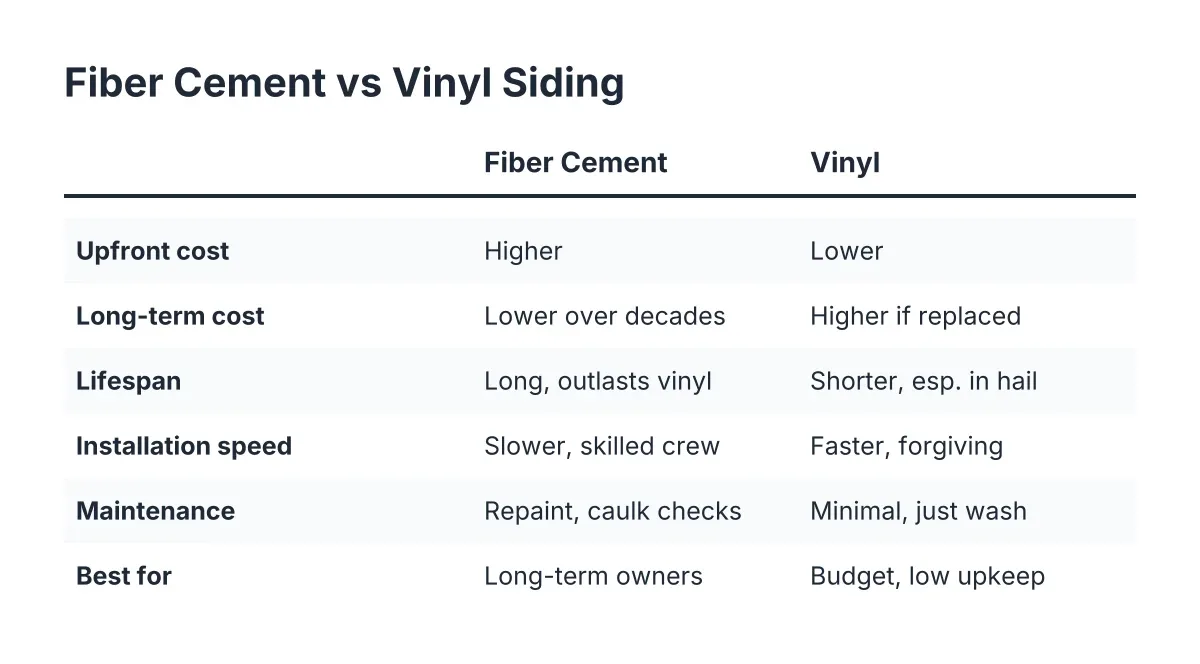
| Criteria | Fiber Cement Siding | Vinyl |
|---|---|---|
| Upfront cost | Higher; heavier material and more labor to install | Lower; lighter material and faster install |
| Long-term cost | Lower over decades; repaint eventually, but fewer replacements | Higher if panels crack or fade and need replacing sooner |
| Lifespan | Long; typically outlasts vinyl in most homes | Solid, but usually shorter, especially in harsh sun and hail |
| Maintenance | Repainting every so often; occasional caulk touch-ups | Minimal; wash it down, replace damaged panels |
| Best for | Long-term owners who want durability and a painted-wood look | Budget-focused owners who want low cost and low upkeep |
Fiber Cement Siding: Strengths and Trade-offs
Fiber cement is a mix of cement, sand, and cellulose fibers pressed into boards or panels. Think of it as a plank that looks like painted wood but behaves more like concrete. It shrugs off hail better than most materials, it does not burn, and insects have no interest in it. For homes along the Front Range that take hard sun, wind, and the occasional hailstorm, that toughness matters.
The trade-offs are cost and labor. Fiber cement is heavy, and cutting it takes special blades and dust control. That means a longer install and a higher bill than vinyl on the same house. It also needs paint. Factory finishes last a long time, but at some point you will repaint, and the caulk joints need checking every few years. If you skip that upkeep, water can get behind the boards and cause the same kind of water damage we see behind cracked stucco.
Where it shines: long-term ownership. If you plan to stay in your home for a decade or more, fiber cement usually pays you back in durability and curb appeal. It holds a crisp, painted look that vinyl cannot fully copy, and it stands up to the freeze-thaw cycles that punish exteriors in Colorado.
Vinyl Siding: Strengths and Trade-offs
Vinyl siding is molded plastic panels that snap and nail onto your walls. It is the least expensive siding to buy and install in most markets, and the install goes fast because the panels are light. Once it is up, upkeep is about as easy as it gets: rinse it with a hose once or twice a year and you are done. The color runs through the material, so scratches do not show the way they do on painted surfaces.
The trade-offs show up over time and in rough weather. Vinyl can crack in a hard hailstorm, especially when cold makes it brittle. Strong sun fades it, and faded panels are hard to match years later, since colors get discontinued. It can also warp near grills or reflected light from energy-efficient windows. None of this makes vinyl a bad choice; it makes vinyl a choice that trades peak durability for low cost and low effort.
Where it shines: budget builds, rentals, and homes you plan to sell within several years. If the goal is a clean exterior at the lowest cost with almost no maintenance, vinyl is hard to beat.
Comparing Fiber Cement and Vinyl: The Deciding Factors
Cost drivers
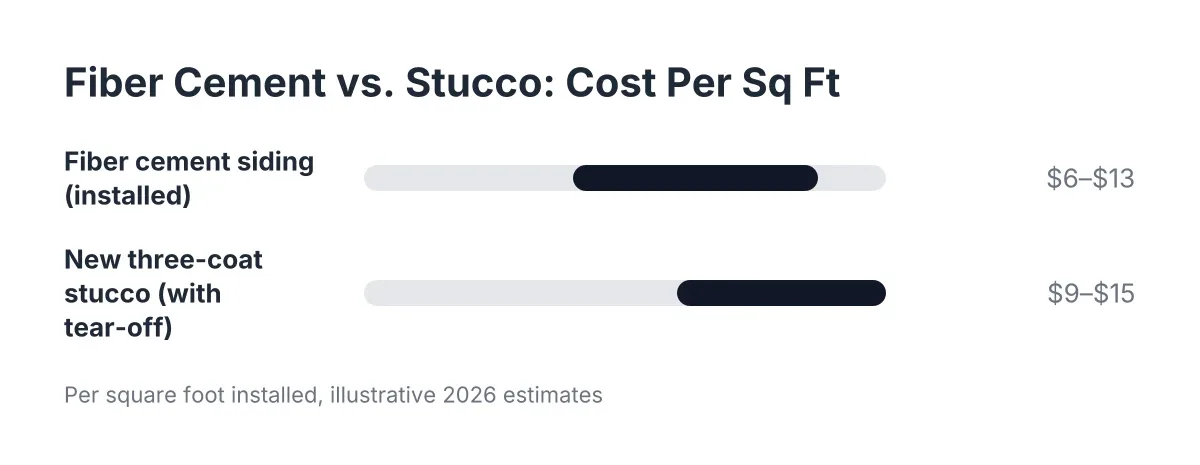
Vinyl wins on upfront cost; fiber cement usually wins on cost over the life of the house. Vinyl is cheaper to buy and cheaper to hang, so the day-one invoice is lower. Fiber cement costs more to install because of the weight and the labor, but it typically needs replacing far less often. If you plan to stay put, spread that higher upfront cost across the years and the math often tilts toward fiber cement.
Lifespan
Fiber cement typically lasts longer, especially in hail country. In most homes, fiber cement outlasts vinyl by a wide margin because it resists impact, fire, and rot. Vinyl holds up fine in mild climates, but Colorado hail and intense sun shorten its useful life. If your neighborhood has taken hail claims in recent years, that alone is a strong argument for fiber cement.
Installation
Vinyl installs faster and more forgivingly; fiber cement demands a skilled crew. A vinyl job on an average house can wrap up in days. Fiber cement takes longer, and mistakes in flashing or fastening can trap water against the wall. Whichever way you go, the installer matters as much as the material. Poor installation is where water damage starts, and fixing water damage behind siding costs more than doing the install right the first time.
Maintenance
Vinyl is the low-maintenance pick; fiber cement asks for periodic paint and caulk care. With vinyl, you wash it and replace the rare cracked panel. With fiber cement, plan on repainting eventually and checking caulk joints at trim and seams every few years. If you know yourself and you will never repaint, be honest about that and lean vinyl.
Situational fit
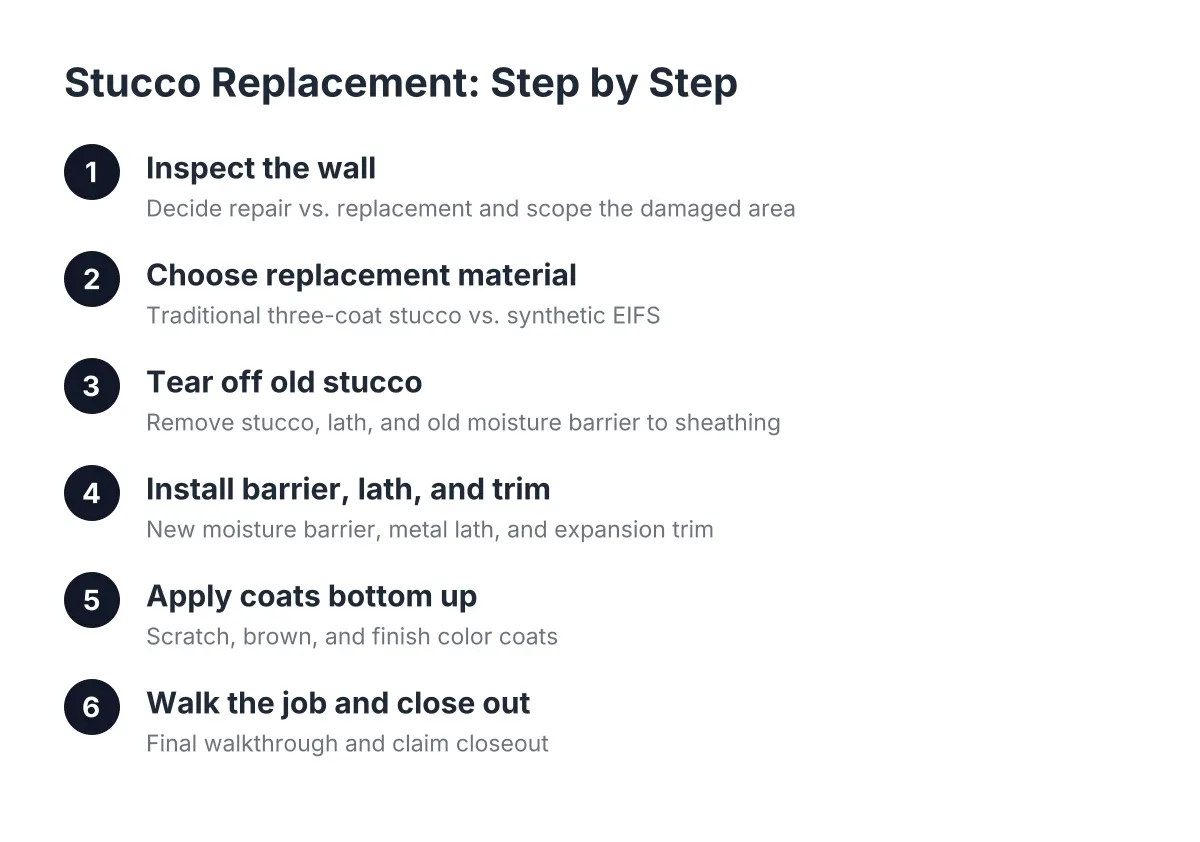
Match the material to how long you will own the home and what the weather does to it. Long-term owners in hail-prone areas fit fiber cement. Short-term owners, tight budgets, and low-upkeep priorities fit vinyl. If your current exterior is stucco and you are weighing whether to repair it or switch materials entirely, that is a different decision than siding-to-siding. A full stucco siding replacement is a bigger project than patching cracks, and it is worth reading about stucco siding material replacement in Castle Rock before you commit either way. Sometimes a focused stucco repair costs a fraction of new siding and buys you years.
Which Should You Choose?
Choose Fiber Cement Siding if:
- You plan to stay in your home ten years or more
- Your area takes regular hail, and impact resistance matters
- You want the look of painted wood without the rot
- You can handle a higher upfront cost for lower long-term cost
- You are fine repainting eventually to keep it sharp
Choose Vinyl if:
- Upfront cost is the deciding factor
- You want the least maintenance possible
- You plan to sell within several years
- Your climate is mild and hail is rare
- You need the job done fast
If you are stuck between the two, default to fiber cement for a long-term home in hail country and vinyl for a short-term or budget-driven project. That covers most real situations.
Common Questions
Is fiber cement worth the extra cost over vinyl?
For long-term owners in harsh climates, usually yes. When weighing fiber cement siding vs vinyl, the higher install cost of fiber cement buys you better impact resistance, fire resistance, and a longer expected life. If you plan to move within a few years, vinyl keeps more money in your pocket now and looks fine on the listing photos.
Should I replace my stucco with siding at all?
Not always. Cracked or stained stucco often looks worse than it is, and stucco crack repair, stucco patching, and texture matching can restore the wall for far less than new siding. Replacing an entire exterior makes sense when the stucco has widespread water damage or failed substrate, not when it has a few cracks. Get the stucco assessed by someone local before you price out siding.
How do I know if my stucco damage is bad enough to justify new siding?
Look for soft spots, bulging sections, staining that returns after cleaning, or cracks wider than a coin edge. Those can point to water damage behind the wall, which needs opening up to inspect. Hairline cracks and small holes are normal wear and are usually fixable with straightforward stucco repair. A local Castle Rock crew can tell you within one visit whether repair or replacement makes sense.
Which material handles Colorado hail better?
Fiber cement, and it is not close. Vinyl panels can crack or puncture in a serious hailstorm, and matching replacement panels years later is a headache once colors change. Fiber cement takes impacts that would break vinyl, which is one reason it has become common along the Front Range.
If you need stucco repair, Castle Rock Stucco Pros can help.
Related guide: stucco siding replacement — Complete Guide
Prefer to talk it through? Call (720) 797-8506 — a quick call is usually the fastest way to get a straight answer for your situation.