Stucco Contractor Communication: Managing Your Repair From First Call to Final Coat
If you have ever stared at a stucco patch that does not match the rest of your wall, you already know the real problem was not the trowel work. It was the talking. Good stucco contractor communication, managing the job from the first phone call through the final texture pass, is what separates a repair that disappears into the wall from one you notice every time you pull into the driveway. In Castle Rock, where hail and freeze cycles crack stucco on a regular schedule, who you can actually reach matters as much as what they know.
Here is the uncomfortable part nobody in the trade likes to say out loud. A lot of what gets sold as "stucco repair near me" is one of three things: a national franchise routing your call through a call center two states away, a rotating crew that has never seen your wall before the morning they show up, or a thin website built to capture your phone number and sell it as a lead. None of those models are built for communication. All of them are built for volume.
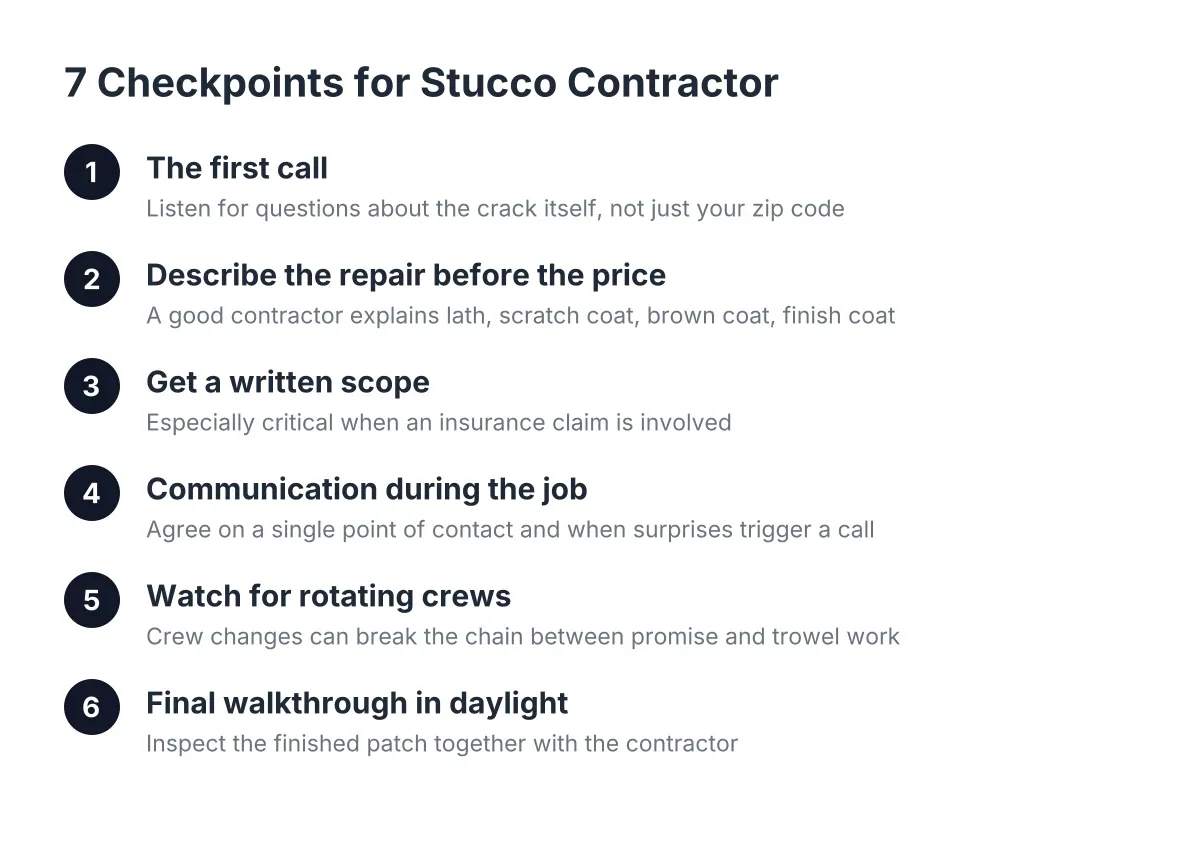
This article lays out seven communication checkpoints, from first contact to final walkthrough, that tell you whether a contractor will actually manage your repair or just show up and wing it. Each one is something you can test before you sign anything.
1. The First Call Tells You Who You're Actually Hiring
Pay attention to who answers and what they ask. A dedicated local stucco person will ask about the crack itself: how wide, how long, whether it follows a window corner, whether you have seen staining that suggests water damage behind the stucco siding. A call center will ask for your zip code and a good callback time.
That difference matters later. The person who asked about the crack is building a mental picture of your wall before anyone drives out. The person who logged your zip code is routing a ticket. When something goes sideways mid-job, you want the first person on the other end of the phone.
For a homeowner who already lived through one bad patch, this is the earliest filter. If the first conversation is generic, the texture matching will be too.
2. Make Them Describe the Repair Before They Describe the Price
A contractor who communicates well can walk you through the layers of your wall in plain language. Stucco is built up over a moisture barrier, then metal lath or chicken wire, then coats of material: a scratch coat, a brown coat, and a finish coat that carries the color and texture. A repair that lasts has to rebuild those layers, not smear patch material over the surface.
Ask them to explain how they will tie the new patch into the old wall. A good answer mentions the lath. When a section gets cut out, the edges should leave the wire exposed and torn rather than sliced clean, because the contractor needs that wire to weatherproof the patch properly. A clean grinder cut forces them to open up more wall, which costs you more.
If the estimate conversation is all price and no process, you are buying a mystery. That is usually how the last bad patch happened.
Why stucco contractor communication in texture matching matters
Anyone can say a patch will blend in. The last contractor probably said it too. The honest version of that conversation sounds different: the contractor talks about your specific finish, how weathering and fading affect the match, and whether a color coat over a larger area will hide the transition better than a small patch.
There is a real trade-off here worth hearing out loud. On an older, sun-faded wall, a perfect match on a small patch may not be achievable, and the right move may be to refinish a full wall section so the edges land at natural break lines. A contractor who tells you that upfront is managing your expectations. A contractor who promises an invisible patch on a 20-year-old wall is managing your signature.
3. Insist on a Written Scope, Especially When Insurance Is Involved
If a hailstorm put chips and cracks in your stucco, you are not just hiring a repair crew; you are building a paper trail for an adjuster. The written estimate should spell out what gets removed, what gets rebuilt layer by layer, and what the color and texture matching plan is. Vague line items like "repair stucco, south wall" do not survive an insurance review.
The stakes in Colorado are not small. Home insurance premiums here rose 65% over the last five years, with hail cited as a major driver, according to the National Association of Insurance Commissioners. Adjusters scrutinize claims harder than they used to; between 2018 and 2020, hail claims nationally rose 2% while questionable claim submissions rose 34%, according to Rocky Mountain Insurance Information Association data. Clear, specific documentation from your contractor protects your claim.
For example, suppose a Castle Rock homeowner takes hail damage on two walls after a spring storm, with a $1,000 deductible and a repair estimate in the $3,000 to $6,000 range. In that scenario, the contractor who photographs each impact point, itemizes the lath and coat work, and emails the written scope within a few days is doing half the insurance work for you. The one who texts a single number is creating a fight with your adjuster.
4. Stucco Contractor Communication During the Job Itself
Managing communication with your stucco contractor mid-job comes down to three agreed-upon things: who your single point of contact is, when you will hear from them, and what triggers a call before work continues. Settle all three before the first coat goes on. Repairs uncover surprises, and the plan for surprises matters more than the plan for the easy case.
Stucco work has built-in waiting. Coats need cure time between applications, and the finish coat cannot be rushed onto a scratch coat that is still green. A crew that explains the gaps before they happen looks professional. A crew that disappears for three days with no word looks like they walked off the job, even when the delay is legitimate.
In addition, ask what happens if they open the wall and find rot or hidden water damage behind the stucco. The right answer is a stop, photos sent to you, and a revised scope in writing before anything else gets billed. The wrong answer is finding a surprise line item on the final invoice.
5. Rotating Crews Break the Chain Between Promise and Trowel
Texture matching lives or dies on one question: is the person who looked at your wall during the estimate the same person holding the trowel? With franchise operations and rotating crews, the answer is usually no. The estimator's notes get compressed into a work order, and the nuance about your specific finish, the swirl pattern, the aggregate size, the sheen, gets lost in translation.
Therefore, ask directly: who does the finish coat, and have they seen my wall? A local operation with a stable crew can answer in one sentence. A dispatch model cannot, because they do not know who is available that week.
This is the single most common reason a patch "almost" matches. The hands that did the work never talked to the eyes that made the promise. If you are the person who notices a two-shade color difference from the driveway, this question is non-negotiable.
6. Watch How They Communicate About Prep, Not Just the Patch
The boring prep steps predict the quality of the finish, and a good contractor narrates them without being asked. Before new material goes over existing stucco, loose burrs and rough spots get scraped off so the new coat bonds to a clean surface. Adjacent trim, windows, and walls get taped off so patch material does not stick where it should not. Work proceeds from the bottom of the wall upward.
However, you should not need a trade background to evaluate this. Listen for whether the contractor explains these steps on their own. Someone who volunteers the unglamorous details is thinking about the whole job. Someone who only talks about the finish coat is thinking about the photo at the end.
Here is a quick checklist of communication signals to listen for during the estimate visit:
- They name the texture style on your home instead of calling it "standard."
- They explain cure times between coats and build them into the schedule.
- They tell you which surfaces get taped and protected before work starts.
- They say what they will do if the opened wall reveals water damage.
- They put the texture and color matching approach in the written scope, not just in conversation.
7. The Final Walkthrough Should Happen in Daylight, Together
Communication at the end of the job matters as much as at the start. Insist on a walkthrough with the contractor present, in natural daylight, viewing the repair from the distances that matter to you: up close, from the sidewalk, and from where you park. Stucco texture reads differently at each distance, and a patch that looks fine at arm's length can telegraph from the street.
Next, agree in advance on what happens if the match is off. Fresh finish coats shift slightly in tone as they cure, so a fair contractor will explain what settles over the first weeks and what will not improve. The difference between a specialist and a patch-and-run operation is whether "we'll come back and blend it" is a written commitment or a wave goodbye.
One honest caveat: some situations genuinely need more than a repair conversation. If cracks keep returning in the same spot, if large sections sound hollow when tapped, or if you find soft spots that suggest widespread water damage, bring in a professional to evaluate the whole wall assembly before anyone quotes a patch.
What Good Communication Looks Like, Stage by Stage
Pulled together, managing a stucco project through contractor communication follows a simple arc:
- First call: They ask about your wall, not just your zip code.
- Estimate: They explain layers, lath, and the texture matching plan in plain language.
- Written scope: Itemized, photographed, and specific enough to hand to an insurance adjuster.
- During the job: One point of contact, scheduled updates, and a stop-and-call rule for surprises.
- Crew continuity: The person who saw your wall is connected to the person finishing it.
- Prep: They narrate the unglamorous steps without prompting.
- Walkthrough: Daylight, together, with a written plan for anything that does not blend.
None of this requires a big operation. In fact, the structures that make companies big, call centers, dispatch software, and rotating crews, are the same structures that break this chain. When you are hiring a stucco contractor in Castle Rock, the most reliable predictor of a patch that disappears is not the logo on the truck. It is whether the person you talked to on day one is reachable on day ten, and whether they ever stopped talking to you in between.
Your last patch probably failed at one of these seven checkpoints. Test the next contractor against all of them before the first coat goes on, and the repair you stop noticing becomes the likeliest outcome instead of the lucky one.
If you need stucco repair, Castle Rock Stucco Pros can help.
Prefer to talk it through? Call (720) 797-8506 — a quick call is usually the fastest way to get a straight answer for your situation.